Monday, June 02, 2008

PACS Synergy Takes Energy

My fellow author Erik Ridley (OK, Erik, you can stop laughing now) reports today on AuntMinnie.com about the use of Synergy, an open-sourch program from SourceForge, to control multiple PACS apps from one computer. This was based on a SIIM presentation by Stuart Pomerantz, M.D., from Mass General.

"Many of the ergonomic benefits of a 'one-box' radiology solution can thus be achieved in a multi-PC environment with keyboard-monitor software at no additional cost," Pomerantz said. He discussed the MGH researchers' experience with an open-source, virtual "one-box" system during a scientific session at the meeting.

A "one-box" approach with all applications running on one workstation would offer ergonomic advantages, allowing users to use a single PC (and keyboard and mouse) to drive all applications, he said. A virtual, network-based "one-box" model would also have this benefit, yet it would retain the flexibility to split into two separate simultaneous input modes for two-person navigation and data entry, according to Pomerantz.

"It's important that the virtual 'one-box' is not through a switching device, through a manual switch where one keyboard and mouse controls a different on-screen connection to one PC or the other, but rather a fluid connection across all PCs with simultaneous control," he said.

This is an interesting idea, and actually one I have encountered before. One of my partners bought a second computer, and connected it to the same monitor, mouse, and keyboard as his first computer via a hardware KVM switch. He did this to allow different (and at that time somewhat incompatible) PACS clients
to run on the different computers, but to still be controlled from the same perch in his office. Personally, I thought it was overkill for the purpose.

Pomerantz's approach does not use hardware KVM switches, but rather networks control via the Synergy program.

With synergy, all the computers on your desktop form a single virtual screen. You use the mouse and keyboard of only one of the computers while you use all of the monitors on all of the computers. You tell synergy how many screens you have and their positions relative to one another. Synergy then detects when the mouse moves off the edge of a screen and jumps it instantly to the neighboring screen. The keyboard works normally on each screen; input goes to whichever screen has the cursor.

In this example, the user is moving the mouse from left to right. When the cursor reaches the right edge of the left screen it jumps instantly to the left edge of the right screen.


OK, this has potential, but for many of us, the potential is that of confusion. I would be rather concerned about realizing which computer it is that I'm operating.

Is this all really necessary? I'm not so sure of that either. Most desktop workstations have the horsepower to drive the PACS client, SR window (if you are so unfortunate as to need one), RIS client, and some level of advanced visualization software. If you are using an integrated thin client, there is relatively little impact on your CPU.

I'll probably try this at home, and amuse my wife and son no end as I scoot my cursor over to their screens while they are trying to do something productive. I might have a different opinion of the efficacy of using this with PACS if I were to see it in action at Mass General, but short of that, this seems to represent about the same level of overkill as the old KVM switch idea. Just my humble opinion, of course.

Thursday, May 29, 2008

80K Hits
. . .and some interesting software


Image courtesy of:
http://www.predig.com

Visit 80,000 was from a Sprint/United Information Service customer in Kansas City, Missouri, who found me via Google. They were trying to find out "who's going to buy GE business". . . I guess that remains to be seen, eh?

In the meantime, I just read about an interesting piece of software from BridgeHead Software. The product is called PACStore, and it supposedly
. . . helps healthcare organizations reduce the accelerating storage hardware and management burden imposed by the long term retention and protection of PACS (Picture Archiving and Communications Systems) medical image data.
The function that grabs my eye has to do with the old problem of uniting disparate PACS:

PACStore effectively unifies PACS data by enabling clinicians to search across stored medical images from different proprietary PACS systems. It does this through a search facility based on the Digital Imaging and Communications in Medicine (DICOM) standard used by most PACS vendors.

PACStore is storage agnostic, providing unlimited flexibility for selecting and deploying different types of storage media throughout the evolution of your data lifecycle management strategy. Storage costs are reduced as PACStore automatically moves data onto the appropriate storage media based on how available it needs to be. The most current, active PACS image data stays on the most highly available primary storage, while static data, which is viewed less frequently, is moved to alternative, lower cost media in line with compliance and protection requirements.

Sounds pretty good. I would remind the folks at BridgeHead that radiologists like to search too, not just clinicians. In fact, I think our needs are more important! And, they are a little too IT centric in their approach, or at least in their advertising:


The PACStore Solution

Traditionally, PACS vendors have provided internal standalone backup and offline archiving capabilities to address PACS data only. This created stovepipes within the organization, resulting in redundant technology assets outside the control of IT.

With a single complex study soon expected to consume upwards of 1TB of disk space, you can no longer afford redundant systems for medical image management.

PACStore from BridgeHead allows you to leverage your existing IT infrastructure, putting IT back in control of all your data.

Hey, wait a minute! I don't want IT in control of my data! But I get where they are coming from. This seems to be more of an internal fix than something to truly bring several external PACS together, but the idea could perhaps be redirected to that end.

Did they say 1TB per exam?

Tuesday, May 20, 2008

Follow The Green Brick Road
. . .The Official GE Version

I've been fortunate enough to make some good friends in the PACS business over the past few years. One of them is a great guy by the name of Brad Levin, whom I met while he was working for Amicas. Brad later joined Dynamic Imaging, and now, of course, works for GE.

Brad read over my previous post about the upgrade path for Centricity, and was kind enough to pen the official GE response, which follows unedited below:


I hope everything is well. On behalf of my colleagues at GE Healthcare IITS, I wanted to follow up on your comments from, "Follow the Yellow Brick Road ", posted on April 18, 2008. Per your inquiries, we wanted to provide additional detail and also clarify a few items referenced.

1. Centricity PACS version 3.X - As mentioned, our upgrade program for Centricity PACS 1.X/2.X has been offered for nearly three years, and (other than users running the latest Solaris hardware (V480)), requires a Solaris to Linux upgrade due to hardware end-of-life from Sun Microsystems.

2. To be clear, the advanced visualization solution you are referring to is marketed as “AW Suite” and is now available via software integration to Centricity PACS 3.X. Presently, the AW Suite embedded integration includes the following applications: CardIQ, AutoBone , CT Colon , Advanced Vessel Analysis, and Advanced Lung Analysis.

3. Since the acquisition of IDX by GE Healthcare, the ImageCast (IC) radiology information system has been marketed as Centricity RIS-IC. Presently, RIS-IC is ranked the #1 RIS by KLAS (Radiology (large) category, 2007 End of Year Report, 12/07, http://www.klasresearch.com/). As an integrated solution for RIS/PACS, this is marketed as Centricity Radiology. As a point of clarification, the Centricity PACS worklist is not changing to the interpretation worklist used by RIS-IC; however, customers using Centricity Radiology may choose to implement a RIS-driven workflow. Only in that case would the RIS-IC worklist be used. One last note about RIS-IC, the upgrades to Centricity PACS 3.X have no relation whatsoever to RIS-IC. Accordingly, Centricity upgrades do not include RIS-IC, and therefore, your comment about RIS-IC being “….included with the purchase of Centricity 3.0 Linux server…” is not accurate.

4. Regarding the new Centricity PACS-IW, similar to our naming structure for RIS-IC, the “IW” stands for “IntegradWeb”, based upon the recently acquired IntegradWeb PACS from Dynamic Imaging. Centricity PACS-IW is presently the #1 ranked PACS by both KLAS (PACS-Acute Care (large) Report, 4/08, http://www.klasresearch.com/) and MD Buyline, for the past two years in a row in the MD Buyline Intelligence Report for PACS, http://www.mdbuyline.com/.

Also, just to clarify a few items related to your upgrade discussion:

1. Your first upgrade alternative is a status quo decision to remain on the Solaris platform of Centricity 1.X/2.X. As you are aware, all hardware has a similar cycle – in just a few years, hardware that was once state-of-the-art eventually turns end-of-life. The decision by Sun to move their server hardware to end-of-life was made independent of GE Healthcare; however, it does have a significant impact on Centricity customers, and the solution is to upgrade to Centricity PACS 3.X. By moving from Solaris (a proprietary platform) to Linux, GE is moving to a more mainstream technology that in the long term provides Centricity customers more performance, choice and flexibility.

2. The second upgrade alternative you mention concerns an upgrade to Centricity PACS-IW. Any upgrade to Centricity PACS-IW would include a traditional PACS migration of images and results. While migration is rather commonplace in the replacement PACS market today, you are accurate that many of the unique data elements (e.g., annotations, key images) from Centricity PACS would not be able to be migrated to Centricity PACS-IW. This consequence of migration is the same when migrating from just about any PACS to Centricity PACS-IW, as well as the consequence of migrating Centricity PACS to any other PACS sold today. Considering this limitation, we do not recommend this as an option. Whether in the future GE will be able to export all the unique data elements is unclear at this time, thus, we are taking the most conservative approach by not committing to it and not recommending it. The only way to ensure the protection of these data elements is to upgrade through the Centricity PACS (not PACS-IW) product family.

3. The third upgrade alternative you discuss protects your investment in Centricity PACS by upgrading from Solaris to Linux, upgrades you to the latest Centricity 3.X platform complete with the new features you explained to your online audience (nice, thorough list, thank you), while also leveraging the diagnostic capabilities of the IW viewer anywhere over the Web. Currently there is a worldwide engineering initiative leveraging the strength of the IW diagnostic viewer and Centricity PACS 3.0 [Note: Prior versions of Centricity will not be able to take advantage of this new product]. This new product, Centricity Web DX Viewer, which we announced at the SIIM 2008 conference just last week, is a work-in-progress (WIP). This diagnostic capability will enable diagnostic interpretation anywhere over the Web, powered by the IW viewer. The Centricity Web DX Viewer will directly connect to the Centricity PACS 3.0 database and enable radiologists to perform complex image manipulations to include 3D (MIP/MPR) along with all of the other features of the IW viewer, change study status directly in the Centricity PACS 3.0 database, while also being assured the appropriate study locking mechanisms are in place. As this effort was scoped earlier this year, our Centricity PACS beta partners have already been identified and engaged. Keep in mind that Centricity Web DX Viewer is not meant to replace any of our existing client technology, as we are continuing to invest and support those programs. The Centricity Web DX Viewer is an additional capability that our Centricity customers can soon choose to add to their Centricity PACS environment, without compromising the investments they've made to their Centricity PACS infrastructure.

4. In terms of next generation development, we have indeed brought together our research and development teams from Centricity PACS and Centricity PACS-IW, leveraging the best innovations from each team into a single next generation effort. The current iteration of the next generation solution was demonstrated at the GE SIIM Customer Event last Thursday evening and was extremely well received.

In closing, GE Healthcare looks forward to helping you and your colleagues leverage your investment in Centricity PACS for not only today, but for the future. We pledge to all of our customers that we will continue to ensure an upgrade path for Centricity PACS, as well as integrate and make available the best available technology in the GE Healthcare product portfolio. And lastly, GE Healthcare will continue to develop innovative technology, as well as canvass the marketplace for potential acquisitions of technology that both deepen and enrich today’s product mix for the benefit of our customers.

I hope this has been helpful, but it is only intended to provide a brief overview. I encourage you and your online audience to contact their GE Sales Executive to learn more since every customer has different needs and requirements. We will also be discussing more about the Centricity Web DX Viewer over the coming weeks and months, to include presentations at the GE Healthcare User Summit, August 18-21, 2008, in Washington , DC .

If you or your audience has any questions about the above, please have them contact me at brad.levin(AT)ge.com and I will see that their questions are answered.

Regards,


Brad
Brad Levin
VP, Marketing, Dynamic Imaging Solutions
GE Healthcare IITS

Monday, May 19, 2008

Kroger Becomes EMR Vendor

You know technology has progressed when you can buy it at the grocery store.

From the Enquirer (the Cincinnati paper, not that other Enquirer) comes word that the grocery chain Kroger will be selling this MedFlash device, a USB drive that will "store all of a patient's personal health records." This is not yet nation-wide, but will be offered in Kroger's 103 stores in the Greater Cincinnati and Northern Kentucky market. The little drive costs $29.95.

The Med-Flash device is made by a company called Connectyx. They appear to be primarily concerned with medical and billing software. While the Med-Flash could end up to be their biggest seller, their website touts other things such as the "Medical Revenue Manager" or

MRN Manager(tm) (which) provides a remarkable return-on-investment, accelerating your evenue cycle by putting you in charge of Medicare and insurance denials.

The easist and most effective tools to manage your denials are in the MRN Manager(tm) suite of tools! Over TEN-MILLION claims processed in last 12 months.

They seem rather sure of themselves. Anyway, Med-Flash stores your entire file, according to the website, and even comes with a "free Rx Card that can be used at any participating Pharmacy to help you save 50 to 80% on Generic Drugs." All this for $29.95!


And just how do you get your information into Med-Flash? Basically, you go online to MyMedflash.com and enter the information. Presumably, the patient himself takes care of this. Here is the on-line form:


Supposedly, "thousands" of images from MR's or CT's can be uploaded "via Internet Explorer," but I'm not sure how that works with respect to PACS. The site notes: ". . . the program includes a picture/document uploader that enables the owner to upload MRI/EKG/X-rays photos." Just where the average patient is going to score these images in a form they can upload is not specified. They could at least upload reports if they have a document scanner, and who doesn't these days?

I'm wondering if Med-Flash is more of a Flashy gimick at this point in time. Carrying a laminated piece of paper might accomplish the same thing for most people. However, I can certainly see the potential in carrying one's full medical dossier, especially for those with complex histories. I'm still wondering how Joe Patient is going to get his CT from the hospital PACS into the Med-Flash site and drive, but I'm sure someone over at Connectyx is working on that as we speak.

I guess the next step is an implantable RFID chip that the hospital reads by passing your head under the barcode scanner.

Wednesday, May 14, 2008

GE Sells Out
...Their Appliance Business


After 100 years of GE appliances, GE plans to get rid of this flagship division. It seems that the giant conglomerate is looking to improve stock prices after a rather rocky first quarter.
From today's Wall Street Journal:

Shedding the appliances brand would be a symbolically significant move for the Fairfield, Conn., company. GE entered the business in 1907 and boasts of milestones such as introducing the refrigerator, room air-conditioner and toaster oven.

But because the unit is now a relatively small part of the company, a sale might not satisfy investors who are pressing Mr. Immelt to improve GE's sluggish performance. Last month, GE reported an unexpected 5.9% drop in first-quarter net income and lowered its earnings forecast for the year, only weeks after issuing sunnier projections. The move prompted the biggest one-day selloff in GE shares in more than 20 years.

GE's shares finished Wednesday at $32.51 each in New York Stock Exchange composite trading, putting them near levels they traded at in 1999.

Ouch! So who's going to buy the fridge division?
GE has hired Goldman Sachs Group Inc. to run an auction for the appliances unit. It's unclear who might be interested in bidding this early in the process. But possible buyers for the division include appliance makers BSH Bosch und Siemens Hausgeräte GmbH of Germany and Haier Group of China, bankers said. Private-equity firms and GE's Mexican partner, Controladora Mabe SA, could also be interested, they said.
Siemens? SIEMENS? My GE fridge (the one in the garage that actually works unlike my overpriced SubZero) is now going to be made by Siemens? Well, I've never owned any Siemens appliances, except for an old model of their GigaSet cordless phone, which worked quite well.
OK, now, no one needs to blame me for this fiasco. I like my GE appliances. Really. I like my GE stock, too, and I'm pretty worried about where it's going.

Tuesday, May 13, 2008

Agfa Finds Buyer??

On the eve of SIIM in Seattle comes some good news for my friends at Agfa. According to printweek.com:

Agfa-Gevaert's battered share price, which has fallen around 70% in the past year, recovered slightly last week on the news that it may have found a buyer for its underperforming medical unit.

Agfa's shares rose more than 7% after chief executive Jo Cornu revealed the company had received many expressions of interest since appointing German merger advisory firm Lazard at the end of last month.

The share jump also followed the revelation by US private equity outfit Gores Group that it is interested in Agfa's healthcare division.

Gores said: "We find Agfa an interesting company with some great assets, and we are ready to speak about a partnership or a purchase."

The Gores Group is:
. . . is a private equity firm focused on acquiring controlling interests in mature and growing businesses which can benefit from the firm's operating experience and flexible capital base. Gores' offices in North America and Europe serve its active investment programs in these regions.
Here's a list of their holdings:

Current
Adventa ControlTechnologies
Aptiv Technology Partners
Avure Technologies
CompuDyne
Enterasys Networks
First Communications
Global Tel*Link
Diagnostic Health Corp.
Intelliverse
Lineage Power
Real Software
Sagem Communications
SER Solutions
Somero Enterprises
United Road Services
Wire One Communications

Prior
Anker
Aprisma Management Technologies
Artemis International Solutions Corp.
Brand-Rex
Connection Machines Services
Encore Real Time Computing
Farallon Communications
Goretek Data Systems
Humanic Solutions
Information Dimensions
Inmac
JAMIS Software
MPC Computers
ONEBOOK Financials
Proxicom
QuorTech Global Solutions
QuorTech Solutions
Revere
Select Business Solutions
Silicon Systems and Technologies
SSA Global Technologies
The Learning Company
VeriFone
Vicorp

Gores doesn't have a PACS company as yet, so this could certainly diversify their holdings.

I don't yet know the price tag for this little purchase, but I'm sure it's a good deal for Gores. Whether it's a good deal for Agfa and its users remains to be seen....

Saturday, May 10, 2008

Survival of the Fittest . . . Small PACS Companies

Hershey Ice Breaker PACS candy, courtesy http://www.likecool.com/

Any time Amicas is mentioned on AuntMinnie.com, there follows a wave of responses divided into two main camps. There are those of us who love the product, love the company, and will defend it to the hilt. That should gladden Steve K's heart no end. However, there are the usual nay-sayers that generally knock any company with revenues less than the nation of Panama.

So it goes on a recent thread, started by Michael D, who was interested in the latest Amicas offerings. Larry, the Cable Guy from Nebraska, posting as GITRDONE, immediately pounced:

Amicas is a very small, almost regional player in the PACS market, they have a decent product but that is where the positives end. They have very spotty support coverage, and their long term sustainability is suspect. They are still around because of a large infusion of cash a few years ago, otherwise they would be another Merge story right now. They have a me too product though that you can get from 15 or so other companies that all seem to be in the same boat. If you want to buy a simular product for a simular price from a company that will more than likely be around in the next 3-4 years I would look at McKesson, Fuji or Philips. I would guess that Amicas will be purchased or fizzle out in the coming years as they just don't have the scale or talent to play in the replacement market.

Larry later reveals that he works for a PACS vendor, apparently in Nebraska (my old stomping grounds!), and his main competition there is NovaRad. Larry keeps repeating his mantra throughout the thread:
  1. Small companies will die or be assimilated.
  2. Amicas has a me-too product, identical to 15 others.
  3. You are far better-off buying McKesson, Fuji, or Philips.

Now, I'll be the first to agree that there are tremendous pressures on PACS vendors, especially the smaller companies. And yes, some will disappear. Having gone to many, many RSNA's throughout my career, I can vouch for the fact that a number of the products and companies that were there at the last meeting didn't survive to make the next.

Beyond this, I disagree completely and totally with Larry. Amicas' product is very different from the others, and really, it is only when you reach the next tier down from the likes of Amicas, Intelerad, and DI (well, they used to be at this niche) with some of the smaller fry that the GUI's start to look a little more alike. And even those products are unique. The IT types simply don't understand that radiologists don't all work in the same manner, and different rads and different groups will need different approaches. I'm not so much of a Pollyana to say that everyone would love Amicas if they tried it. (I would wager that lots would, but that's beside the point.) Me-too product? Not even close.

The small companies provide innovation that does not exist, at least to the same degree, within the large behemoths. Without Amicas, Stentor, Dynamic Imaging, and even ScImage, to name just a few of the small players, PACS would be probably be stuck back in the state of trying to immitate film, with tiled-displays on $50,000 Sun boxes. I don't think there's much question that the little guys, well, some of them anyway, have led the way in trying to give the customers what they want.

But Larry essentially paraphrases the old IT belief: "No one ever got fired for choosing GE." The large company is safe. It will be there tomorrow, and will always be available for service and to take care of me. Hmmm...sounds a little socialistic to me. Sadly, with this opinion borne out of fear of making the wrong choice and looking bad and/or getting fired for it, comes a complete dismissal of the needs of the folks for whom the product is being purchased. If the big boys understood the needs of the radiologists, and wrote their software with them in mine, there would be no smaller companies in this business. But that isn't the way it works.

With the shrinking number of dollars to spend, the PACS consumer has to be far more savvy than ever before. No longer can an IT committee hijack the decision, insisting on the "safe" purchase from the large company. Been there, done that, and the results are not pretty. Spending, oh, I don't know, 2-3 (or more) times what an Amicas installation would have cost easily bought us 1/2 the usable system. We can no longer afford to blow millions in that manner.

I find it most amusing that Larry repeatedly mentions McKesson, Fuji, and Philips as his "safe" choices. What happened to Agfa and GE? GE is the biggest PACS company of all, and I will absolutely guarantee in writing that they will be here 100 years from now. (And if they aren't, good luck collecting on that bet!) Why doesn't Larry mention them? Could it be that Larry thinks they can't GET'R'DONE? Maybe buying from the large company isn't always the best idea after all. Or does Larry work for Fuji?

Thursday, May 08, 2008

Dalai-Less In Seattle


Due to some last minute family stuff, I won't be able to attend SIIM after all. However, my PACS guru will be there, and since he is somewhat less infamous than me, he will be stealthily gathering lots of good stuff that will appear here upon his return.

I would also welcome reports from anyone else attending the meeting. Let me know what you thought of the new toys, what you felt was the most innovative, funniest, etc. I'm counting on all of you to be my eyes in Seattle!

I WILL see you next year in Charlotte!

Wednesday, April 30, 2008

Moldy Business

You may recall from my older post, "Mold and Morality," that I had several "mold remediators" come to my house to check out our mold problem that proved to be essentially non-existent. One of these operations wanted me to pay $125 for the honor of having been inspected by one of their "trained professionals", who declared our house "contaminated".

I sent this letter in response:

I sent an email outlining my thoughts on this to your assistant, but apparently she did not forward it to you.

While I was not present when you or your agent inspected my house, my wife relayed to me that she was told repeatedly that the house was "contaminated". This prompted me to have the house tested by the same service used by our hospitals here in (our little town), at considerable cost to me. You may contact my attorney for these results, but suffice it to say that the living quarters of the home were found to be completely free of mold. There was a minimal amount of mold in the crawlspace, an amount that our inspector stated was less than or equal to virtually any other home in our area.

While researching this situation, I came across this video from KNBC (http://video.knbc.com/player/?id=199430), and it was eerily remniscent of the entire experience with (your company).

With this in mind, I will respectfully request that you withdraw the inspection fee, and we will part with no hard feelings. If this is not acceptable, we can continue further discussion with the Better Business Bureau serving as arbitrator.

Sincerely,

Dr. Dalai

Of course, this did not make the owner of the company very happy. He replied:

As to your email transmission:

Having checked her emails, (the secretary) did not receive any emails from you to forward to anybody.

Your wife was told the crawl space was contaminated – that’s where the inspection took place, based on Mrs. Dalai’s request.

Please furnish me the name of your attorney; I will be glad to ask him for the results – of course, you will have to release him to do so.

I am happy your living quarters are free of mold – your crawl space is not. If you would like some good information on mold in crawl spaces please visit our website and click on Mold Facts; then click on About Crawl Spaces (Read More).

There is not a minimal amount of mold in your crawl space – in fact some areas require either a dry ice blasting or baking soda blasting to remove the mold. Please view the attachment for pictures of your crawl space.

With all these added inspections at great cost to you, what is the problem with paying us the agreed upon amount of $125.00 to visually inspect the crawl space?

I refused to look at the video you bring up simply because I know it will infuriate me. I would expect better from an M.D. but apparently your aim is to bully and intimidate. Please look at the attached testimony of (another MD who liked the service).

I have hard feelings - (our) technicians are professionals – let’s have the discussion with the Better Business Bureau.

You owe this company $125.00 and I will turn it over for collection.

Neither one of us needed to waste this time.


Sincerely,
Mr. X
President
Mold Company.

Well, I'm so sorry he took it that way. My final response to all of this was:

Mr. (President):

Apparently my email to (your assistant) ended up in her spam folder, which I suppose is appropriate.

The bottom line to our discussion is this: my wife, who is not a scientist, was told repeatedly by your agent that the HOUSE was contaminated, and that a $10,000 course of remediation was necessary to fix this. Note that he used the word HOUSE, and not simply crawlspace. That is a significantly different level of abnormality, as I'm sure you will agree. Based on our independent report, I'm certain we can also agree that the living quarters are free of mold. As to the crawlspace, our inspector did note small amounts of mold, which he stated were no greater than any other house in the area would reveal upon similar inspection. I'm sure you don't wish to imply that absolutely every home in (our small town) is contaminated and in need of your services.

I'm sorry you feel the video clip would upset you, Mr. (President), as that is not my goal. A consumer-minded vendor would be interested to know how his agents are coming across to his customers. The video provides a very good example of how one should NOT conduct themselves in this particular business. And I'm sorry your feelings are hurt by all of this. I have no doubt that your techs are professionals, and I assume they have all been trained by (Big Cleaning Franchiser) methods since the establishment of your franchise in 2006. That is beside the point.

I am quite happy for Dr. (customer)'s positive outcome. His letter shows that he did have contamination in the living quarters of his house. I do not.

Please refrain from threats of collection agencies. I am respectfully disputing this charge, given the fact that your agent repeatedly declared the house contaminated, and followed this with a hard-sell pitch for your services. Independent testing later proves that the level of "contamination" was significantly overstated, as the living quarters are not involved. In this circumstance, use of a collection agency would be considered harassment. Beyond this, your comment concerning my profession is uncalled for in this setting, and is basically harassing as well. I am not attempting to bully or intimidate you or anyone else. A third party reading this communication would suggest just the opposite.

I certainly agree that neither one of us needed to waste valuable time on this. If you wish to have the BBB involved in this matter, I will certainly be glad to forward this communication thread to them.

By the way, your company is listed as a member of the National Organization of Remediators and Mold Inspectors, or NORMI. Their Regulations page, http://www.normi.org/articles/Mold-Inspection-Remediation-Regulations.php, states explicitly:

§100.107. Conflict of Interest and Disclosure Requirement.

(a) Conflict of interest.

(1) A licensee shall not perform both mold inspection and mold remediation on the same project.

I think that's all that needs to be said in this matter.

Sincerely,
Dalai, M.D.

I have yet to hear back from the gentleman. Perhaps that is indeed all that needs to be said. Caveat emptor, as usual.

Friday, April 25, 2008

OsiriX Involved in 3-Way....
Fusion, that is

Image courtesy of http://www.auntminnie.com/

A long time ago, I posted a piece about a better way to link old and new CT's together. My thought was to mark at least two, and preferably more, landmarks on each study and have the computer morph the old study to match the new one.

Well, this product hasn't quite appeared as yet, but OsiriX has come up with something rather similar that allows the fusion of PET, CT, and MRI studies. As reported in AuntMinnie:

Using several pairs of reference points located in the area of interest, the OsiriX 3D application correlates anatomic landmarks from the CT element of the PET/CT scan (or SPECT image) with those of the MR scan. With these markers established -- a greater number of points may be selected for greater accuracy -- the program allows the user to realign the CT image with the MR image "in a matter of seconds," consequentially also combining the PET/MR information accurately, Ratib (Osman Ratib, chair of radiology and head of nuclear medicine at the University Hospital of Geneva) explained.

"Once you've done that, you can use the registration tool to create a new set of images that are perfectly aligned, and which you can manipulate and play with," he said. "It provides convenient and fast visualization and navigation capabilities across a large number of multimodality images, and, of course, it is free and runs on off-the-shelf software."

Why is this fusion a good thing?

"PET shows the extent of metabolically active tissue in tumors, while MR shows the tissue alterations and the spatial distribution of surrounding organs. Unfortunately, very often MR does not show the exact extent of tumors due to surrounding inflammatory reactions and edema. Therefore, image fusion of PET and MR is expected to provide significant information that is not obvious from the two modalities presented separately; this can increase the accuracy and therefore confidence in diagnosis," Ratib added.

"A three-way registration tool can provide clinicians and nonradiologists with a convenient way to review and localize focal abnormalities. That they can now interact and 'navigate' through these image sets rather than just rely on static prints provided by radiologists is a real improvement in clinical practice," Ratib concluded.

One minor problem for some of us: This program only runs on Macintoshs. I guess I'll break down and buy one sooner or later.

Tuesday, April 22, 2008

The Story According To GE

Our local GE rep and an applications specialist came to visit today. They ran me through a demo of the GE AW 4.4 Volume Share, especially as it will be used with our nascient Coronary CT arteriography (CCTA) program. While 4.4 retains some of the quirks of the earlier versions, it does show some very significant improvements, with some very nice implementations of automation. The images presented were spectacular, having come from a GE VCT 64 slice scanner. They did process a scan from another company's scanner, and the vascular detection center-line placement didn't go quite as smoothly, but it was relatively easy to tweak it into complacency.

At the moment, there is a limited remote control option. This allows three limited simultaneous access sessions, and one "virtual AW" session, which gives full control of the AW, but only if no one is using the workstation itself. Late this year, there may be a TeraRecon-style client-server product, but there are no details as yet.

The conversation turned to the Hawkeye, the SPECT/(limited)CT device. The nuclear rep wasn't along for the ride today, but he did want me to know that diagnostic CT images from our 64-slice VCT could be grafted onto a Hawkeye study. Which sort of defeats the usefulness having a CT in your SPECT camera beyond attenuation-correction only. I related our pending purchase of the Symbia, but I did reassure them that when GE comes out with a diagnostic CT version, we would certainly consider it.

At this point, our rep began a rather surprising discussion, the GE side of my little unpleasantness from four months ago. It seems that there had been considerable internal pressure to get to the bottom of the episode, and it turns out to be rather more complicated than I would have thought. This was probably a rather difficult conversation for our rep, and I am very impressed with him for coming forward, and I am grateful to finally hear something from GE on the topic.

The problem originated with my post comparing the 2D/3D GE Discovery PET/CT with BGO crystals to the 3D Siemens Biograph 16 with LSO crystals. Frankly, it was one of my most carefully written and researched pieces, and I was quite proud of it. I evaluated the various technologies, both of which I actually use daily, and came to the following conclusions:

I'll give you the punchline first, and then we'll go into the boring discussion of what's behind it. My educated, although still subjective, opinion is that the Biograph produces better images. Sorry, GE, but Siemens gives us images with less noise which are overall more pleasing and easier to read, again, in my opinion. . .

. . .What I do know is that the images from the Biograph are better, at least to me, than those from the Discovery. That's my story, and I'm sticking to it. . .

You might ask, "Will the Discovery fail to demonstrate something that the Biograph would show?" Now that's one question I can't honestly answer, and it's probably the most important of all. Time will tell on that one. But you can bet it will become obvious eventually.

Apparently, a competitor (which one is obvious) used this material in sales, which is their privilege, and I can't say that bothers me particularly. Assuming that I was quoted correctly, and from what I've heard, they either handed out copies, or gave out my URL. I would certainly like to hear from any of you who received this material.

But somehow, word got back to GE that I had declared the Discovery's images "non-diagnostic". That is simply not true. The quote above is a direct clip from the offending post, which is now off-line. Nowhere do I say that GE's scanner is non-diagnostic, and if I felt that way, I wouldn't, I couldn't, read from their machine. The patients come first, you know.

Supposedly, when someone like me "declares" that a machine is non-diagnostic, the manufacturer must file dozens of papers with the FDA to show that the claim is false. So, our rep went to the clinic that owns the Discovery to see what was the matter. The techs told him that there was no problem (and I remember them asking me why he would think there was), but in the process, this whole situation was mentioned to others. Supposedly, that is all that happened. You all know the rest of the story as it progressed from there.

Our rep had heard about the discomfort this had caused me and expressed sincere regret. Apology accepted, and I'm happy to let bygones be bygones. What was told to me when I was called on the carpet for my blog-posts placed more blame on GE than they deserve, based on today's disclosure.

As I said at the time, this whole episode demonstrates the desperate need for better communication. Had GE approached me immediately, we could have put the whole problem to rest then and there. As it stands, everyone involved had an unnecessary trip through the ringer. The AuntMinnie.com thread spawned by these unfortunate events disclosed a huge current of anti-GE sentiment, which I found quite surprising and very, very sad.

Let's all take this lesson to heart and proceed forward. In this day and age, it is critical for vendors to hear what their customers have to say. Maybe today's sale will be lost, but tomorrow's might be saved. And, let's all do a better job of listening to each other. I am very approachable, and I would like to think reasonable as well. Talk to me. Don't wait until a situation blows up in our faces to say what should have been said.

Sunday, April 20, 2008

Time Is Money


I love watches, especially those with lots of dials and buttons. I own only one really nice watch, which tells the time, of course, and also has a stopwatch, moon-phase, and perpetual calendar that will work until 2499. (Of course, there is a little enameled metal insert that my great-great-great (etc) grandson will have to have placed by a jeweler in the year 2299 to make that last 200 years. I've promised this watch to my son as an heirloom when he reaches the age of 40, the age at which I bought it for myself. So, at that point, quite a few years from now, I'll be needing something new.

Pictured above is the Patek Philippe 5002-J Sky Moon Tourbillon, which should be adequate for the purpose. From the Patek website:

The Sky Moon Tourbillon Ref. 5002 is the most complicated wristwatch ever produced by Patek Philippe and also the workshop's first double-face wristwatch. Its movement consists of 686 parts, some of which are microscopically small.

Technical Specifications

Watch:

  • Minute repeater with tourbillon escapement
  • Chime with two “cathedral“ gongs activated by a slide piece in the case
  • Front side:
  • Perpetual calendar with retrograde date hand
  • Hours and minutes of mean solar time
  • Day, month, leap year by hands
  • Moon age
  • Crown at 4 o'clock: setting of the time and winding
  • Opaline-white dial with embossed Calatrava cross motif, gold applied Roman numerals
  • 9 hands
  • Reverse side:
  • Sidereal time, skychart, phase and orbit of the moon
  • Crown at 8 o'clock (24-hour scale): correction of sky/moon indications
    Case is humidity and dust protected only (not water resistant)
  • Case diameter: 42.8 mm

Caliber:

  • Thickness: 12.61 mm
  • Diameter: 38.00 mm
  • Case diameter: 42.80 mm
  • Number of jewels: 55
  • Power reserve: min 38 max 48 hours
  • Balance-wheel: Gyromax
  • Geneva Seal Hallmark
Yes, it has a star chart on the back! But I guess you have to take it off to see that. Oh, well, nothing's perfect. And it's not even waterproof!

I should probably start saving my pennies now. The list price is approximately $2 Million, but savvy shopper that I am, I found it here for only $1.4 Million. I do hope they take American Express. Think of all the Frequent Flyer Miles I'll get!

Ah, it's nice to dream about such things once in a while. The kind of wealth it would take to own one of these things is absolutely mind-boggling. I would frankly never buy one, even if I were so blessed as to be able to afford one, but it sure would be nice to actually see one someday.

Friday, April 18, 2008

Follow The Yellow Brick Road...
The Centricity Upgrade Path


There has been a lot of rumour and innuendo concerning just where GE is going with its latest acquisition, Dynamic Imaging, and their IntegradWeb PACS. The discussion is further accentuated by mention of a Linux server upgrade to Centricity that will cost Heaven-knows how much.

I had the chance to speak with some very nice GE people who helped clarify all of this, at least to a significant extent. Some of it begins to make sense...

First off, as a site with Centricity 2.x and old Sun servers, we are, as they say, SOL. This is now an end-of-life product, a situation which GE blames on Sun for abandoning the hardware itself. So, to go to Centricity 3.x (presently 3.03 with 3.04 in the wings) we must replace the back-end with the new, flashy Linux server. I don't know off-hand what actual hardware this encompases, but the new server is supposed to be the lynchpin of GE's new IT-style approach to PACS and all things digital. Supposedly it is a more "robust" hub for connectivity of various things like Pathology and Cardiology images. How much will this cost? Well. . .we're not totally sure, but probably less than $200,000, but likely more than but closer to $100,000. It could have been worse, folks.
As it turns out, the Linux server has been a part of the plan for the last three years, and there are already 1500 of them out there.
I have speculated that 3.x is the end of the line for Centricity, but officially, that is not the case. Supposedly, there is a 4.x in the planning stages. GE is not yet ready to pull the plug on our old friend.

There is a laundry list of improvements that differentiate Centricity PACS 3.x from 2.x. These include:
  1. Consistent Presentation of Images (CPI), part of the IHE profile
  2. GSPS (Gray-Scale Presentation State)
  3. Unreject Images
  4. Hiding Images
  5. Color Export
  6. Go to Image
  7. ROI Annotation (for multiple images)
  8. Modality-defined left and middle mouse button assignments
  9. DICOM Send-now sends GSPS and Key Image Notes
  10. Keyboard Shortcuts (see this link)
  11. Unlimited Status Changes
  12. Voice Commands--Allows the user to control the PACS application and to dictate annotations and notes
  13. Confidential Patients
  14. STAT prioritization
  15. PGP-Presentation of Grouped Procedures
  16. Voice Clips

These upgrades apply to the main thick client, called the RA1000. A few will be ported over to the Centricity Web client as well.

These additions add some interesting fuctionality (I'm intrigued with the voice-control thing, although if it works as well as the voice-controlled navigation in my car, it won't be worth the disk-space it sits on.) There is now the option of integrating the Advantage Workstation into a viewport of the PACS. This is done entirely in software on the PACS workstation, with no client-server setup. The fundamentals of the viewer remain the same, however, and in particular, the worklist is still pretty primitive, and creating hanging-protocols, or DDP's, is still rather painful.

Now here is where things get interesting. We all know that GE bought the IDX company and thus acquired its RIS. (Of course, this led to the "old" GE RIS going EOL, but that's another tale.) Centricity's new RIS is as displayed is called the RIS-IC (maybe IC stands for IDX-created?) and in the implementation shown to me, it really takes the place of the worklist, and the text or demographic page. As a worklist, it does a reasonably good job, showing what's stat, what's locked by someone else, what's directed to you in particular, etc. It is very, VERY configurable. It isn't an Amicas RealTime Worklist, of course, but it is a huge step up for Centricity.

And how much more for the RIS-IC? Well. . . my understanding is that it will be included with the purchase of the Centricity 3.0 Linux server. Maybe I missed something. . .

A very interesting aside about the IDX RIS is the integration of speech recognition. Actually, I don't think you can get it right now, because GE/IDX has apparently had its share of problems with the Nuance engines. They are moving toward using something called M*Modal which does something called "speech understanding" rather than speech recognition, and requires no training. I'll believe it when I see it, but I'd like to see it!

Now that you've suffered through the other drivel, it's time to reap your reward, the UPGRADE PATH! There are actually several options to be available, and I don't know how much more each will cost. But here they are:

  1. Don't do anything, stick with Centricity 2.x and scour junkyards for Sun server parts.
  2. Immediate migration to IntegradWeb, or IW as they like to call it. Basically, this would be the same as buying the "old" Dynamic Imaging product would have been six months ago, except it now has a green GE on it. While the images will migrate, the annotations and what not won't. Not a great choice.
  3. Buy the Linux upgrade, and round about November or December of this year, buy an IW to replace the Centricity Web for outside access. Yes, folks, this means that IW will be implemented as a web-appendage, a server grafted onto the Centricity 3.x database. If that bothers anyone. By mid-2009, remote dictation will be added to the IW, allowing one to actually use it for interpretation. I didn't ask the question, but I have to wonder if this means that one won't be able to click a study as dictated and have this propagate back to the PACS itself until this change occurs.
  4. In late 2009, the IW will be available as an alternative GUI for Centricity 3.x

As the relationship with DI progresses, the two cultures will start to mix, and the designers from both camps will sit down together to create the next generation of GUI's. At the risk of offending my friends at GE (there might still be one, you know!), I have to hope that the offspring of this marriage favors IW more than Centricity. A lot more.

I'll keep you posted on where we go with all this.

Wednesday, April 16, 2008

Get DoctorDalai.com Into The Top 100!

Healthcare 100 - eDrugSearch.com

While it isn't quite David Letterman's Top 10 list, my blog has made it to the healthcare100.com list of "The World's Top Blogs on Health and Medicine". As of this time, it is number 305, although the widget to the left places it in the 500's. Hey, I'm happy to be on the list at all!
You can help me move up the list, if you are so inclined. Here's how they create the ranks:

Ranks are based on a combination of four sources:

Google PageRank (0 to 10) – Google PageRank is a link analysis algorithm that interprets Web links and assigns a numerical weighting (0 to 10) to each site. High-quality sites receive a higher PageRank.

Bloglines Subscribers (1 to 20) – Bloglines displays the number of subscribers for each blog’s feed. Each blog is assigned a Bloglines value from 1 to 20 based on subscriber ranges – e.g., more than 20, more than 30, etc. The more subscribers, the higher the Bloglines value.

Technorati Authority Ranking (1 to 30) – Technorati’s authority ranking shows the number of unique blogs that have linked to a particular blog over the past six months. The more link sources referencing your blog, the higher the Technorati ranking. Similar to a blog’s Bloglines value, a blog’s Technorati value is determined based on ranges (e.g., top 10,000, top 20,000, etc.), and each range is assigned a number (1 to 30) that is part of the algorithm.

eDrugSearch.com Points (1 to 10) – To add a little spice to the Healthcare 100 rankings, we add our own subjective ranking of each blog based on the quality of content and frequency of updates.

All four metrics are added to determine each blog’s total score. In the case of ties, the suborder is determined by eDrugSearch.com points. If eDrugSearch.com points are the same, Technorati authority ranking points are compared, followed by Bloglines subscriber points, and finally Google PageRank points.

Rankings are automated and updated frequently, with the date of the most recent update posted under the Healthcare 100 heading.

OK, folks! Link away! Subscribe to the feed! Make DoctorDalai.com #1!!! (OK, #100 wouldn't be so bad....)

Friday, April 11, 2008

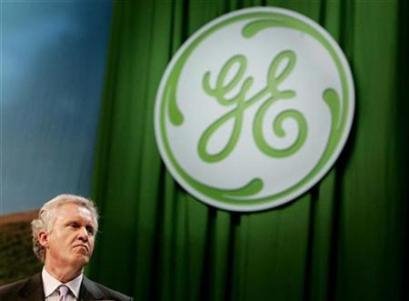
GE's Stock Plummets! (But It's Not MY Fault!!!)

Jeffrey Inmelt, President of GE
Image courtesy of http://news.yahoo.com/


No matter what you might think, I'm really not happy about this, since I'm a GE stock-holder. It seems that GE posted rather weak earnings, and its stock price plunged 12.8% today, dragging the Dow itself down 256 points. From the Wall Street Journal:

The conglomerate has significant presence overseas and was thought to be somewhat resilient to a slowdown in the U.S. economy, but it posted earnings well below analysts' expectations, a near unheard-of outcome for a company renowned for posting profits at or above Wall Street forecasts. GE also cut its 2008 earnings outlook.

The decline in GE shares was the worst in percentage terms since the 1987 market crash. The drop erased about $47 billion in market capitalization.

Mike Thompson, research director at Thomson Financial, which tracks earnings data, called GE's report "startling," underscoring both the seriousness of the economy's problems and the extent to which analysts' profit expectations remain far too rosy.

WAH! $47 BILLION! Up in smoke, just like that. Ah, what I could have done with $47 Billion. Or $47 million, for that matter. C'mon, guys, let's pick up the pieces and get back to work. GE has a larger GNP than many small countries, so I'm sure they will survive this painful episode. Let it be known that I'm at GE's beck and call should they need whatever help and advice I can muster. AuntMinnie.com reports that GE Healthcare didn't do so well, either:

A lackluster U.S. economy and continued regulatory shipping restrictions on its surgical supplies business adversely affected revenues and profits at GE Healthcare in the first quarter of 2008. For the period (end-March 31), revenues for the Chalfont St. Giles, U.K.-based vendor dipped slightly to $3.88 billion, compared with $3.89 billion in the first quarter of 2007. Profit decreased to $528 million, compared with $637 million in the same quarter a year ago.

In its first-quarter financial report, parent company General Electric of Stamford, CT, noted that GE Healthcare was "impacted by a difficult U.S. environment" and cited the ongoing suspension of C-arm deliveries from its GE OEC Medical Systems unit as part of a consent decree with the U.S. Food and Drug Administration.

$500 million profit doesn't sound so bad to me, but everything is relative, I guess.

A foundering GE means a foundering U.S. economy, and that is serious trouble for all of us. This is not good. Not at all. And I'm not kidding about that.

Thursday, April 10, 2008

Party At SIIM


I am planning to attend the 2008 SIIM meeting in Seattle next month. This is the first time I've gone since 2003, when SIIM was SCAR. I'm looking forward to catching up and learning new things. Expect many amusing posts from the exhibit floor.

It seems that one of the large companies is sponsoring a big party at the Seattle Space Needle:

Enjoy a new view. You’ll be on top of the world in Seattle’s acclaimed Space Needle, enjoying the relaxed atmosphere and camaraderie of the 2008 Welcome Reception. . . Check out the view 520 feet in the sky, and enjoy beautiful vistas of the Seattle skyline and harbor. All meeting attendees with registration badges are invited to this enjoyable evening of food, drink, collegial relaxation, and networking. Don’t forget to wear your badge and bring your drink tickets!

Uh...did they say 520 feet in the sky? As in 520 feet down to the ground? Hmmmm... Could be a little dangerous for some of us. Maybe I'll just get room service...

Anyway, I do hope to meet some of you in Seattle! No concealed weapons, please.

Wednesday, April 09, 2008

When You Lie Down With Dogs....


I emailed Medical Justice a while back to ask about their program, and I've been on their mailing list ever since. (Click the link to learn more about them, as this post is on a tangential topic.)

The latest news bulletin from MJ concerns an expert witness with a conscience, and how it got him in trouble.

It seems that a Dr. Swerdlow signed on with a malpractice attorney to testify against a surgeon whose patient died after a a breast augmentation procedure.

Swerdlow was later deposed and found the experience unsettling. He was asked if he had read the deposition of the operating surgeon, and honestly answered no. Specifically, the attorney asked if Swerdlow "believe[d] it's consistent with ethical practices [for] expert witness[es] in the guidelines approved by the [his professional society] to testify against an anesthesiologist when you have not asked for his deposition transcript, if there is one, so that you can see his side of the story?"

Swerdlow responded, "I think it would have been good for me to have seen it, and I did not ask for it. I did not think to ask for it. And I wouldn't comment upon the ethics thereof." Swerdlow also admitted that he had "never testified in trial," that he "was not aware that [the surgeon's] deposition had been taken," and that he was "a relative novice at this whole thing."

Swerdlow then did what he believed was eminently reasonable. He asked for the defendant's side of the story; namely the surgeon's deposition. He read it. Then he wrote an addendum addressed to all attorneys stating now that he had read the entire record, he did NOT believe the treatment rendered was below the standard of care. It was clear that such testimony would not serve the plaintiff's mission. So, their team pleaded for more time to find a new witness. A motion for summary judgment was already pending and the judge ruled too late. Case dismissed.


But, the story isn't over. The plaintiff attorney wasn't going to be embarrassed in that manner, so he sued his own witness, Dr. Swerdlow for:

(1) professional malpractice

(2) fraud

(3) negligent misrepresentation

(4) breach of fiduciary duty

(5) breach of contract

(6) breach of the implied covenant of good faith and fair dealing, and

(7) negligent infliction of emotional distress.

The case was actually dismissed by a lower court, but the lawyer appealed, and the case will indeed go to trial.

In this case, at least, we are slapped in the face with the fact that the truth is the last thing on the lawyer's mind. Litigation becomes nothing more than a game, and woe to anyone who changes the rules that the lawyers themselves create.

Dr. Swerdlow may have initially felt he was doing the right thing, but more than likely the fee for his expert witness testimony was enticing. I have written about this before, and nothing has really changed. There has been a little more talk of tort-reform here and there, but not a lot. The problem of contingency cases and paid plaintiff whores continuies unabated. (Note to Dr. Swerdlow...I'm not calling you a plaintiff whore as I don't know all the details of your agreement with your friend the lawyer.)

My opinion is simple, as that's usually all I can muster anyway. If testimony can be paid for, then it can be bought. We have to disconnect the cash from the testimony, and I think the only way that can happen is if it becomes illegal to pay some of the outlandish fees for expert witnessing. There are docs out there that make a living off of this low-life behaviour, which can yield up to $20,000 or more per trial. My personal policy is to refuse all payment, and to insist on a subpoena. That way, I am free to tell the truth with no strings attached. Yes, it costs time and money to review a case, and those who accept the money will say on the stand that they were paid for their time and not their opinion. Nice, meaningless words that distract from what is probably obvious to everyone. Especially if serial testimony becomes a significant supplement to the expert's income.

You would think lawyers would beat down my door for the free testimony, but that is hardly the case at all. They don't want testimony they can't control. Or own.

So, if you ever get the itch to testify on a paid basis, keep in mind where you are lying (pun intended). Not only might you get fleas, you could get mauled by the dog in question as well.

Friday, April 04, 2008

April's Fools.....

I just received a nice note from Mr. Esra Ozer, who states that he is from Siemens:

Hi there. Just saw your April Fool's Day posting about Siemens and Disney. Since I'm with Siemens and you're a radiologist, I think we both can agree that it's pretty important that people get the right medical information from the Internet (or at least that they don't get the wrong info). With April Fools Day now over, we ask that you remove the false posting. I'd hate for consumers or the FDA to get completely inaccurate information about a topic as important as medical imaging. Look forward to your feedback. Esra Ozer, Siemens Corporation, New York

I'll take it as a complement that anyone might actually fall for my now-annual April Fool's Day post. Perhaps relations with the FDA are skittish, and I certainly wouldn't want anyone to have any trouble in that regard. So, you will notice the offending material is no longer available online. If anyone would like a copy of the absolutely brilliant post, please email me at doctordalai(at)gmail.com.

It is rather amusing that when Siemens has a problem, they approach me directly, with rational discussion. I find that refreshing, as compared to some others who simply don't like what I've said. Well, come to think of it, that unfortunate situation to which I'm obliquely referring occurred in part because one particular company was quoting my posts in reference to a competitor. But, we'll let bygones be bygones.

By the way, Siemens does indeed sponsor the "Spaceship Earth" ride, giving it the biggest ball(s) in the industry. And, for what it's worth, the feedback I've received on my totally fictional fantasy of Immersion Picture Archiving Communication And Control (IPACAC...anyone ever heard of ipecac?) suggests that there is interest in such a product. Any big companies want to pick up the, ummm, ball on this?

Tuesday, April 01, 2008

Siemens, Disney Team Up For Revolution In Imaging (NOTE THE DATE!!!)


Having children means that at some time in your life, you are required to make a pilgrimage to Orlando, Florida, so you may pay homage to Mickey and company. Having done so several times before, we opted to visit Universal Studios instead, and found it quite enjoyable. The rides (with the exception of several killer roller-coasters) are just a half-notch below those of Disney World in quality, but the park is much more manageable, and the details on the movie-set-like environment are very well done. Universal has an Express system that lets one go to the front of the line, and that saved us a great deal of time. Yes, one usually has to pay for this, but since we were staying in a Universal hotel, we got it free. Contrast this with Disney's Fast Pass system, whereby one has to race in to get a limited number of passes dished out each day. We did go over to Epcot for one day, and the Fast Passes for the new "Soarin'" ride were gone well before we arrived that morning. Universal's Express might be less "fair" financially, but I still like it, especially after waiting over two hours to ride the 4 minute 42 second Soarin' thing. (Which was probably worth the wait, by the way...)

Whilst at Disney, I was rather shocked to see that venerable old AT&T no longer sponsors Spaceship Earth, which is now paid for by Siemens. I think we can now safely say that Siemens now has the biggest ball(s) in the industry...

I was prompted to learn more about this marriage of giants, and a brief search yielded quite a reward. Here is the text of a press-release from today:


Siemens and Disney Unite to Revolutionize Medical Imaging

Lake Buena Vista, Fla., Apr 1, 2008

In an unprecedented alliance, electronics and health-care giant Siemens AG will combine efforts with Disney Corporation, well known for theme parks and movie productions, to take medical imaging to the next step in its evolution.

"Disney and Siemens are two of the world’s most recognized and respected brands, both known for their relentless commitment to innovation. We look forward to working with Disney to grow our relationship and realize the potential of two great companies. This new relationship creates an ideal opportunity to demonstrate Siemens’ innovations to our customers, while also strengthening the Siemens brand in a memorable and relevant way. Viewing medical images, such as CAT (Computed Axial Tomography) scans or MRI (Magnetic Resonance Imaging) exams has been limited by our 20th Century-based technology. No matter how fast the computers get, or how sharp the image may appear, we are still seeing only a shadow of what is truly present within the body," notes George Nolen, President & CEO, Siemens Corporation. "With the advanced visualization techniques of Disney's Pixar division, as well as their expertise in flight simulation as applied to various attractions, we are now able to actually place the physician virtually within the body. The most microscopic of processes will be visible to the eye from this vantage point. This certainly represents a new era in imaging."
Robert Iger, Disney President and CEO, agrees. "Our scientists and engineers have worked closely with their counterparts at Siemens to create this absolutely unprecedented system. The imager actually becomes part of the image!"
The system, code-named IPACAC, or Immersion Picture Achiving, Control, And Communication, resembles an aircraft cockpit more than a conventional viewing, or PACS (Picture Archiving and Communication System), station. Controls include a joystick with force-response feedback, haptic interface with virtual gloves sporting tactile feedback technology, and dual-DLP projectors which yield a three-dimensional image with the appropriate polarized eyewear. Mechanisms remniscent of aircraft simulators move the seat for further nonvisual clues as to the viewer's "position" and transit within the body.
"We've actually been testing a larger scale, non-3D version on the crowds for many years over at the old "Wonders of Life" pavilion, says Iger. "What we learned there has been invaluable in this latest effort."
Other large corporations had no comment other than to point out the date of this press release.
Siemens AG (NYSE:SI) is one of the largest global electronics and engineering companies with reported worldwide sales of $107.4 billion in fiscal 2006. Founded 160 years ago, the company is a leader in the areas of Medical, Power, Automation and Control, Transportation, Information and Communications, Lighting, Building Technologies, Water Technologies and Services and Home Appliances. With its U.S. corporate headquarters in New York City, Siemens in the USA has sales of $21.4 billion and employs approximately 70,000 people throughout all 50 states and Puerto Rico. Eleven of Siemens' worldwide businesses are based in the United States. With its global headquarters in Munich, Siemens AG and its subsidiaries employ 480,000 people in 190 countries.

This is pretty big, folks. I'm picturing something like a hyped-up version of the "PACS Station of the Future" that GE did for Eliot Siegel a few years back as shown at RSNA:


I'm assuming that all those rides I took on Body Wars was part of Disney's research into this product:

It's nice to have been part of such a big project. And all the while I thought they were just taking me for a ride. Which is a good thing on a day like today. Have a happy one.