Monday, November 07, 2016

Home Sweet Home


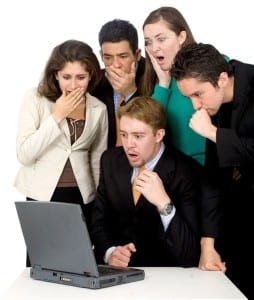
I'm back home from my adventures, so these posts will go back to being boring as usual. But, I still have to tell you about my final triumph. Well, perhaps triumph is too strong a term, but we did have a bit of success. As you see in the image above, we sent a nuclear study, a thyroid scan, from the e.cam to the PACS, where it can be seen on the laptop above. This is definitely the first time this has been done at Korle Bu, and probably the first time in Accra and all of Ghana, and maybe Western Africa as well. We've made history!

But all good things must come to an end, and it was time to prepare to go home. There had been some confusion as to whom was paying for the guesthouse room. I had assumed I was, but then it seemed that I wasn't, and on the evening of my departure, it seemed that I was paying after all. That was fine, but I didn't have enough Cidi's, and had to make a nighttime trip to the ATM farm, which is not a good idea. But Ben came with and played bodyguard, and I survived the experience.

I ended up with about 500 extra GHC's, worth about $125. I thought I'd spend them at the airport, but Delta insisted we head to the gate as quickly as possible so they could conduct the third security check, pat-down included, and then make us sit for an hour before boarding. Anyone headed back to Ghana anytime soon?

The flight home was uneventful, save for the "Is there a doctor on board?" call about 2 hours before landing. A passenger had experienced a seizure, and was still in that groggy, post-ictal state. Fortunately, two real doctors got to him before I did. It was rather amusing in a perverse way to watch the NYC paramedics perp-walk the poor guy from the back of the plane and out to an ambulance (presumably) upon docking.

Since we landed a bit early, I had the brilliant thought (well, Mrs. Dalai thought of it...) to try to get on the earlier flight that I shouldn't have been able to make. I was the last standby to get on, but I did make it, and also the next back home from Atlanta, which was about to close it's doors when I got to the gate, completely out of breath. So I made it home 4 hours before my scheduled arrival. Of course, my bags didn't, but that's OK.

It will still take me a bit to process this trip. It is indeed life-changing, in ways subtle and not. I'm thrilled, for example, to eat salads and to have ice in my drinks again. And looking around my reading room today with 10 monitors and 4 computers all for my own personal use, I shake my head in wonder at the amazing largess we take for granted over here. Today was my first day back at work, and everyone asked me how I liked the trip. I had to hesitate...how do you answer this question? This was not a pleasure trip, and certainly much different than your average vacation. But I loved it, and I certainly hope to do something like this again. Maybe that's the best answer I can give.

Thanks to WhatsApp, I've heard from my fellow travelers almost daily, and I text with Ben several times a day. Things seem to be progressing nicely without us; our training seems to have made a difference, and that, after all, is what we hope to achieve. And I'm very proud of how far everyone at Korle Bu has come. Hey, I can brag a little..."My son the doctor!"  OK, my Ghanaian friends, but you get the idea.

Wednesday, November 02, 2016

It's Just Another Manic Monday...And Tuesday...And Wednesday...

I'm still here in Accra, this morning working on some stuff before my appointment with the Head of Nuclear Medicine here at Korle Bu Teaching Hospital. More on nuclear things momentarily.

We hit the ground running on Monday, after the emotional trip to Cape Coast the day before. We were to meet with the Head of IT and tour the facilities (Brian tells me there is a server room that is right up there with most he's seen) and speak with those knowledgeable in a locally-developed mini-EHR designed for the OB-GYN Department. But due to various scheduling conflicts and the Head of PACS IT taking ill, we ultimately met simply with one of the designers directly, who demonstrated the capabilities of their software. I was most impressed; this system is as good as any in-house developed product I've seen, and better than most.

I delivered my PET/CT talk to the Radiology residents yesterday morning, and they were as attentive as any audience I've had over the years, again asking some of the most insightful questions. Imagine how much good they could do with the actual scanner itself!

Thanks to Dr. B.'s monitoring of misbehavior of a worklist, I've discovered a glitch in the Merge PACS 7.0.x software. Worklists are comprised of a worklist "frame" (my term, but it helps me understand the new structure) and blocks that actually do the heavy lifting of determining which exams show up on the list. A worklist can contain multiple blocks, so one can create a list of all CT's and MRI's done today by combining the individual "Today" blocks. A key element in the block is the "Time Constraint" which tells the worklist the time-frame of exams to display:


The glitch, which my friends at Merge were able to reproduce, is that the Start Time Hours entry can blank itself, simply erasing the entry. It doesn't go to zero, it goes to nothing. Which fouls the block, which fouls the worklist. But now that Merge knows about it, I'm sure it will be fixed.

In the meantime, I'm still slogging away at a solution for those with limited-capacity Mac's. "Dr. Mary", one of the residents, has very graciously lent me her Macbook Air (128 Gb SSD) for experimentation. Unfortunately, the drive is way too small to accommodate BootCamp for a Windows installation, so I've tried anything and everything to work around this. Dr. B. suggested Wine, sort of a program-by-program Windows emulator. I tried this, with some minimal success on other Windows programs, but the Merge client is a large Java app, and getting Java running within Wine so as to run Merge is beyond my abilities, at least within the time I have left to make anything work. My last possibility is to use a program called WinToUSB to turn a USB Hard Drive (won't work on a flash drive, we tried) into a bootable Windows environment. The first disk we tried failed utterly, and I'm trying with another. The installation seems to always fail at the 95% mark. This is one I might have to leave in Ben's able hands. I asked "Dr. Mary" if perhaps there is a new Mac coming for Christmas. She smiled and asked if perhaps she should simply get a Windows laptop next time. Frankly, much as I love my Macs, it is probably the best thing to do if running Windows software is your main focus. Can someone explain to me why a program written in Java, supposedly a platform-independent environment, will only run on Windows? We Mac-lovers feel slighted!

On to Nuclear Medicine. As above, I will meet with the Head of Department today, and hopefully I'll have the opportunity to show her how the Merge PACS works, and explain my idea of connecting their Siemens e.cam (which is currently down for service) to the PACS. Keep in mind that here, as in much of the rest of the world, NM is a completely separate entity from Radiology, but I can tell you from long experience that having both Radiology and Nuclear examinations available to compare to each other and to newer studies is incredibly helpful. I'm expecting the same happy reaction I've seen on everyone's faces when I demonstrate the capabilities of soft-copy reading in general, and the power of this particular PACS client in particular. That alone has made this trip worthwhile.

I cannot believe how quickly my time here has passed. We have today and tomorrow remaining here at Korle Bu, and then back to the USA on Friday. (And back to work on Monday!) As I'm donating this laptop to the hospital, I probably won't have another blog entry until I'm back home. Which will allow much time for me to process what I've seen, done, and learned here. I can tell you already that a trip like this is life-changing. You cannot spend this length of time outside your comfort-zone and not come back just a little different. I've been accepted by people of a culture very different than mine, to the point that I feel very comfortable among my new friends. Yes, we stand out as obviously different, but I really stopped thinking about that after Day One, to the point that when I ran into another Obroni here at Korle Bu, my first thought was that HE was out of place. But not me. Perhaps I'll be able to wrap more words around the feelings with time.

Hopefully, I've absorbed some of the profound kindness and hospitality we've been shown on this trip. The common Ghanaian greeting is, "You are welcome!" (Which makes a lot more sense than saying it in response to "Thank you".) We really were welcome here. While I'm anxious to get back home to the family and the puppies, I will truly miss Ghana, and if they'll have me again, I do hope to return someday.

Sunday, October 30, 2016

Slave Castle


There are a few places on our lovely planet that sit in silent testimony to the horrors man can inflict upon his fellow man, and I had the honor and privilege to visit such a place today. I write this with difficulty, but it must be written. What I've felt today must rival what one feels at a concentration camp (I've yet to visit one, but I must). There is nothing but sadness at this place, the knowledge of just how low humanity can sink, how evil can take over a good man's soul.

We left early this morning for a three-hour drive from Accra in a VERY small Hyundai, over relatively good roads. The trip was uneventful, except for being stopped by the Ghanaian Police who warned Alfred, our driver, not to stop for bandits who are dressed in the uniforms of the Ghanaian Police. Got that? The scenery en route was fascinating. I have tried to take photos of the street scenes here, but I simply cannot do it justice. Picture block after block after block, mile after mile after mile, of unfinished storefronts, tables, booths, piles of coconuts, larger piles of coconut shells, smoked fish, every manner of electronics from at least 30 years ago, car parts, tires, motorcycle parts, ornate caskets, statuary, pretty much anything and everything. And every manner of vehicle, from a few Mercedes and even a Lexus GX to little carts pulled by a motorcycle chassis. And people. More people per square foot than I have ever seen in my life. Today, many were in their Sunday Best, and there were several outdoor church services to be found by the roadside. Ghana is majority Protestant, and the people are quite religious.

We arrived at Cape Coast, and with the aid of my Cities2Go app (like I know where I am in Ghana), we found the Castle, one of several on the Ghanaian shore (once called the Gold Coast) that was the center of the African slave trade. You can look up the numbers; they are mind-numbing. Millions of slaves passed through these forts/castles on their way to the New World. Many died here, mainly from disease, many more died en route. Some chose to throw themselves into the ocean from the ship, and as there were a number of them chained together, that created a similar deadly choice for all. Perhaps it was better that way. 

It should be made clear that both Europeans and Africans were involved in the slave trade. Raids were conducted into a good part of Western Africa and human beings who were just minding their own business were captured and delivered to the slavers. Prisoners of tribal wars got sent off to slavery.

The sordid list goes on. No party, save the victims themselves, were innocent in this horror. And it should also be mentioned that a majority of these tortured souls were sent to nations other than the United States. In fact, about 40% went to Brazil alone, and today, this is the nation with the second-highest number of people from African extraction. There's a lot of guilt and a lot of blame to go around.

This is a shot from within the Male Dungeon. There were multiple chambers here, each holding something like 200 men, without room to lay down, with no toilet, and with water and food delivered once a day. The three window openings provided what little ventilation was to be found.

Here is the walled-up original "Door of No Return" through which the slaves passed through to reach an underground tunnel leading to the port at the base of the castle. There are viewing areas along the castle courtyard looking down into the tunnel, allowing soldiers to monitor progress. The slaves never saw daylight from the time they arrived here until they reached the New World. If they were alive when they got there.


The "Door of No Return" was recut into a different wall, and those of African descent whose ancestors left from this place may request a "Door of Return" ceremony to mark the occasion of their visit, and bring things full circle.


You'll be happy to know that while slaves suffered and died below, the various Governors (this place was built/rebuilt/run/owned at various points by the Swedes, the Dutch, the Portuguese, and the British) lounged in this lovely room with cool sea-breezes that drowned out the stench of death coming from the dungeons.


My readers know I am not a big fan of the current occupant, but it was fitting and proper that the first American President of African ancestry visited here in 2009 and placed this plaque:


Mrs. Obama, in fact, found that her ancestors did indeed pass through this horrible place en route to America. 

A few years ago, I was in Germany, and had the opportunity to visit Hitler's podium on the Zeppelin review stand in Nuremberg. You've seen the stands in newsreels from the end of the war, when the Allies shot the swastika off the top of it. I stood there and felt some small glimmer of the triumph of good over evil. Hitler died a nasty death, and the parts of my family that left for America survived. Up yours, Herr Shickelgruber. I guess the Castle has a happy ending as well, but it's hard to see it standing in the dungeons where men and women were held like animals, where many died like animals. Our guide, Sebastian, put it thus: "The only way this could have happened was for those in power to stop seeing their captives as human." I have no better answer. But at lunch, our driver, Alfred asked this, "How could religious people do this? How could they go to the church on the grounds and then do this to people?" To that, I have no answer.

The profound sadness the Castle inspires is not pleasant, but something I think all must experience. I leave here changed a bit, a little older, a little wiser, a lot sadder. We have not learned the lessons we should have from all this. The Castle ceased warehousing people in the early 1800's, but slavery continued, and sadly still does to this very day. Not 150 years later, the Holocaust not only enslaved people, but deliberately slaughtered them as well.

But here I am in Ghana, a proud, free nation that remembers this shameful past, but goes on with life, building and growing. Maybe that is the answer after all. 

Go on with life. Forgive. But don't forget. Don't EVER forget...

Saturday, October 29, 2016

Weekend Update

I have a short report covering the past couple of days' activities, but despite the relative brevity, you may rest assured that things remain busy here in Accra!

On Thursday, Ben had asked me to look into sending exams back to the modalities in case something needed to be printed from the console and not PACS. (Brian continues to make progress in DICOM printing from Merge PACS; there is still a contrast issue with the printed films.) While I was able to find the mechanism to do this, the transmissions did not go through completely, and I think this indicates a problem with the configuration on the modality end.  However, the CT and MRI both have functions that query the PACS, which would accomplish the same thing we are attempting. I'll test the function if I can ever get some time on the scanner!
                    
In and among that bit of tail-chasing, I was able to spend some time with the residents. A FEW are still using the Query function rather than the worklist, and several were logged in with a generic ID. I cautioned Ben and the resident that this could lead to a number of problems in the future and strongly advised that the generic sign-on not be used except in very extreme circumstances. (I was thrilled to discover the generic login and password on the backgrounds of most of the workstations!) And I made another little discovery...One of the monitors, a 30" consumer-grade HP, was set for a lower-than-optimal resolution. I grabbed the mouse and set it to the proper, higher resolution...and I was then schooled by the resident..."Doc, many thought the icons were too small at the high resolution, so we run it at low resolution to make the icons bigger..." I'm going to have to see if I can buck this trend, as the low-res causes us to lose some of the drop-downs off the lower edge of the screen. That's not a reasonable trade. Keep in mind, many/most of the stations are running on one monitor. There are several Barco's in the waiting, but their workstations lack power-supplies, which are coming. Apparently on a slow boat!

Friday was a bit more frustrating. We had meetings scheduled with various people critical to the project, but many had other obligations, and we did a bit of hurry-up-and-wait. The meetings ultimately did occur, and we had good discussions. There appears to be an in-house team developing a RIS-like program for another division, which hopefully can be adapted and interfaced to PACS. I'm to cast eyes on that on Monday.

One high point was my first lecture here at Korle Bu, an introductory talk about PET/CT, delivered to an apt (and awake!) audience of Nuclear Medicine residents, and many folks from RT as well. You have to keep in mind that the NM residency program is completely separate from Radiology, and these kids have not been exposed to CT. Still, they grasped the concepts readily, and asked some very astute questions. And they even laughed politely at my feeble attempts at humor...  While I think there is only a small chance of PET/CT coming here in the near-future, I believe everyone needs to be aware of its capabilities and know when sending the patient off to South Africa (where the closest PET/CT lives) might be worthwhile. And who knows? Maybe some very nice scanner company will donate one to this very busy (and worthy) Oncology site. Oh, and we'll have a cyclotron on the side with that, please. (Please?)


Finally for Friday, what I thought would have been an easy task turned difficult. You might recall that I mentioned putting the Merge client on the residents' laptops. Well, a couple of them have Macbooks, and I was asked if I could make the Windows/Java-based program work. But of course! I replied naively... Well, the Macs in question are Macbook Air's with 128 Gb SSD's. Oops. I'm having one of the residents try to clear 50 Gb off of her drive (she had exactly 2.5 Gb free) and I'll try to do the most minimal Windows 7 installation possible. If that doesn't work, I've found a reference to creating a bootable Win7 (or any Windoze) runtime external USB disk, and maybe that will work. This is one I might have to dump on Ben.

We are playing tourist for the weekend. We went to the Big Mall, as nice and modern as any in the States, and then had drinks and dinner at the Bojo Beach Resort, a rustic but still quite beautiful site:


Tomorrow we are off to the slave-trader castles at Cape Coast.

I suddenly realize that my time here is more than half over, and I still haven't accomplished all I came to do. So for Monday through Thursday, here's my agenda:

  1. Spend more time with the residents, smoothing out their Merge experience
  2. Give more lectures to NM and Radiology residents
  3. Connect the NM gamma camera, a 2005 Siemens e.cam, to Merge PACS
  4. Work on the Macintosh problem above.
I could spend another 2 weeks on those alone. I also come to realize, however, that I'll probably not have much reason to be asked back here, as by the time I would return, the staff will be better versed in the PACS than I am, and could probably teach me how to use it. I'm hoping there will be many more sites, assisted by Rad-Aid, that install Merge PACS, and I would love to be on site at go-live! I'm ready, willing, and able! That's the joy of working part-time, right? 

In the meantime, I bid you good night from Accra. 


Wednesday, October 26, 2016

Preliminary Status


This morning, I spent an hour demonstrating Merge PACS to the residents and those attendings who were able to, well, attend. I went over some basics of the PACS, as well as a few of the more powerful tools, and everyone seemed to grasp very quickly what I had to offer. In particular, in working with several residents in CT and MRI, I found ALL were using the worklists as I had suggested. Wonderful!!! I was able to show those in the CT reading room the ease with with they could create 3D renderings. We tried this with both thin and thick data, and of course the thins gave the best result.

While watching the workflow, it became apparent that the residents aren't the ones (generally) who mark the studies as "Read", but rather the attending does so after review. I was able to make a button (a macro, really) that mimics the "Click study Read and go to Next" Checkmark, but marks the study as in "Preliminary" status instead. I think this fits the way things are done here. The only downside is that each individual user has to place this on the client under their own login, but that's not too much of a problem.

Things are shaping up!

In the meantime, here are a few more shots of Korle Bu Teaching Hospital and environs:

Chest Clinic

Main Entrance (under renovation)

National Cardiothoracic Center

ATM "Farm" on Korle Bu Campus

Street scene outside the gates

Tuesday, October 25, 2016

Worklists...


Time for today's PACS opus...I can report a day of incremental progress.

All three of us met with the Head of the Radiology Department first thing this morning and then with the residents. I will have a session with them tomorrow at 8, wherein I will run a PACS demo on the big screen in the Radiology Conference Room, and take questions as I go. I think this will prove valuable and will lay the foundation for some one-on-one time later on.

The rest of my day was spent mostly in the PACS/reading room, again working closely with Dr. B., the IT-savvy resident. (Honestly, I think that when I’m done here, he will be Korle Bu's resident-advocate for all things PACS!) And thanks to my PACS admins back home, I was able to solve the problem or loading the Merge client onto Windows 10 laptops, so we now have a bunch of very happy residents!

I made several work lists, which I modified as Dr. B requested. The IBMerge PACS is so powerful in this regard that just about any worklist you can think of can made, given enough time, energy, and willingness to work through the list of check-boxes and drop-down menus. I'll be quizzing the residents (and any attendings I can reach) about their needs for more of these.

We found a few possible, temporary (I would hope) work-arounds for the lack of reports. Clearly, what we ultimately need is a RIS, but short of that there are two ways to get a report associated with a particular study. First, one could copy the typed report and paste it into the comment field of the exam's order window. This drops all formatting, and the comment window shows only four lines at a time. The other possibility is to use the “snipping” tool to create a JPEG image of the report, upload it into PACS, and the use the QC editor to merge it into the main study as an extra series. A little more tedious I'm afraid.

I worked with Ben as well on uploading fluoroscopic and sonographic images. We have some hurdles here, in that when multiple studies are loaded from the modality onto a disc or flash drive, and they attempt to load the whole thing at once, all the exams get loaded under the first patient’s demographics. The only solution to this is to load the patients one at a time (my recommendation) or manually split them later (which might be easy to forget to do and would be even more tedious.)

I noted that virtually all CT’s have a huge number of slices, some up to 2500 or so. Even head CT’s are pushing 900 and more slices for a pre and post contrast exam. I spoke at length with Dr. Buckman about this, and I would like to get everyone's thoughts as well. (I read CT, but I'm no luminary.) Dr. B. feels that the thinnest slices should be used to avoid missing tiny abnormalities. While there apparently is no significant malpractice problem here in Ghana, the residents are VERY contentious, and sincerely wish to do no harm. This is admirable to the max. But when I asked for an example of something missed because thin sections weren't available, he showed me a 2cm lesion. In my experience, the thinnest sections (the Toshiba Aquilion One produces 0.5 mm slices) are useful for exquisite reformats and CT angiography. Most of us old folks don't have the stamina to peruse 600 slice sequences 50 or 70 times per day, and I don't think there is much that would be missed by using 5mm (or even 2.5mm) reformats. Add to this the multiplanar reformats created on the scanner and also sent to PACS, and we have a situation that will deplete the SAN very rapidly. Thus, some compromise is needed. I'm thinking that with the Merge PACS ability to create reformats and renderings in the viewer, perhaps only the thin sections should be sent and nothing else. Alternatively, they could create all the reformats on the CT and then lose the thins. But this is a waaaaaay above my pay-grade so I'm going to defer to those much wiser.

Stay tuned!

Monday, October 24, 2016

Monday, Monday...


Korle Bu Courtyard


Our first daily report from Korle Bu!

We had a very good first day! (Well, Erin was under the weather in the morning, perhaps a reaction to her anti-malarial, but she recovered quickly and joined us after lunch.) We had a significant amount of hurry-up-and-wait in the morning. Ben, Mack (PACS/IT), Brian, and I made the trip back and forth to the Nuclear Medicine department several times, waiting on those we needed to see. We finally did connect later in the day. More on that shortly.

While not in transit, Brian and I spent the morning in the reading room with Ben and Dr. B., one of the residents. We were able to solve a few problems, and at least understand several more. Brian had mentioned the problem of multiple clicks required to close a study and mark it as read, and his discovery of the "check mark" button that would do this in one click. (One of those things we AMICAS users have known for years!) When working with Dr. B, we found that his checkmark was greyed out. After some experimentation and observation, we found that the button does NOT function if the study was opened via query and not from a worklist. Which brings us to the problem of them actually USING a worklist. Merge PACS has VERY powerful worklist creation capability. Basically, if you can conceive of how a worklist should look, it can be created. The downside is that as compared to the later versions 6.x, which we are still on back home, the level of complexity in crafting the darn things has increased considerably. I need to have a word with my friends at Merge on that! However, I think I have the hang of the new approach, and I was able to create a simple worklist, "Today's Studies" without too many glitches.

I worked with Dr. B. for about an hour, showing him some of the tools within the Merge Halo Viewer, and he caught on very quickly. I think similar sessions with one or two of the residents (and attendings, and clinicians, and anyone else) would work best rather than try to answer everyone's questions in a larger group. I would like to concentrate particularly on creating departmental worklists and more individualized hanging protocols. That could take my entire two weeks in and of itself.

I spent some time trying to install the Merge PACS client on Dr. B's Windows 10 laptop, but without success. I was able to download an MSI from my server back home in Columbia, and I'll try that tomorrow. Apparently no one has had any trouble with Win 7, and I was able to load Merge 7 onto my Mac running Win10 in Parallels, so it CAN be done.

Now, Erin will tell everyone about the developments within the Radiography Department, which I think are very exciting!

Erin: Very exciting. Thanks guys for making sure I as alright this morning. I am feeling so much better. I met Dr. O who is the Radiography Program Director and we had a great discussion. I donated the textbooks I had brought with me. I will be lecturing the Radiography students tomorrow at 9am on what our Radiography program is like in the States. Also, Dr. O is charged with trying to start more Radiography programs all over Ghana. I learned a lot about the status of radiographers in Ghana and will be lucky to speak to students tomorrow. I told Dr. O that it would be nice to have both of our sets of students interact with each other in the near future. I feel that we could all learn a lot from each other. Maybe even create "sister" programs with each other. Dr. O stated that he is trying to attend the RAD-AID conference on Nov. 5, which Brian and I will be attending also. I was intrigued to learn how similar our Radiography programs actually are. Hopefully the beginning of a wonderful relationship.

Me: I'll close with a paragraph about our meeting (finally!) with one of the Radiation Therapy Docs. The two NM physicians are out this week, I believe, but may be back next week. I'll be giving a talk to the NM residents on Friday. We discussed connecting NM to the Merge PACS, which she generally favored, particularly after we were able to get the client up and running on a laptop and demonstrate its capabilities. She had NEVER seen the PACS in action and was most impressed. (This thing sells itself!) We will, of course, need to defer to the NM Head of Department for approval before proceeding, but the actual connection should be straightforward. (Which I say whilst crossing mhy fingers.) We discussed as well a problem RT has had with importing planning CT's into their TDS planning system,

OK, just one more little paragraph....Never commission someone who was once paid by the word...

The topic of rapid delivery of reports arose at several junctures. Without a functioning RIS, there are very limited options. Merge PACS does have a comment field built into the order window, and a separate voice-clip property. We use the latter to provide instant gratification for the ER docs, and it could work here. There may be a way to use a "print to DICOM" program to load the resident's typed reports into the PACS as a separate series in the exam. It's not optimal but... More on this as we go. Tomorrow we have a meeting with the residents...I'm not sure if I am to lecture them on PACS or on one of the other topics I've brought with, but we'll see. In the meantime, Me ma wo adwo!

Brian: Migaso

Ben: You want to try some Twi already yeah.😉

Me: Did I say it right???😃

Ben:: You mean, did you post it right? Yeah, you did! Will be glad to hear you say that out loud!...😊
Me: I'll need coaching or Mack will laugh at my Southern Accented Twi!

More to come....

Sunday, October 23, 2016

A Quiet Day In Accra

Just a brief note...I spent most of the day at Dean's Guest House, getting over jet-lag, and talking with my team members. Brian, radiologically-trained PACS administrator, has been here a week, and has had great discussions with the folks at Korle Bu. He's made significant progress on a number of issues. Tomorrow, Erin, Radiology and NM technology educator , and I dive in and offer expertise where we can. My jobs will include working with Radiology residents, and with the Nuclear Medicine Department, primarily to get them more comfortable with their Merge PACS, and also to give a few lectures and work with them in any way the proves helpful. I'm hoping as well to be able to connect their gamma camera to PACS. Wish me luck!

Tonight, we went downtown to eat with Nathan, a former member of the Korle Bu staff Brian had come to know on a previous visit. The restaurant was fine (we had pizza of all things) but the cab ride from the 'burbs (I think...I'm not very familiar with the town as yet) was fascinating. And frightening. And amazing. I'm reminded somewhat of Lima, Peru, where the traffic was actually much worse. There, stop-signs are treated as suggestions, and traffic-lights are ignored completely. Here in Accra, these things are obeyed, but traffic is still very wild. Merging is an exercise in combined trust, timing, and terror, but somehow between judicious use of horn and gas (and rarely the brakes), everyone gets where they are going.

Accra by night strikes me as somewhat similar to many towns in the Caribbean, but much larger, with more buildings, some very new and modern, some not so much. But what stands out to me more than anything else is the number of people on the sidewalks, on the streets, milling about. I'm sure they all have a purpose in mind, but I've never seen so many people just...there. It's almost unnerving.  I'm sure I'll understand the culture more by the time I return home.

In the meantime, may I wish you Me ma wo adwo, a good evening, in Twi, (the primary local, though unofficial, language here in Ghana.)

Saturday, October 22, 2016

Made It!


Well, here I am in Ghana!  Everyone I've met so far has been great, save for the lady who was quite convinced that I had her suitcase at baggage claim. The lady at Customs wanted to be sure my suitcase full of medical supplies was indeed that, and no doubt seeing my two rolls of Charmin within upon opening the case convinced her that I was on the up-and-up. Mack and Teddy from Korle Bu IT retrieved me from the airport and negotiated the rather treacherous night traffic here in Accra to deliver me safely to Dean's Guest House, near the hospital campus. I've settled into my small but serviceable room, unpacked, and opened up a nice big Club beer, the local brew. I'll meet the other team members tomorrow. Erin is a rad tech instructor and Brian is a GE PACS administrator who has been here for a week and has quickly adapted to the Merge 7.x system. Who knows? Maybe he'll advocate for changing to Merge back home!

Tomorrow will be a down day...I'll try to get acclimated to the time-zone and the bugs. (Haven't been bit yet!!) Perhaps we'll go exploring, although that might not be the best idea...

But come Monday there is work to be done. Based on Brian's reports to the gang back home, Korle Bu is actually quite far advanced in things IT related. I'm hesitant to give my "Laws of PACS" to the residents, as there seems to be a good relationship to IT, but perhaps they will find it interesting to see what we go through back home. 

I've been up much of the past 36 hours (it took almost exactly 24 hours to get here via Amsterdam) so allow me to collapse on my bed with Sleep-Number equivalent of about 300 and rest up for whatever tomorrow has to offer.

Morning note...While editing this piece this morning, the power at Dean's has gone out three times. I'm told this is pretty common. It's amazing what we take for granted back home...

Wednesday, October 19, 2016

Agfa F***s Up

I am on the e-mail list for Agfa's Daily Blog Update, and it often contains interesting information. But imagine my surprise when THIS came through this morning:


I immediately clutched my pearls to my ample bosom and experienced a bad case of the vapors. Such language!

Agfa immediately sent out an apology:
Our sincere apologies are in order. The first article in our daily blog update today was not appropriate. We strive to bring you a wide selection of relevant articles from around the web to promote thought, present new ideas, and offer insights into the ever-changing world of eHealth and Digital Imaging. We messed up today and let an inappropriate article slip through. We have removed it from our blog, but unfortunately, could not remove it from your inbox.

Can we thank all those who brought this to our attention and please continue to read our blog updates on a regular basis.

Please accept our apologies.
No harm done, guys. But no doubt, someone is going to get fired. At least no one said, "Pu**y".

Tuesday, October 04, 2016

Directions...


Wow. It's been three months since I last checked in with you, my loyal readers. All 3 of you. As you might guess from reading my ranting over the past 11-plus years, I've been in the midst of a dilemma,  in this case trying to figure out what my future should hold. There are many directions to go, many options to consider, and many needs to satisfy. But I think I've got it. Finally.

To be totally honest, my basic instinct was to retire completely at the end of the year. Which was my intention last year, but somehow I stayed on. And I will indeed continue to work for another year, although I'll cut back my weeks even more; in 2016, I will have worked 26 weeks, but in 2017, I'm planning on being in the saddle for only 22 weeks. That's enough, I think. Rest assured, however, I'll have my phone on and operational 24/7, so no one need worry about reaching me. No, I don't charge for that extra service...

So why was this decision so hard? Do it or don't, right? Well, it's complicated, and there are many factors involved. Of all of them, the financial aspects are the most straight forward. Continuing to work keeps my (markedly lowered) salary coming in, and my health insurance is provided. Since Dalai, Jr. has a $36,000/year drug habit, that drug being Remicade, insurance is quite nice to have, and even our rather high-deductible plan would set me back almost as much as the Remicade if I were paying for it directly out of my pocket. No brainers, there.

Then there's the mental stimulation. Being at the PACS station does keep me on my toes, with little time to squander on foolishness like blogs. Hopefully, with the downsized work-year, I'll be a bit better. A three month hiatus is inexcusable.

And I must add that Mrs. Dalai was quite encouraging...of me getting my saffron-robed backside out of the house. "For better or worse, but not for lunch!" as she says. Quite often, in fact.

There were some negatives, of course. Here, I must be careful in my wording. If you choose to read between the lines, I cannot be responsible for what you assume I'm saying. Capisce? Much of my hesitation revolved around numbers. Mainly numbers of exams, read and unread, daily variance in consumptions of the numbers, numbers of things on exams I did not find, numbers of times I could not complete my interpretation of an exam all at once due numbers of others coming in my office, numbers of patients reading their own reports, etc., etc. Some of these problematic numbers could be cured by throwing greater numbers at them, but greater numbers come with greater costs, and in essence, this is not an option for the for the foreseeable future. So, I could either embrace the numbers or reject them. For one more (reduced) year, I'll suck it up. After that...we'll see.

You might recall my earlier post about Rad-Aid wherein I mentioned a chance to go to Ghana. I couldn't make that trip, but I was given another chance to go, and so I shall! Watch this space for updates from Africa. My task (as team leader, no less, being the only physician on this particular expedition) is multifold. First and foremost, I will try to help with the local PACS, which thanks to a generous donation by IBM/Merge, is the same as our system. Actually, it's a version ahead of ours, so I've had to try to learn that one a bit sooner than I had planned. Fortunately, the viewer component is pretty similar, but the worklist page is much more complex, allowing construction of some rather amazing worklists. I'll still declare Merge PACS to be one of the more usable out there, and I'm sure the physicians in Accra can by now use it about as well as I can. But their system lacks one element, a RIS. As luck would have it, I gave this problem some thought when we put in our AMICAS PACS years ago, in this post from January, 2006, 10 (yes, TEN) years ago. My solution was to use PACSGear to scan a paper report and send the image to PACS as another series in the particular exam. One could also use one of several software apps out there (I cited Print2PACS back then) that would do the same thing with a digital document. Those ideas might work. It seems though that the residents in Ghana actually type their reports into a different computer, so I'm wondering if they could instead type into the PACS comment field. Much will become apparent when I'm on site. In the meantime, any ideas on this are welcome.

Task #2 involves integrating the Nuclear Medicine Department into PACS. Which means setting up DICOM link from the gamma camera to the PACS. This should be straight-forward, but somehow with PACS, nothing is ever easy. As with most places outside of the United States, Nucs is completely separate from Radiology, with all the complexity that entails.

Last, but certainly not least, I am going to share some of my limited knowledge with the rads and residents. I'll concentrate on things nuclear, since that is my area of expertise, and I've prepared a good number of lectures in that realm over the years.

I'm hoping to make a difference with this trip, both on the ground in Accra, and within my own soul. This seems to be a wonderful way to give back, and I'm hoping my efforts will be found worthy.

By the way, Rad-Aid is exploring a flying hospital concept, using not a 747, but an airship!


Sign me up for the first flight...

Let me end on a happy note. I had the opportunity to speak with a bunch of pre-meds at a local event last week. Yes, that's a good thing! These particular pre-meds were members of a pre-med honor-society, and they definitely were the cream of the crop. Based on some of my past experiences, remote and recent, I had expected a bunch of arrogant, socially-inept snowflakes, bleary-eyed from 20-hour days of study, the sort that would sell their soul, or at least a kidney, to get into medical school. I couldn't have been more wrong about this bunch. These kids (indulge me, I'm old) were enthusiastic, yes, but they were curious and introspective, well-informed, and interested in just what it is radiologists do. They had the proper balance of intelligence and humility. Their MCAT scores are no doubt high, but they maintain their humanity and their humility. In other words, they GET it. They have the instinct to be fine physicians, those to whom I would send my family and friends.

I feel more optimistic about the future of medicine than I have in a very long time.

One of those kids might become my doctor some day soon. Hopefully, one of them will go into gerontology.

Sunday, July 10, 2016

She Flies Again!

Courtesy Smithsonian National Air and Space Museum

After a long restoration, the U.S.S Enterprise flies again, in a position of honor in the revamped Boeing Milestones of Flight Hall at the Smithsonian National Air and Space Museum. The new climate controlled case (the model once was hung on wires out in the open) sits amidst quite a few non-fictional aircraft and spacecraft, such as a Lunar Lander, Yeager's Bell X-1, Sputnik I, The Spirit of St. Louis, the Apollo 11 Command Module, and some other good stuff. Why is a model of a fictional ship included here?

Yes, it's just a model, but...

This collection of wood, vacuum-formed plastic, lights, and a bit of metal and paint carries our hopes, dreams, aspirations, and at least one vision of our future. This model IS the Starship Enterprise many of us came to know and love in our childhood. The ideals set forth in the show got at least some of us through the rough times of the 1960's. Keep in mind, our first real reach beyond our planet, the moon landing July 20, 1969, occurred at the end of the original Star Trek run. Yes, I know one is real, and one is fantasy, but the dreams inspired by both will carry us to the stars. How poetic!

OK, back to Earth. There are quite a few videos on YouTube about the restoration, and I've posted just one of them below. I was quite fascinated by the computerized LED replacement lights in the warp drive nacelles. It seems the original rotating light show was created with motors and Christmas lights. The assemblies got hot enough to scorch the wood housing! How far we've come...


And now, I shall boldly go... back to work.

Thursday, June 30, 2016

McKesson Sells IT Division...
To Dump Earlier Mistake???

You've all heard by now that healthcare giant McKesson will spin off its IT division. Here's the bullet from Fortune:
Healthcare services provider McKesson said it would combine most of its information technology business with Change Healthcare Holdings to form a new company with combined pro forma annual revenue of $3.4 billion.

Change Healthcare, a provider of software and analytics, network solutions, and technology-enabled services, will contribute all of its businesses to the new company, with the exception of its pharmacy switch and prescription routing business.

Tennessee-based Change Healthcare is majority owned by Blackstone Group.

The new company will be able to offer managed care companies technologies for financial and payment solutions as well as tools for administrative and clinical management, said McKesson, which has a market value of about $39 billion.
AuntMinnie.com elaborates:
In a pair of June 28 announcements, McKesson said it will create a new standalone healthcare IT company in partnership with Change Healthcare Holdings, the revenue cycle management firm formerly known as Emdeon. The new entity will have estimated annual revenues of $3.4 billion, with McKesson owning 70% of the firm and Change shareholders owning the remainder.

The new firm will combine all of Change's operations with most of McKesson's Technology Solutions division, which includes its Imaging and Workflow Solutions unit, which offers enterprise PACS software as well as image management applications for radiology and cardiology. Other operations in the division include Health Solutions, Business Performance Services, and Connected Care and Analytics units.

In announcing the spin-off, McKesson Chairman and CEO John Hammergren said the move would "establish a more efficient suite of end-to-end payment and claims solutions, as well as clinical capabilities," while also "unlocking the value" of the Technology Solutions business. McKesson and Change are also positioning the move as one that will help their healthcare customers navigate the transition to value-based healthcare.

Following the closing of the transaction, McKesson and Change plan to pursue an initial public offering for the new venture. McKesson will then exit its investment in the new company.

McKesson said the spin-off will not include its Enterprise Information Solutions division, which it will retain as it "explores strategic alternatives" for the division. This business includes electronic health record (EHR) software, such as McKesson's Paragon hospital information system. McKesson's RelayHealth Pharmacy division also is not included in the spin-off.
So the new company will have PACS and some other stuff, but NO EHR. Fortune adds, "The new company will be able to offer managed care companies technologies for financial and payment solutions as well as tools for administrative and clinical management, said McKesson, which has a market value of about $39 billion." Doesn't sound like a ripe market for the PACS offering.

Why would McK give birth to a partially-formed offspring like this? Good question. AuntMinnie's Brian Casey continues:
Speculation that McKesson might be seeking a divestiture surfaced in early June, when an article in the Wall Street Journal suggested that the company might be looking at options due to pricing pressures in its core drug distribution business.

The article indicated that the Technology Solutions business had $2.9 billion in sales in its most recent fiscal year (end-March 31) and operating profit of $519 million, which is just a fraction of the $188 billion in sales and $3.6 billion in operating profit produced by McKesson's drug distribution business.

The move is a sign that ongoing changes in the industry are affecting even some of the largest players, according to Michael Cannavo, principal of PACS consulting firm Image Management Consultants.

"It is interesting to see moves by many of the larger companies to either start refocusing their core offerings or consolidating their products with other vendors' offerings," Cannavo said. "End users used to be concerned about the smaller vendors not surviving, or at least the products they bought surviving. Now the larger vendors are starting to have some of these very same issues. The sad reality is no one vendor is considered a safe bet anymore."
The Wall Street Journal elaborates:
Companies often consider separations of units whose profit margins, expected trading multiples or strategies differ dramatically from those of core businesses. It has been happening more as shareholder activists and other investors push companies to narrow their focus.

Spinoff activity peaked among U.S. companies in 2014, with a record 58 transactions worth $164 billion, according to FactSet. They have fallen off a bit since then, though in the past year several big companies have pursued such moves, including Hewlett-Packard Co., Baxter International Inc. and Xerox Corp.

McKesson has announced cost cuts and layoffs as it grapples with price pressures brought on by consolidation among its customers.
And again from Fortune:
Morningstar analysts said McKesson’s healthcare IT business never fit the firm’s overall strategy and was an impaired asset from the beginning as a result of the accounting fraud. (See below.)

“Management has not made any material investments within this business over the past several years, and to our understanding, the technology was two to three generations behind other major HCIT players,” they wrote in a note.
Let's look at a bit of McKesson history, courtesy of the Wiki:
Founded in New York City as Olcott & McKesson by Charles Olcott and John McKesson in 1833, the business began as an importer and wholesaler of botanical drugs. A third partner, Daniel Robbins joined the enterprise as it grew, and it was renamed McKesson & Robbins following Olcott's death in 1853.

The company successfully emerged from one of the most notorious business/accounting scandals of the 20th century—the McKesson & Robbins scandal, a watershed event that led to major changes in American auditing standards and securities regulations after being exposed in 1938. In the 1960s, McKesson & Robbins merged with Foremost Dairies of San Francisco to form Foremost-McKesson Inc.
Yes, they merged with a Dairy.

McK decided to get into informatics at the end of the last century. From Fortune again:
In 1999, McKesson entered the healthcare technology sector by purchasing a large tech company, HBO & Co., for $14.5 billion. Shortly after the deal, auditors discovered that HBO & Co. had been fraudulently boosting sales, eventually leading to a shareholder lawsuit that cost McKesson nearly $1 billion.
Oops. WSJ:
But after it was completed, auditors found evidence that HBO executives had fraudulently booked revenue and inflated the Georgia company’s profits. Several HBO officials were indicted on federal charges, and its chairman was eventually sentenced to 10 years in prison. McKesson shares didn’t recover to their pre-scandal levels for more than a decade.
In the meantime, McK did do something wise...it dumped the PACS that came with HBO and bought a much better product from ALI. Erik Ridley's 2002 AuntMinnie.com article gives an interesting glance into those primitive times:
With PACS seen increasingly as the imaging layer of an electronic patient record, it's no surprise that healthcare information systems vendors would want a piece of the action. The bid by HIS firm McKesson Information Solutions to acquire Canadian PACS provider ALI Technologies for $340 million (U.S.) is the latest acquisition/partnership among PACS and HIS vendors.

For McKesson, the decision to reenter the PACS market reflects its desire to offer a complete electronic patient record, including support for digital image management, said Randy Spratt, senior vice president of technology and standards for McKesson Information Solutions of Alpharetta, GA.

If completed, the deal would mark McKesson's second go-round in the PACS market. McKesson Information Solutions' predecessor, HBOC, had acquired PACS developer Imnet Systems in 1998. McKesson later bought HBOC in early 1999, but abandoned the unit's PACS initiative two years ago.

The architecture of the Imnet PACS technology was not sufficient for many reasons, including its lack of adherence to open standards and lack of a practical image distribution method, Spratt said.

"We probably did not fully appreciate the depth of technical expertise that was required for the viewers and workstations of medical images as opposed to document images," he said. "Without a complete product and without the skill set and expertise, we determined that it would take more time and risk to get it to market than it would to close that product down and look for another."

In acquiring ALI, McKesson receives a true PACS success story, an independent that was able to thrive in a market dominated by larger modality and film vendors. Focusing initially on ultrasound miniPACS, ALI became one of the leaders in the niche before electing to expand into radiology PACS.

ALI implemented that expansion in part by purchasing independent PACS firm Olicon Imaging Systems in 1999. Today, ALI has an installed base of over 500 installations worldwide. While ultrasound PACS orders still make up the majority of the vendor's installed base, roughly 66% to 75% of the firm's new system revenues are being generated from radiology PACS orders, said Greg Peet, ALI's president and CEO.
Ha. I feel vindicated on several levels. I had been told for years that AMICAS was unworthy of my attention because it was a small company ready to be plucked and destroyed. But Merge bought AMICAS and IBM bought Merge, making this one of the most solid systems out there. And Big Iron McKesson is dumping its PACS. Go figure. And the McKesson PACS story itself tells us that a Big Iron (or shall we say, larGE) company can buy another PACS and make it work, rather than destroy it.

We shall see what becomes of one of the more beloved systems out there. I'm thinking it might be wise to put purchase decisions on hold for a while...

Monday, June 20, 2016

Bad Design Kills...

You might remember my post earlier this year concerning failed Kickstarter projects and bad EHRs. I also noted that even a big company such as Damlier Fiat Chrysler could embrace a really bad design, in this case, the gearshift. I quoted from Fox News at that time:

Electronic gear shifters on some newer Fiat Chrysler SUVs and cars are so confusing that drivers have exited the vehicles with the engines running and while they are still in gear, causing crashes and serious injuries, U.S. safety investigators have determined...

Agency tests found that operating the center console shift lever "is not intuitive and provides poor tactile and visual feedback to the driver, increasing the potential for unintended gear selection," investigators wrote in the documents. They upgraded the probe to an engineering analysis, which is a step closer to a recall. NHTSA will continue to gather information and seek a recall if necessary, a spokesman said...

In the vehicles, drivers pull the shift lever forward or backward to select gears and the shifter doesn't move along a track like in most cars. A light shows which gear is selected, but to get from Drive to Park, drivers must push the lever forward three times. The gearshift does not have notches that match up with the gear you want to shift into, and it moves back to a centered position after the driver picks a gear.

This particular adventure in poor choices has led to a very unfortunate consequence:  It seems likely that the mis-begotten gear-shift on his Jeep Cherokee led to the death of Anton Yelchin, which I talked about yesterday.

Again, from Fox News:

Gear selectors from 2014 Jeep Grand Cherokee (Left) and 2017 Jeep Grand Cherokee (Right) (Jeep)

The Jeep Grand Cherokee involved in the accident that killed 'Star Trek" actor Anton Yelchin in Los Angeles on Sunday was one of 1.1 million Fiat Chrysler vehicles worldwide subject to a recall to address a transmission design flaw that was cited in several similar incidents, though none fatal.

According to police, Yelchin died from blunt force asphyxia when he got out of the vehicle and it rolled down his driveway and pinned him against a brick mailbox and a security fence. His 2015 Grand Cherokee featured an uncommon type of electronic gear selector that works like a self-centering toggle to cycle through the transmission's modes (park, reverse, neutral and drive,) rather than a lever with notches or specific positions for each.

Hundreds of owners filed complaints with the National Highway Traffic Safety Administration that it was confusing to use. Several had exited their vehicles without having engaged Park as intended, leading to rollaway events despite warning lights and sounds designed to prevent this from happening.

In April, Fiat Chrysler reported that there had been 41 injuries related to the problem and issued a recall for 2014-2015 Grand Cherokees with the 8-speed transmission to update their software to give enhanced warnings and prevent the vehicles from moving if a door is opened when it is not in Park. The 2012-2014 Dodge Charger and Chrysler 300 sedans that used the same gear selector were also recalled. Fiat Chrysler now uses a more conventional lever in all three models.

It’s not yet known if Yelchin’s Grand Cherokee had been brought in for the recall service prior to the accident, but the LAPD says it is trying to determine whether or not the car was in Park when the accident occurred. TMZ has reported that the vehicle had not received the update and was in neutral at the time of the accident.

"FCA US extends its most sincere condolences to the family and friends of Mr. Yelchin,” the automaker said in a statement regarding the accident. “The Company is in contact with the authorities and is conducting a thorough investigation. It is premature to speculate on the cause of this tragedy.”

Police do not suspect foul play in the accident, and that toxicology reports could take months to analyze.
Here is a video of the gearshift lever in operation:


And here is the NHTSA summary:  "Drivers erroneously concluding that their vehicle’s transmission is in the PARK position may be struck by the vehicle and injured if they attempt to get out of the vehicle while the engine is running and the parking brake is not engaged."

And here is where Mr. Yelchin died. . . his own driveway:


My regular readers know what's coming. Maybe I don't even need to say it. But of course, I will anyway.

Poor design has the potential to kill. This should be obvious, self-evident, clear as day. Here, a rising star was snuffed because some engineer at Fiat-Chrysler had a cutesy idea about changing a fundamental part of a car that didn't need to be changed. The shifter needs to shift, easily and confidently, and it needs to be clear just what gear has been selected. Bottom line, it has to work, each and every time it is used. Or someone could die.

Software companies take note:  So it is with PACS (and EHR's). Don't let the engineers and software writers go wild. Don't throw in features just because someone on the team thought it might look good. Don't take an approach that gets between the user and his/her task, here, viewing patient images and information. Test your product with real users. Then test it again. And again. And again. Make sure it works in the hands of the drivers, I mean users...

And I must state this in the strongest, most litigiously slimy terms possible: Medical software has just as much potential to kill as does a faulty shift lever. Never forget that. Create the software you want used on your child or your spouse or your parent. Or on a young, rising actor, who should still be with us.

Sunday, June 19, 2016

Life Is Short, Play Hard...
Anton Yelchin, The "New" Chekov, Dies At 27

We've lost yet another Star Trek actor, and it is a sad occasion, indeed. Today, we lost Anton Yelchin, the 27-year-old Russian-born actor who played Chekov in J.J. Abram's reboot of Star Trek.

Image courtesy ILM/AP, LA Times
From the WikiPedia:
Yelchin was born March 11, 1989, in Leningrad, Soviet Union (now Saint Petersburg, Russia). His parents, Irina Korina and Viktor Yelchin, were pair figure skaters who were celebrities as stars of the Leningrad Ice Ballet for 15 years. His family is Jewish; in the USSR, they were subjected to religious and political oppression. Yelchin had said: "My grandparents suffered in ways I can’t even begin to understand under Stalin."

Nationally, Yelchin's parents were the third-ranked pair team; they thus qualified for the 1972 Winter Olympics, but were not permitted to participate by the Soviet authorities (Yelchin has said the reason was unclear: "I don't exactly know what that was – because they were Jewish or because the KGB didn't want them to travel").[7] His family moved to the United States in September 1989, when Anton was six months old, after receiving refugee status from the United States Department of State.[3][4]
Yelchin died in a freak accident, apparently while checking his mailbox, according to the LA Times:
Actor Anton Yelchin, perhaps best known for his role in the new “Star Trek” films, died early Sunday after his vehicle rolled down his Studio City driveway and trapped the actor against a mailbox, authorities confirmed.

Friends went to the 27-year-old actor’s home shortly after 1 a.m. Sunday, when he didn’t show up for a rehearsal as expected, L.A. police Officer Jenny Houser told The Times. Authorities believe Yelchin’s vehicle rolled backward down the steep driveway, Houser said, pinning him against a brick mailbox and security gate.
We've lost many of our screen friends from the Original Series, which as you know is now itself 50 years old. Leonard Nimoy died just a year ago at age 83, DeForest Kelly died years ago at age 79, and James Doohan (Scotty) a few years later at 85. (William Shatner, the real Captain Kirk, remains incredibly active and vibrant at age 85, same for 79-year-olds George Takei and Walter Koenig.) We can accept, though with difficulty, the loss of old friends. But to have such a young life snuffed out in an instant, in a senseless, and yes, freak, accident, well, it will take me a lot longer to accept that.

I am amused by the number of Jewish actors who have "gone where no man has gone before". The list is longer than I would have thought. I was not aware of Yelchin's Jewish heritage until today, but it should come as no surprise. Shatner, Nimoy, and Koenig, as well as Marc Lenard (the only actor to portray a Klingon, Romulan, and a Vulcan--Sarek, Spock's father), and from the spin-offs, Brent Spiner, Armin Shimmerman, Max Grodenchik, Aron Eisenberg, Wallace Shawn. Jews in Space! (With no apology at all to Mel Brooks!)

Indeed, life is short, as Anton Yelchin's tragic demise proves to us. Too short to tolerate malfunctioning PACS installations, but also too short to get one's bowels in a violent uproar over them.

You'll notice I've been silent lately. There hasn't been that much to say, or at least not that much I can or perhaps should say, if you grasp the nuance. I can tell you that several of our major problems with GE's Universal Viewer have been fixed, but several have not, with no obvious resolution in sight. Our other problem child has had a lot of talk, effort, and money thrown at it, with some improvement...but suffice it to say that a lot of what I've been talking about for the past eleven and a half years on this blog hasn't changed one little bit.

Godspeed, Anton...עליו השלום

Monday, May 09, 2016

YUVGE Disappointment

Our Universal Disappointment has been updated to the latest and greatest, Version 6.x. I should have been more wary, as a certain other Version 6.x has led to a lot of Pain And Constant Suffering. But no, I was optimistic. After a YEAR of having to reopen examinations four and five times to make all the images load, lo and behold, the New and Improved Universal Disappointment did indeed fix the problem. And even more exciting to us, it seemed to be more generous about showing saved measurements as well. We thought we were back in business.

Now, that's not to say that UV6 fixed everything. We still have windows covering over windows, and the measurement tool and the scrolling tool do not play nicely together. We could have lived for another year with that, if we really had to. But, no, we had to find another, far worse problem.

Last week, the second week of UV6 deployment, things started drifting downhill. We would get an occasional presentation state error when loading old PET's for comparison. No big deal.  But today, things took a nose-dive. We can no longer load ANYTHING, new or old. We get these rather cryptic messages instead:


Someone want to tell me WHO the F... Dakota might be? Are we talking about Dakota Fanning? What would she have to do with my PACS? North Dakota? South Dakota? Is that where GE keeps its cloud? Must be raining up there.

We are dead in the water, once again proving Dalai's First Law:  PACS IS the Radiology Department. No PACS, no exams, no patient care.

GE, you should be ashamed. You made us wait a YEAR for this update that fixed a "coding problem" that should have been fixed 51 weeks ago with a minor hotfix. NOW you deploy a faulty upgrade that has taken us down completely? Really? Don't you boys and girls ever even test your software before unleashing it on the masses?

GE took a fantastic product, Dynamic Imaging's IntegradWeb, and ran it into the ground. I can promise this particular site will NEVER purchase anything from GE again, and if anyone asks me in my waning years about GE products, I won't have much nice to say.

UV now earns the dreaded Dalai Do Not Buy designation. No surprise.


ADDENDUM...

We're back up. The problem was "a setting got changed that made the system look in the wrong places for things." Perhaps it was checking Fargo and not Rapid City.

Friday, May 06, 2016

Siemens Health-Imagineers

From Siemens comes this press-release:
Today Siemens Healthcare unveiled its new brand name Siemens Healthineers. The new brand underlines Siemens Healthcare's pioneering spirit and its engineering expertise in the healthcare industry. It is unique and bold and best describes the Healthcare organization and its people – the people accompanying, serving and inspiring customers – the people behind outstanding products and solutions.

"We have an exceptional track record of engineering and scientific excellence and are consistently at the forefront of developing innovative clinical solutions that enable providers to offer efficient, high quality patient care. Going forward as Siemens Healthineers, we will leverage this expertise to provide a wider range of customized clinical solutions that support our customers business holistically. We are confident in our capability to become their inspiring partner on our customers' journey to success", explained Bernd Montag, CEO of the company. "Our new brand is a bold signal for our ambition and expresses our identity as a people company – 45,000 employees worldwide who are passionate about empowering healthcare providers to optimally serve their patients."

As part of its Vision 2020 strategy Siemens AG announced nearly two years ago that its healthcare business would be separately managed as a company within the company with a new organizational setup. Siemens Healthineers will continue to strengthen its leading portfolio across the medical imaging and laboratory diagnostics business while adding new offerings such as managed services, consulting and digital services as well as further technologies in the growing market for therapeutic and molecular diagnostics.

The name of the legal entities will remain unchanged.
I heard about this new moniker a few days ago, from a friend high up in the Siemens hierarchy. It took me a moment to place the term, and then I realized why it sounded familiar...From the Disney Imaginations website:


About Imagineering
Walt Disney Imagineering is the unique, creative force behind Walt Disney Parks and Resorts that dreams up, designs and builds all Disney theme parks, resorts, attractions, cruise ships, real estate developments, and regional entertainment venues worldwide. Imagineering’s unique strength comes from the dynamic global team of creative and technical professionals building on the Disney legacy of storytelling to pioneer new forms of entertainment through technical innovation and creativity.

The name “Imagineering” combines imagination with engineering. Building upon the legacy of Walt Disney, Imagineers bring art and science together to turn fantasy into reality and dreams into magic.
I really think this is an incredible way to view healthcare software, although maybe a little difficult to roll off the tongue. Still, I predicted a cooperative effort of this sort way back in 2008...

It's far better than someone else's motto..."ImaGinE It Works..."

Wednesday, April 13, 2016

Gomerblog On EHR's...

Gotta love Gomerblog. In fact, I urge all of you to subscribe for a dose of medical humor far more sophisticated than what I provide here.

Today's entry follows upon the heels of the wishful thinking April Fools' Day post. (I do have it on good authority that Apple really IS working on medical software, but my source would have had to kill me had he elaborated.)

The dirty little secret seems to be that the EHR programmers didn't know their software would be used on real, live patients!  Wow...

From Gomerblog:

EMR Developers Shocked to Learn How Their Software is Actually Used

By Gomerblog Team on Apr 12, 2016 07:00 pm
Several developers of widely-used electronic medical record (EMR) software were invited out of their cubicles last week for a much-hyped tour of the real-world health care system.
2341821_mA volunteer team of medical office managers showed the visiting programmers around inpatient hospital wards and outpatient clinics yesterday, carefully coordinating the visits so the programmers could witness physicians in the full swing of patient care.  Seeing their products being used in actual clinical settings for the first time, the general response of the developers was shock.
“Wait, wait, wait,” said Bingo “Bozz” Murdoch, developer of MediQuickChart Systems.  “They’re actually using our software to, like, keep track of real patient records,” he noted.  “And they’re trying to enter the data real-time.”
Murdoch simply shakes his head when asked about the many levels of inputs and multiple levels of exhaustive drop-down menus.  “You just can’t get all of medicine into a dropdown menu,” he said incredulously.  “It would just be impossible.  That’s why we just picked a handful of interesting diagnoses and codes to include in the system.  These systems were never meant to be comprehensive.”
EMR software has long been a source of headache and delay for physicians and associated health personnel alike.  Along the way, many have wondered what the heck the developers were thinking.
“Why would you list 63 different ophthalmology exam findings on this drop down menu, and yet require us to free-text ‘enlarged tonsils’ every single time?  It’s supposed to be a primary care EMR, for gosh sakes,” said Dr. Goodforyou, a physician who was noted to be running 90 minutes behind at the time of the interview.  “Ever since moving to electronic medical records,” he added, “my charting has bitten the big one.”
Patients and physicians have also been critical of the need for computers in the exam rooms, complaining that the screens introduce a barrier to personal communication.
“It’s like talking to my teenager,” complained patient Mandy Mayhow, when asked about her impression of EMRs.  “I feel like the doctor isn’t even there any more.  I’m just talking to the back of a screen.”
Dr. Goodforyou was no longer available to respond to Mayhow’s comment.  His office manager, however, noted that he probably feels the same way.
Again, the software developers were at a loss.  “We were never asked to consider doctor-patient interaction or clinic flow in our product development,” said Murdoch.  “We thought the goal was simply to try to maximize required visit documentation.  It was all supposed to be a game.”