Friday, October 15, 2010

Dalai's Laws of PACS, Revised...The RANZCR Address

Note:  Video of the presentation from Perth is now available online at:
http://webcast.ranzcr.edu.au/Mediasite/Play/b6626adc21b24e0abbee6d85a0de17f21d?catalog=1e393b2b-7491-49f7-9d67-23cdbe177cbe

G'day!

When I spoke on behalf of healthinc in Brisbane a year ago, I never thought I would be asked to return for a repeat performance. But here I am and I'm really thrilled to speak with you today, even though I've been looking over my shoulder since I arrived in Australia. And by the way, thanks for having me over when your dollar reached parity with ours! Anyway, I hope you will consider these few moments time well spent, an amusing break from your real educational activities. And remember, if you don't take any notes, you'll have plausible deniability of ever having heard me!


You may have seen my blog, DoctorDalai.com. If so, you might ask how this average private-practice radiologist from Columbia, South Carolina, a small city in the Deep South of the United States, become the Dalai Lama of PACS? Here's the story in brief: In 1992, when I was just a few years out of residency, one of my senior partners introduced me to this thing called PACS, (although we really didn’t use the term so much back then.) We slowly implemented a piece here, and a piece there, and by the mid 1990's our main hospital was one of the first to be totally (almost) filmless, and ultimately paperless. My partner aimed for the idea of “Sit here, read there”. Among us, anyway, he was a visionary, although he always had some problems getting his home computer to work properly. Sadly, he’s since gone on to a better place (no, he's not dead, he's in Florida!), but I’ve been able to oversee the implementation of his idea. My group now covers five hospitals, two outpatient centers, and numerous doctors’ offices, all interconnected either with the hospitals' PACS or a system we own. Just about every examination can be accessed from anywhere, the dream fulfilled. Or is it a nightmare? That depends on the day.

I won’t exaggerate my role in this achieving this dream, but as a former Electrical Engineer, it did seem natural that I would get involved in the process. In large part, I’ve had to be the spokesman, and occasionally the champion for my group of radiologists, since many of my colleagues had little idea of how this PACS thing worked, or even how it should work, and by and large didn't care much as long as it did work. I began to post on AuntMinnie.com, initially asking what to do about a system that failed constantly (but that my senior partner loved.) To hide from him, and from the little company involved (ScImage), I adopted a nickname I thought no one would connect to me. Totally out of the blue, I came up with “Dalai Lama”. It didn’t fool anyone, but an Internet presence was born. My immodest assumption that some of my AuntMinnie posts were worthy of a wider audience led to the creation of Dalai's PACS blog, and the rest is history. Obviously, the blog postings, as well as my thoughts today, are my own personal experiences, opinions and observations and I just want everyone to take them for what they are worth. No divine knowledge or inspiration is implied. Certainly no offense is intended toward His Holiness, the XIVth Dalai Lama.


In fact, His Holiness is speaking at Emory University next week if you should happen to be in Atlanta.

The sense that medical imaging products were not all they could be, and the willingness to make honest statements online about my observations, has made me what I am today, the premier radiologist PACS blogger. Actually, I’m still the ONLY radiologist PACS blogger, but that provides job security, I guess. In a sense, I have appointed myself the spokesman for radiologists concerning PACS functionality as a whole. That rather lofty opinion of my role comes more from the vendors than from my inflated ego. As one of the loudest and least-civilized voices on such things, I seem to have reached the threshold of attention of at least some of the PACS vendors. Indeed, I have it on good authority that one of the main targets of my bilious postings thinks I've been "unfair" to the industry, meaning that particular company. I'll let you be the judge of that as we progress.

Whether in the Deep South of the US, or the Southern Hemisphere, we radiologists are all experiencing many of the same problems with PACS and the associated infrastructure, and dare I say it, the politics surrounding both. I’m one of a very few speaking publicly about these observations, probably because the audience is pretty small, we perceive no one cares, most of us aren’t crass enough to lay things out as blatantly as I do, and many are hesitant to take on the vendors, and others who don't get it. But after a day slogging against a malfunctioning system, I think most of us do care, and want some changes.

When I left residency in 1990, film was ubiquitous, and there was no such thing as PACS out in the field, at least not in a place like ours. My group had purchased a teleradiology system the year before I joined, however, consisting of video capture of the digital modalities, and a video camera on a stick suspended over a view-box for transmission of plain radiographs.


This conncected via analog telephone line to the Image Data Corporation Multiview Photophone, which we affectionately called the "humpback". Now those were the days. A 9 inch grayscale screen with a Touch-Tone numerical keypad serving as the only control. Things have of course become somewhat more complicated since then.

What has happened to the PACS market over the years is a story of Biblical intricacy, substituting corporate mergers and acquisitions for the "begats." This very Photophone device is a good example. You see, Image Data Corporation was purchased by eMed, which was bought by ACCESS, which then changed its name back to eMed, which in turn was purchased by Merge. In the meantime, AMICAS, my favorite PACS, was purchased by Vital Works, which changed its name back to AMICAS, then purchaed Emageon, and just this year, the whole package was purchased by none other than Merge. Thus, at least my PACS world has come full-circle within 20 years and Merge triumphs. Literally hundreds of PACS vendors have come and gone since I first started dabbling in this venue. There are well over 100 companies out there today in PACS, although how many are truly viable is up for debate.

Of the dozens, and even hundreds of PACS products, there is one positive comment to be made about each and every one: they all do show the images. Sort of. Some don’t do much more than that, and may in fact make it quite difficult to see the images, which is the whole point of their existence! A very few are obviously written with the radiologist in mind, with input from a number of rads. Others are clearly authored by computer geeks who had little idea how to spell PACS, let alone how to handle X-rays and CTs and their associated workflow. The common thread with most of these is the utter lack of understanding of what we do and how we do it. Approaches range from the ridiculous to the sublime.

One interface was even made to look like a spaceship control panel (I'm not exaggerating).


Fortunately, I was prepared for that one.

If you can't beat them, you might find yourself assimilated into the collective...

One small company even sold us one of the earliest implementations of an online real-time MPR viewer, wrapped in one of the worst GUI's I have ever seen.


Getting the images into the thing was an exercise in agony. It just didn't occur to this vendor that there was more to the software than the core viewer.

Another larger and more familiar vendor still insists upon pursuing the concept of toggling tools on and off with no obvious rhyme or reason. This company, among others thinks that the more buttons there are, the better the deal. (Which is something that some of their IT-based customers also believe.) Clearly, no practicing radiologist actually touched these programs before their release.

In addition to the joys of the disparate, sometimes poorly written software, I’ve had to deal with our IT departments and their lack of understanding of our workflow, our needs, or often anything at all about what we do.


Sometimes it really does seem like a horror movie.

Overall, it has always seemed to me that in a life and death business like ours, things could be done better.

Over the years, certain trends and patterns in PACS and our relations with PACS vendors as well as Information Technology became clear. I’ve distilled these into the LAWS of PACS. I have revised this list over the years, as the landscape keeps changing. Here they are, without further ado. . . try to picture me as Moses coming down off Mount Sinai:


I. PACS IS the radiology department.


This one is as obvious as it gets, but many still can't grasp the concept. Once PACS is in place, film is essentially gone forever, and in a very real sense, the mass of wires and computers is the entire department. Yes, there are still modalities, CR cassettes, barium, and so on, but for all intents and purposes, PACS is the department's face to the world. It should go without saying that the system actually has to work. Every single time it's used. You see, patients' very lives depend on this technology. Let me repeat that. PATIENTS' LIVES DEPEND ON PACS. IT HAS TO WORK.

I believe there has been some local experience with PACS malfunctions, and not long ago, I personally endured a 3.5 hour outage of a central PACS system that covered three hospitals, including a Level I Trauma Center. You can very well imagine the impact this had on our hospital and on our patients.

II. PACS exists to improve patient care. Its users are the radiologists and radiologic technologists. The entire goal of the PACS team is to optimize PACS function for its users.

This should be a no-brainer. In theory at least, everything and everyone in a hospital or clinic exists to improve patient care, from the guy who mops the floor to the neurosurgeon, to the Chief Executive Officer (yes, the CEO thinks he is above the surgeons, and we'll let him hold onto his fantasy). In essence, we all work for the patients, not the CIO, not the CEO (and certainly not the vendors).

I admit to some degree of bias, but I have to believe that PACS exists for us, the radiologists, to use for patient care. Quite often, though, IT doesn't accept this very important reality. The IT version of this law might read, "We provide PACS because it is made up of computers, which we own throughout the enterprise. We know far better than you do how our computers work, and what software will be easiest for us to maintain. We would be much happier if you would refrain from actually touching the mouse or the keyboard." Fine, let them push the barium too!

III. PACS should be the shared responsibility of the radiology and IT departments.

Notice the word "should." PACS is one of those little projects that requires the help and expertise of a lot of folks. As in Dalai's Second Law, PACS is indeed at its core a collection of computers and wires, an IT project if there ever was one, right? But as per Dalai's First Law, PACS is the radiology department, governing everything from its workflow to its profit margin -- things understood best by radiology, and it is a critical component of PATIENT CARE!

Therefore, I make the bold statement that management of this very important system should be shared between IT and Radiology. It only makes sense to let the various departmental expertise apply to where it can do the most good, again for Patient Care.

Sadly, PACS, being a rather high priced item, sometimes becomes a hostage, yanked back and forth to the department that wields the greatest power. Thus, territorial squabbling comes into play. Sometimes, the participants, whether from IT, or the government, or a vendor (this wouldn't happen to Radiology) tend to lose their orientation, which should of course be directed toward...THE PATIENT!

IV. PACS should not get in your way.

A corollary of Dalai's Second Law: PACS exists to let me, the radiologist, look at my patients' images. Anything that gets between me and that image is a distraction, and gets in my way. Obviously, some of this will be necessary, but if I have to click excessively, or take 39 trips to the menu bar before I'm done with the exam, something is wrong. Let me illustrate with an automotive analogy:

The newer BMW’s have something called iDrive, which is a big mouse that controls 700 functions. Most people end up accessing about 20 of these. Disgust with the vast excess is called “feature fatigue." The multiplicity of stuff available distracts one from the road, creating a potential hazard. Lexus vehicles on the other hand have simple, intuitive controls that make you feel more a part of the road. (Sadly, Lexus now has a new model with its own version of iDrive. Apparently my influence is limited.)

V. Workflow is inversely proportional to the number of buttons on the PACS desktop.

This is a corollary of the Fourth Law. I cannot, for love, money, or excessive ranting on my blog, get some of the big PACS companies to understand this. I was told by the head of a major PACS project from a major PACS company that its solution to providing a feature when you ask for A and I ask for B is to add a button that does both A and B. Here is what happens when the buttons are allowed to multiply like rabbits:

Many modern systems have in this way become hyperconfigurable and suffer from something I call the Lego-PACS syndrome -- that is, one can organize the buttons on the interface in so many ways that the permutations would take a century to exhaust. I assume the building toy Lego is as popular here as it is back home, and it was indeed my favorite growing up. But the sad fact is, I don't want to be spending my time searching through a sea of buttons and menu items; I want to read my studies. There is a minimum feature set necessary to accomplish this simple goal, and beyond that, every extra function has the potential to slow me down. That’s not to say that I don’t like advanced functionality. I do love power! But there are ways to simplify and organize these controls so they are unobtrusive, but available.

VI. PACS is not film.


In the early days of PACS, displays were designed to mimic a film view box. This seems rather foolish to us today. The versatility of a soft-copy display is so much greater than that of a piece of film it just isn't funny. Can you window and level a piece of film? Can you cine through images on a filmed CT? Well, I suppose you could stack them up like a deck of playing cards and riffle through them, but come on! Take away film and your workflow improves 10-fold.

VII. The degree of understanding of Radiologist workflow is inversely proportional to the size of the PACS company.
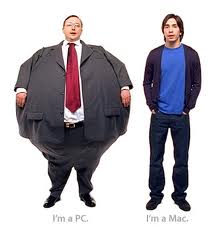


While not a hard and fast rule, it does seem that smaller companies can be more innovative and responsive, at least to a point. With some of the huge monolithic companies, having things "my way" is simply not in the cards. The products of the larger companies seem to reflect the mentality of largess, and even "bloatware". With this comes the anathema of the Lego PACS and obstructive designs I have bemoaned above. Sometimes, a large company (in this case large is spelled l-a-r-Capital G-Capital E) tries to emulate the flexibility of a smaller company by simply purchasing said smaller companies. Perhaps they are trying in this manner to become all things to all rads, or maybe they are just trying to find something that actually works. So far, their latest assimilation into the collective hasn’t worked very well.

VIII. Vendors work for us, not the other way around.

I suppose it's easier for the manufacturers to attempt to adapt the user to the program rather than vice versa, and our first mistake is allowing this to happen. I was shown a demo recently of the latest version of our PACS, one which I haven't been terribly pleased with to this point. After five years of whining (on my part), they had finally added on a simple function of spine labelling. The new toy was well-executed, but far more complex than what we had requested. Something simple could have made it out the door as a service release. Some other features that we had despised stayed on. When I protested, I was told, "But that's what makes us different!" I refrained from responding, "that's what makes you inferior!"

IX. A true PACS guru is worth his/her weight in gold.

There is absolutely no way in the known universe to successfully implement PACS without a guru. What is a guru? Someone who knows the PACS in and out, knows the radiologists and technologists better than his or her own family, and can make the system work for the end users, as per Dalai's Second Law.

The vendors are usually present for the initial installation, although we all know they may not follow through quite as well as we might like. Ultimately, there must be someone there on the ground to keep everything running smoothly.

X. All software errors, including those within PACS code, can be repaired if the vendor is sufficiently motivated to do so.

I've had some of the larger PACS companies tell me they just can't fix some bug, even one that crashes a system. What they really mean is, they won't fix the problem, or at least they feel the resources required would be more profitably deployed somewhere else, say on the next version of vaporware. As Windows users, we are all participating in the world's largest and longest beta test. At least Microsoft eventually fixes most of the things we discover. Why should we expect any less from our PACS vendors?

XI. If IT doesn’t like something, it will be termed a security risk.

I recently found a way to thwart IT, or so I thought, by using a macro program to automatically refresh a RIS window that would otherwise close every 30 minutes. Signing in to a Citrix window gets boring after the tenth time that day, you know. The macro worked, but IT removed it from all computers, saying that someone could create a macro that would bypass password entry. Sure they could. They could also use a wax pencil to inscribe their password on the monitor, as many of my colleagues have over the years. I’m not certain if we should ascribe IT's behavior to paranoia, concern, laziness or simple meanness. Probably all four. IT actually did decide to let me use my macro in the end, after I made my case to the head of IT security. In the meantime, however, they've taken away the right-click from our computers because I was nasty enough to use it to change the vendor's logo background on the desktop. All I did was shuffle the letters A, G, F, and A around a little bit...

XII. The PACS needs to be operable by the least technically-savvy radiologist on staff.


This is inspired by one of my partners, one of the best interventional radiologists I have ever met. Ironically, he has great difficulties handling anything run by computer. I often tell the story about the time he called me from an airplane about to take off to ask how to turn up the volume on his laptop so his children could watch a DVD. While the PACS has to work for me, it has to work for my less-computer-savvy partner as well, or it might as well not work at all.

XIII. Drive before you buy.


It is impossible to get the feel for a PACS graphical user interface (GUI) in a 10-minute demonstration, no matter how well it is presented. In fact, the better the presentation, the more chance that you are being deceived.

Ask, nay, demand, direct access to the program under consideration, something you can pound on without the salesman in attendance. The joys and pitfalls of various systems do not become apparent until you have actually tried to use them in a production environment. You wouldn't buy a Mercedes after watching the salesman drive it around the lot, and PACS tends to be significantly more expensive than a car. Keep in mind as well that the system that works wel for your mate down the road might not fit your particular workflow.

And as Moses (or was it Pharoh?) said, "So let it be written, so let it be done!"

These lessons have been painfully learned. Ultimately, my experiences and observations have been punctuated by fights, I mean discussions, with our IT folks, administrators, and of course, our vendors. On many issues, I have had to use my blog to garner attention to significant problems with PACS systems, when there was no other way to get anyone to listen. In fact, that is probably why a vendor we all know well labels my blog "unfair". This is such a relatively small niche market that problems might well go unnoticed and thus sales not be affected, were it not for a loudmouth such as myself. Since I'm the only Radiologist blogging about PACS, my "unfair" observations do seem to reach their intended audience. Have I impacted a sale or two? That's not my intention, but were problems dealt with properly, I would have no influence at all. If complaints were addressed, and patient care not impacted, I wouldn't be making any "unfair" observations whatsoever. Sadly, whistle-blowers are generally not appreciated, especially by those who were tattled upon.

I've taken a number of approaches in reporting the joys of our various systems on my blog, from direct opinion-pieces to little cartoons (I'm the one with the stethescope and the nice tan):


I’ve even parodied some famous songs. My favorite example of the latter is my Belgian Rhapsody, which begins (and I'll do you all the favor of reading it and not singing it):

Is PACS online today-

Is that just fantasy?

Still caught in downtime

With no functionality-

Open your files

Look up from the dials and see

I’m just a poor rad, trying to get through the day

‘Cause PACS is easy come easy go

Why it glitches, I don’t know

Any way the circuits blow doesn’t really matter to me

To me…..

--------------------------------------------------

Mama, just read a scan

Had a CT of the head

Clicked it off, now PACS is dead

Mama, it had just come up

But now I’ve gone and crashed it all again

Mama, Oooo, ooo ee ooo

Didn’t mean to make it die

If it’s not online again this time tomorrow

Back to film, Back to film, as if PACS doesn’t matter..

Apologies to Freddie Mercury, wherever he is…


 Dalai's Laws cover the importance of PACS and how it should work. We in this room understand that criticality quite well, but our IT and other politically-minded colleagues often do not. Once the infrastructure is in place to view our patients' images with electronic, soft-copy reading, there is no turning back. If PACS doesn't work, the hospital might as well shut down. I believe you call this situation a "Code Yellow," an internal emergency disaster.


My main trauma hospital, and its two sister hospitals which are all connected via the same PACS, (one you know well) recently endured a complete PACS shutdown lasting 3.5 hours. To this day, no one knows what happened, or at least they aren't telling me. We were dead in the water with NO PACS functionality. All we could do was to look at a few of the studies on the modality consoles. It seems our downtime plan involved printing film, but wouldn't you know it, someone disposed of the printers! IT's response?

Firstly, I would like to apologize for the unexpected downtime that occurred this past weekend. Impax is a very important system in our enterprise, and it definitely prohibits optimal workflow and efficiency when any high priority system goes down.


I have met with the parties involved in responding to the downtime, and the procedure for reporting issues to AGFA was followed appropriately. That being said, the field engineer who responded from AGFA should have escalated the outage to a senior product specialist who is intimately knowledgeable of our system, and he did not. This has been brought up to the service manager for follow-up and resolution.


As far as a failover system, Impax is configured to run in its test environment (on a test server). Since this affects how the modalities send the studies, the time frame for decision-making to initiate this process is 4 hours. This allows the vendor to respond, make assessments, and hopefully resolve any problems. During this time, studies do have to be viewed at the modalities.


I appreciate your feedback and your dedication to (our hospital) Radiology.


Excuse me? FOUR HOURS is acceptable? Not to me, it isn't.

Clearly, those upon whom we all depend for support may not understand the situation. Of course, this is the very same PACS team that when called upon to fix a malfunctioning PACS computer during a tumor conference declared, "Sorry, I'm still in bed. I'll be there in an hour and a half." This truly happened to us a few months ago.

Those vendors who land in my crosshairs got there by a similar combination of deafness, ignorance, arrogance, and hubris, and a significant amount of bad luck. Again and again and again, we are delivered products that the engineers (keep in mind, I am an engineer by training) think we should like, but never asked us if we actually do. Waiting five years for something simple like spine labeling because the vendor didn't want to listen to me when I told them to make it simple is ridiculous. Hearing that some poorly-conceived core functionality will be kept as it is because "that's what makes us special" is enough to drive me to drink. More than I already do, that is.

With bad designs, bad installations, and bad service, the vendors have great potential to wreak havoc upon us, and some do this quite well. Honestly, I don't think the vendors deliberately set out to create problems, but somehow they manage to do so anyway. A fellow in Canada responded to one of my rants against a certain PACS as follows:

Frankly, I have given up on reporting bugs. After one week Level 1 Support says you are doing something wrong...after 1 month Level 2 Support says they will look into it, and have never seen this problem before...after several months Level 3 support says 'Oh yes, that is a known issue, but it has not been given priority'. Is this the reputation any vendor would really want?

No, it's not. And if I were a vendor, I would really hate to bear the liability of a malfunctioning PACS.

What is the answer? Simply put, we need better communication, and that is a two-way street. Somehow, there needs to be dialogue between the end-users of these things and the folks that create them. I've attempted to open the discussion with my blog, but that's just the first step, and a fairly feeble and occasionally misunderstood one at that. But there is one other factor to consider. As long as we keep buying the suboptimal products they are selling, there won't be much incentive for improvement. The disconnect is inherent in the mechanism of that very purchase. We, the end-users, very rarely get much of a say in the selection of the PACS. Rather, it may be driven by some political motives, sometimes even by IT's desire to select a vendor that will do a bit of their work for them. We have an old saying in the States: "No one ever got fired by choosing GE." Clearly, those people don't work for me!

We have to make known our needs, and the manufacturers, the software writers, the vendors, IT, and all levels of governance over us need to listen. And of course we need to hear and understand their restrictions and limitations as well. But if we say nothing, if we are content with suboptimal products, suboptimal service, and indifferent, condescending oversight, well then, we deserve what we get. But our patients deserve better than that, don’t they?

In the end, that's what Dalai's Laws are all about. PACS is a tool for improving patient care, and patients' lives depend on it.

It is very encouraging to realize that all of us in this field face and surmount similar challenges. We must keep fighting the good fight on behalf of our patients, in spite of what some larGE companies might, well, imagine.

My second trip to Australia confirms what I learned on the first: Your country is absolutely beautiful, and your people incredibly friendly. Perhaps you'll make me an honorary Australian after all this, assuming I'm allowed to leave the country, that is.

In closing, I would like to once again thank the convenors of RANZCR for granting me the opportunity of speaking to you this morning. Now, back to the more educational part of the meeting. Thank you for your attention.

Perth PACS Poll


Did you know that Perth is considered the most remote major city in the world?  It is antipodal relative to my home in South Carolina, and it is exactly 12 hours ahead.  Thus, I'm more or less as far from home as I can get and remain on Earth.  But you wouldn't know it by walking around.  Perth is a really nice place, very cosmopolitan. 

After doing a bit of shopping in a wonderful European-style promanade, I've been wandering the exhibit floor at RANZCR. The iPad is the temptation of choice around here, with many vendors offering one up as a prize if you are so kind as to fill out the contact information.  Not a problem, although I doubt I'll be contacted, being rather far from the local market.  I'll let you know if I actually win an iPad.

One such drawing is run by Contrast Imaging Solutions, and I stopped to have a very interesting chat with the guys there.  It seems they have GE to thank for their existence:  someone here using iPACS was abandonded when GE bought the company (RealTimeImage) and assimilated the product.  The CI folks got together and built a new RIS/PACS from scratch.  I gave it a very cursory look and it does seem to have promise.  There are no plans, though, to export it to the 'States as its billing module is geared toward the Australian payers. 

As part of their iPad drawing entry, I had to write down the RIS and PACS I'm using, and its best and worst features.  For my Empiric RIS and AMICAS PACS, I gave credit for usability.  For the downside, I noted the fact that Fuji now owns Empiric.  (I'm hoping that Merge's ownership of AMICAS turns out to be a positive.) 

CI's unofficial talley of the poll so far notes mostly negative sentiments.  There was apparently a pleurality of responses like, "the best part of our system is logging off," and "too many crashes."  I'm not sure there were even any positive answers beyond mine.

Vendors, listen to your customers.  No, not the IT folks, or whatever.  Listen to the radiologists who actually use your stuff.  They don't like a lot of what you are doing.  It's not too much for us to ask for a system that works, and works well, especially at the prices these things command. 

There are companies that understand that.  From my brief chat, Contrast Imaging is one of them.  And I'm sure there are many more.  Wouldn't you rather be known as a vendor that "GETS IT" than otherwise?  Seriously?

Wednesday, October 13, 2010

Reefer Gladness

I'm here in Melbourne, waiting on my friend to finish up business so we can go to dinner.  My enjoyment of Melbourne has been a bit dampened by a cold rain, but I did get to see much of the downtown in spite of the inclement weather.  This is a rather pleasant place, a large city with a nice gentle demeanor (I was accosted by only one homeless person) which reminds me a lot of a smaller version of Boston, or maybe even Chicago.

I did have a bit of a fright when I stumbled across this building:


I had an excellent visit to Port Douglas and the Great Barrier Reef on Monday.  I had, as you know, arrived in Brisbane on Sunday minus my luggage.  Delta relayed the message to Qantas that the bag would show up late on Monday, while I was to be out on a boat cavorting with the fish.  Qantas sent me on to Cairns with $100AU and a little toiletry kit, and their sincerest apologies.  Naturally, the bag arrived that day anyway, but not until I had spent the money on replacements I didn't need.  Oh well.  Attached to the bag was a tag again apologising for its "mishandling."  Delta needs to take lessons from Qantas on customer service.   

The Thala Beach Lodge (lobby pictured below) is about a thirty minute shuttle ride from Port Douglas, the stepping-off point for most of the Reef trips. 


It's probably not a place for kids, as there isn't a lot to do on the property besides eat, drink, and walk the beach.  Still it was very pleasant and relaxing, a perfect spot for those headed to the reef, but who want a smaller, quieter, and more private property.

There are dozens of boats that ply the waters of the Reef National Park.  I chose the Wavelength based mainly on TravelAdvisor.com recommendations, and I'm glad I did.  The Wavelength is a small 30 passenger ship which is geared entirely toward snorkeling; no SCUBA, and no glass bottom.  It was perfect.

The ride out to the Outer Reef is very rough, so much so that the crew fed us motion-sickness pills (some local variant of Dramamine, I think) which worked well.


Here I am with Rich, another guest.  And here I am in the awfully warm Neoprene wetsuit, which does make the cool water a bit more tolerable: 


I'm sure there are lots of folks who would appreciate the shot of Dalai face-down in the water more without the snorkel. 

I can't begin to tell you about all the fish we saw, mainly because I can't remember the names of most of them.  We did not see any clownfish; sadly, they have been severely poached after the cartoon Finding Nemo made them popular.  Did you know they can change sex from female to male?  Nemo's mom apparently didn't know that either. 

We did see lots of other fish, though, and more coral than I thought possible in one place.  I've snorkeled all over, and I've never seen a reef that just goes on and on and on...  These are some photos taken by the marine-biologist on our particular trip.


Our marine-biologist was very knowledgable, and quite personable.  He tried really, really hard not to preach about globalwarmingclimatechange, but he let a little slip out.  Suffice it to say he believes the reef's growth has slowed, and this is attributed to higher surface temperatures and a higher atmospheric content of CO2.  I would have liked to have the discussion of causality with him, but we never got around to that.  He did point out an area of plate-like coral that had been demolished by a cyclone ten years ago and had regrown quite nicely.  Does this disprove the theory?  Probably not to those who BELIEVE, but that's a topic for another day. 

Tomorrow, I head to Perth and the RANZCR meeting.  Back to business!  But these few days have let me acclimate to functioning 12-14 hours into the future, and were well worth it.  More to come!

Sunday, October 10, 2010

G'day!

I made it to Port Douglas, Queensland, Australia, in one piece. Unfortunately, Delta couldn't seem to figure out how to transfer my suitcase over to Qantas, so I'm here quite literally with the clothes on my back. Qantas did give me some cash to buy a few things, which helps some. I was able to run to town and pick up a bathing suit so I can go snorkeling on the Reef tomorrow.

The Thala Beach Lodge is quite pleasant, a bit rustic and out of the way but nice nonetheless. It's sort of a cross between Las Brisas and Camp Nebagamon.

Yes, I'm back, although with a somewhat inauspicious start. For whatever reason, I'm not feeling disoriented this time. On my first visit, just under one year ago, I had some brief mental images of being upside down. Not a problem this time, however. I've simply decided that the rest of you, at least those in the Northern Hemisphere, are the inverted ones. Think about that, you North American/European chauvinists.

More later, assuming I don't get stung or eaten or something.

Wednesday, September 29, 2010

Grumpy Grand Rounds


If you haven't visited the site of fellow blogger Dr. Grumpy (Dr. Grumpy in the House), you should.  Dr. Grumpy is a neurologist whose ". . .patients and practice drive me NUTS!  Some days I’m so sick of patient shenanigans, the stupidity of insurance companies, and just the daily insanity of this field that I write this blog as my gripe forum. I’m a neurologist, and although I practice in an upscale suburban area, I sometimes seem to attract some remarkably “special” folks. I have no idea why. It just seems that weird crap happens to me or my patients. So this is where I vent about it."

This week, Dr. Grumpy hosts Online Grand Rounds.  He asked for submissions of blog posts about "things that make us grumpy," and I provided my post about the Blunder Down Under.  Dr. Grumpy found this grumpy enough to be included, and so it landed in the Grumpy Doctors section.  I really appreciate his introduction to my piece:  "Dr. Dalai, a radiologist who specializes in the "I'm tearing my hairs out by the roots" field of IT, sends in his grumpiness over trying to set up a PACS system."


I would be REALLY grumpy if I had to deal with some of the other issues posted!

The Health Care Law Dissected

Note: Tim Farrell is a radiologist practicing in Virginia. In his own words, he's "done a lot research on the 2010 Health Care Act for a lecture I'm giving at a medical meeting in a few weeks. It's taken me several months to complete the research. In preparation, I compiled a lot of notes, put together in outline/text form.

I know that it's lengthy, but in it I've briefly outlined the history of health care reform, reviewed the reasons behind reform and tried to condense the highlights of over 2,500 pages of legislation.The analysis is my opinion, based on my position as an "insider" in the medical profession who has had to deal with the insurance industry and the state and federal legislature for more than 15 years. A lot of it seems like basic common sense to me.

It's an interesting read, if you're into that type of stuff. If not, it will be boring as hell, so it's your decision whether to read it or not. After spending THIS amount of time on it, I know the law about as well as one can (and a good bit of the stuff "going around", is false)."

Without further ado....


Healthcare Law

Sunday, September 26, 2010

Another Correct Prediction

In my February, 2008 post titled "A New Cellphone Accessory", I requested that someone invent a combined bluetooth headset and video camera, mocked up as below:

On this occasion, I was only a few years ahead of my time.  Behold the Looxcie (Look-see, get it?) wearable camcorder:


Looxcie takes a sound-bite/tweet approach to video.  It is always on, but if you see something you wish to capture, press the button on the back, and Looxcie saves a clip of the last 30 seconds it, ummmm, saw.  It can also function as a bluetooth headset.

Phone app is now available for Android devices, and support for iPhone and Blackberry is coming soon.

All this can be yours for $199.  Visit http://www.looxcie.com.

Tuesday, September 14, 2010

RadNet Buys eRad

I seem to have a lot of contacts in the PACS business, so many that they keep turning up in unexpected places.  I received a note yesterday from a friend at eRad to let me know that the Greenville, SC-based RIS/PACS company had just been bought out by outpatient imaging provider RadNet.  About 5 minutes later, I received a phone call from Ranjan Jayanathan, RadNet's CIO to tell me the same thing.  I met Ranjan a few years back, when he still worked for Dynamic Imaging (and there still was a Dynamic Imaging).  He walked me through one of the best product demonstrations I have ever experienced.  (I wonder if that particular product will ever be seen again, eh, Ranjan?) 

I've got an appointment with Mr. Jayanathan next week to discuss this acquisition further, as I think the story is newsworthy for my illustrious readers.  Stay tuned!

Saturday, September 11, 2010

Doctor Dalai's Health Minute

As a physician, I am supposed to help patients, at least periodically. While I would like to think I do so every working day, I have two personal experiences outside of radiology to report, which I think will benefit you, my faithful readers.

First, let's deal with a bit of technology. In perusing Medgadget a few weeks ago, I came across this intriguing tidbit:


Solar-Powered Toothbrush Supposedly Makes Toothpaste Obsolete


Researchers at the University of Saskatchewan have developed a solar-powered toothbrush that doesn't require toothpaste. At the base of the brush is a solar panel, which transmits electrons to the top of the toothbrush through a lead wire. These electrons react with acid in the mouth, breaking down plaque without the help of toothpaste. It is an advancement of a model described 15 years ago using a titanium dioxide rod which released electrons when illuminated. The researchers are currently recruiting 120 teens to test the brush. The model is named Soladey-J3X and is manufactured by the Shiken company of Japan.


I had a peek at the Shiken web-site, and my curiosity was really piqued:


After a bit of back-and-forth with the Shiken rep, I was able to purchase a sample version, as full production and distribution of the J3X has not yet ramped up. I've been trying it for the past couple of days, and...the damn thing works! I've been using a Philips Sonicare brush, recommended by my dentist, for many years. After two days with the J3X, my teeth feel significantly cleaner, with a definite (although subjective) decrease in my perception of film/plaque as compared to the Sonicare. And this clean feeling lasts all day. I'll keep you informed, but I think we have a winner. I am adding a bit of toothpaste at the end of brushing to keep all my lovely teeth fluoridated, and to keep my breath from lethal levels, but so far, this new toy does what it promises. And it looks really modernistic to boot! (I have the blue one.)

Moving now to the other end of my aerodigestive tract, I finally did something every 50 year-old needs to do: I had my colonoscopy. Sadly, I am actually 51.5 years old, and so this little party was a bit belated. That could have been a disaster, as you will see.

The worst part of the procedure was, of course, the prep. I mean, the induced diarrhea is bad enough, but drinking a gallon of GoLYTELY is sheer torture. This crap has a faintly salty taste and slimy consistency, and by the time I had my last 8 oz. cup of the stuff, I was ready to croak. My green Jello tasted wonderful after that.

The procedure itself is easy as can be. The worst part is anticipation, and the insertion of the angiocath for the IV. After that, a pop of Demorol and Versed sent me off to La-La land, and I awoke in the recovery area with some minor gas pains but no other discomfort. I do have a millisecond-flash of memory from the test itself, in which I think I complained of cramping. That's it. Well, I did get a little woozy about 48 hours later, probably a delayed reaction to the drugs, which gave me an excuse to bail early on Rosh Hashana services. Fainting in Temple is bad form, you know. But I'm absolutely fine now.


Another famous physician, Dr. Mehmet Oz, of the Dr. Oz Show, just recently had his colonoscopy. Being a TV celebrity, he had to do his on time, at age 50. Rather frighteningly, Dr. Oz had an adenomatous polyp, which is considered precancerous, although the potential for malignant degeneration is rather low. Still, someone with as healthy a lifestyle as Dr. Oz is considered at low risk for development of polyps, and of colon cancer. If he can get one, we should all worry.

And indeed, my encounter with the Big Black Snake yielded a polyp as well:


Behold my sigmoid colon, and a 1.8 cm partially-pedunculated polyp within. My gastroenterologist snared this little sucker, and sent it off to pathology. He then skipped town for a much-deserved vacation. Fortunately, I have access to most of the local EMR's, and against my better judgement, I checked the path myself. This is, of course, a bad idea, but thanks to God, Dalai's Polyp was hyperplastic, and this is the most benign variety, with very little chance of ever turning malignant. Still, as the little SOB was over 1cm, I'm compelled to repeat the colonoscopy every three years instead of every five. Since my son has Crohn's Disease, and must be scoped every year or two, I get no sympathy at home for the increased frequency, and frankly, the procedure wasn't really a bad experience at all. I do hope, however, that there are some advances in the prep by 2013.

I want you all to learn from my experience. I was very, very lucky. Had Polly Polyp been adenomatous, I would be in greater danger for having been a wimp delayed my colonoscopy 18 months past the point I should have done it. So, if you are close to age 50 (or 45 for African-Americans), call your gastroenterologist and make the appointment ASAP! Don't fool around with your health. Colon cancer is almost completely preventable, but far more so if the precursor lesion is caught in its very early stages. Don't die young because you are afraid of the prep or the discomfort. It isn't that bad, and this procedure could save your life. Literally.

Now, as a radiologist, I have to add one more thing: Based on my experience, I'm going to skip virtual colonography, and go straight to the 'scope. VC is a good procedure, and it would have found my little friend with ease. But, I would have had to wait for another appointment, and I would have had to reprep.  And, VC involves radiation. Had I come out negative, I might be singing a different tune, but for me, for the moment, the Big Black Snake is my new best friend. Apologies to VC affectionados world-wide.

I suppose my next foray into self-improvement will involve CCTA. Hopefully I won't fall asleep from the beta-blockers.

Wednesday, September 08, 2010

The iPad--Radiology's Sharper Image?


I'm still naive and vain enough to be impressed when something I wrote makes it to a real publication, i.e., a professional operation hoping to sell copy or at least advertising, and not self-published like my blog.

The good people at AdvanceWeb recently asked me to write a piece on the available iPad radiology viewers.  Since their budget didn't allow them to buy me my own iPad, I stole my son's while he was in Australia and proceeded to download any and all viewing apps I could find.  At this stage, most are dedicated to the iPhone, but they work adequately well on the iPad.  There were a few pleasant surprises in this little technical odyssey, including the discovery of Calgary Scientific, which seems to "get it" far better than most in this particular venue.

I have to let you know that the title of the piece was selected by the editors over at AdvanceWeb.  Let's hope the demise of the Sharper Image stores has no bearing on the success of my writing.

To avoid copyright problems, and to keep from having to reproduce the images in the article, I will simply provide you the link to the AdvanceWeb site:

http://imaging-radiation-oncology.advanceweb.com/Features/Articles/The-iPad-Radiologys-Sharper-Image.aspx

I hope you find it interesting.  Let me know if I've inspired you to go out and buy an iPad!

Sunday, September 05, 2010

The Actor Playing...ME!!


Chad Einbinder, Image Courtesy IMDB.com

Every so often, it pays to Google ones' self.  You never know what you might find.  As it turns out, there was a character in Episode 8 of the first season of Grey's Anatomy which aired on May 15, 2005, named....Sam Friedman!  Sam and his screen-wife Doris were the parents of an Orthodox daughter Devo (played by Lisa Kaminer and Sarah Hagan, respectively), who didn't want a valve-replacement from an un-kosher pig.  

Chad, has had a fairly busy, if non-descript Hollywood career, with several minor guest-starring roles in several TV episodes, and more recently Neanderthal #3 in "Night at the Museum, Battle of the Smithsonian".  Playing me, I mean Sam, probably was adequate prep for that one. 

So tell me folks, who is better looking, my alter ego Chad, or me? Don't everyone shout at once...


Friday, September 03, 2010

Another eBay PACS

A while back, I found an ad for a Dynamic Imaging PACS on eBay.  I don't know if it ever sold, but the opening bid was $45,000. 

On a lark, I tried searching for PACS on eBay again today, and indeed there is another system available.  Actually, the seller has two separate but identical listings for the same package. 

Here's the deal:

Brand New PACS system for an affordable price. buy it complete for $8,999. purchase includes hardware, software & licensing. one year complete parts & labor warranty. Order today and have it up and running in 48 hours. Contact Rudy at (see the listing) to get this great deal. STOP buying jackets, STOP buying films, STOP printing & faxing reports. GO DIGITAL Today!. this system will pay for itself in 1 month. be ahead of your competition and offer your physicians instant access to their referred patient images & reports. your success story starts from here. Contact Rudy at (see the listing) TODAY!. Do not pay thousands of dollars more for another system with less features. this is the one and only PACS you need for the life if your imaging center. Future Proof. Feature Rich, Affordable.
Here are the specs:
Included With Your PACS System:
  • UNLIMITED Patients
  • UNLIMITED Studies
  • UNLIMITED Users
  • UNLIMITED Referring Physician
  • HIPPA Compliance
  • Modality Work List
  • Auto Route
  • CD/DVD Burning
  • Digital Laser Label (uses laser to print your clinic's logo & Patient's information on CD's/DVD's)
  • iPhone Compatible. (access your PACS server, view images, read reports from your iPhone. Anytime, Anywhere.)
  • Windows, MAC, Linux Compatible.
  • Referring Physician Portal for your physicians to log-in and view the images for their patients, download reports or print images if they want to.
  • Full imaging center Reporting System. Based on modalities, referring physicians, date, Application Entity (AE), patient ID or any combination.
  • Web Based Radiologist access. your radiologist can read from any computer at any location at anytime.
  • Built-in VPN server. secure connection for outside access. e-Film, digital jacket or any other dicom viewer software.
  • Optional HL7 Interface

Server Configuration:
  • AMD ATHLON 64 X2 5200+ C2 2.70GHZ
  • 2GB DDR2 800 PC6400 HYPERX MEMORY
  • Windows Server 2003 Standard Edition
  • Your Choice of 2TB Hard Drive (RAID0) or 1TB Hard Drive (RAID1). Need more storage? No Problem we can upgrade your storage to meet your needs.
  • Optional UPS
  • Virus, Spyware, Malware, Firewall Protection
  • One Year PARTS & LABOR warranty   

Optional Modules & Services:

  • Dragon Naturally Speaking Voice Recognition Software
  • Transcription System. Available in both digital (digital recorders) or analog (dial-in)
  • Remote Server Backup

What a deal!  I'm particularly intrigued by the UNLIMITED stuff.  I have to pay license fees and buy more storage on my SAN to add patients.  Has Rudy found a way to store an UNLIMITED amount of data on the server?  When you say UNLIMITED, it should mean UNLIMITED, yes?  Well, Rudy?  What say you?
I'm also taken with the thought of a platform-independent PACS.  Rudy was kind enough to include a screen-shot of his GUI, something many vendors never get around to doing, by the way. 

This is a rather busy interface, with cute and occasionally informative icons.  No doubt there are tool-tabs in actual use.  I would assume this was designed by an engineer working with a graphics designer, with no radiologist in the immediate neighborhood.

You'll notice the title-bar refers to this viewer as "RemotEye".  A quick googling reveals the source:  NeoLogica, from Italy.  NeoLogica also provides PACS Connector to connect RemotEye to any DICOM server: 

Thanks to the PACSConnector software option, RemotEye can now be deployed as a "ready-to-use" solution, without requiring development of custom integrations for a specific DICOM server or archive.

Searching for patients and studies, sending DICOM files to server, reporting, downloading and displaying images from server and all operations typically supported by RemotEye are now available through the special module developed by NeoLogica: PACSConnector.

PACSConnector works as a bridge between the DICOM server (PACS) and the RemotEye client, implementing the DICOM protocol on one side, and the RemotEye-specific HTTP/XML protocol on the other side.
RemotEye now also supports a new integration mechanism, based on the HTTP and XML standards. This mechanism is particularly suitable when RemotEye shall be configured as the viewing front-end for a DICOM back-end system or archive. In this mode, RemotEye sends queries to the back-end through the HTTP protocol, based on the search parameters entered by the user in the search window. After performing a query on the DICOM storage archive, the server will send XML-formatted answers to RemotEye, containing the matching patients, studies, series and images. RemotEye will now be able to retrieve and display the relevant studies and series, as requested by the user, even using compression techniques. In order to better support this new integration mode, RemotEye is now also able to execute as a Java Web Start application, in addition to as a Java Applet.
The Java origins explain the cross-platform abilities.  Rudy doesn't tell us which DICOM server is in use, but I would assume it is NeoLogica's LogiPACS

Is this worth $9K?  Well... I'm not sure how much the software costs, but the hardware isn't much more than $1,000 or so.  If you're capable and adventurous, you can use open-source PACS software, such as Conquest and/or ClearCanvas (about which I know virtually nothing) for free.  There's also the free OsiriX client, which can be used with the free dcm4che server.  I'm not sure what the FDA implications might be, however.  You could also use the free PacsOne (their capitalization, not mine) system.  I downloaded it and they proceeded to cold-call me while I was in Costa Rica, costing several dollars and souring me on their product.  Other low-cost solutions (at least initially) include using remote servers as we see with Co-Activ

I guess PACS is now a mainstream product, with its regular appearance in eBay.  I'll be really impressed when we can buy a system at Wal-Mart, along with the EMR they already sell.

Saturday, August 21, 2010

Two Hundred Thousand Hits!


Visitor 200,000 arrived at my blog very early this morning.  He or she was searching for an image of the "O.K. Corral" and stumbled upon my entry of the same name.  The viewer was no doubt disappointed in the contents, although perhaps the old-timey picture below was what they sought:


It only took five and one-half years to get to this point!  Maybe I can accumulate a million hits by, oh, 2020 or so?

Thursday, August 19, 2010

SCRU-Verse

We live in a Broadband world, and ultimately, it shouldn't matter whose pipe dumps the bits and bytes into your lap.  Thus, when AT&T's U-Verse became available in my neighborhood, I thought it was time to jump ship from Time Warner Cable.  After all, even the rather pricey Business Class was only delivering about 4-6 Mbps, and 50+ channels of non-HD.  For the same price, I figured I could go with Ma Bell and get a better deal.  So I did.

Before I dive into my personal tail of woe, I need to tell you  just what U-Verse actually is.  From ATT.com:

AT&T U-Verse® uses fiber optic technology and computer networking to bring you:
* Advanced digital TV
* High speed Internet
* Digital home phone service
It's basically a big data pipe like I said at the beginning, delivering the goods via fiber and DSL instead of cable. The TV end of the package is pretty good, with innumerable digital and HD channels.  They are all full of the usual mind-rot, but having 200 or 300 channels of mind-rot has to count for something.  And you can record them for playback on any TV in the house.  AND there's an iPhone app for remotely programming the recorder, which is also great for impressing your less-than-technical friends. 

Since Mrs. Dalai doesn't like to deal with change (you know who she didn't vote for), I arranged the switch-over to take place while we were en route back from Peru in mid-June.  Thank Heavens for my PACS guru, who gave up most of his Saturday to supervise this fiasco.  It seems that even though my neighborhood is "U-Verse ready," the fiber or whatever hadn't quite made it down to my end of the street, so that had to be, ummmm, laid (which sets up the theme for what's to come) before any other progress could occur.  Then, because I had two phone lines which were billed separately, the BIG AT&T BILLING COMPUTER wouldn't allow voice to be activated.  Even so, they got the TV (and associated boxes and DVR and remotes and so forth) running nicely, and the 18Mbps internet came up properly as well.  (I actually max out at only 14Mbps for my download speed, but that's still a lot better than where I was.)

So far, so good.  All the while, the old POTS (plain old telephone service) analog lines were working nicely as well.  Sadly, I tend to ignore the old maxim that tells us the enemy of "good" is "better." More importantly, there were lower prices and lovely rebates to be had for those who added on U-Verse Voice (which is really Voice Over Internet Protocol, VOIP, using the shiny fiber broadband pipe.)  Thus, I insisted, over Mrs. Dalai's wise protest, upon having Voice put on as well.  This was not a good move.

We've had U-Verse voice up and sort of running for about a month now.  It works, but it has glitches.  Our particular glitch involves a strange buzzing feedback when the victim on my end speaks into the phone.  Of course, that doesn't start until about 5-10 minutes into a call.  It is INCREDIBLY annoying, and ultimately intolerable.  I've had AT&T out to look at everything about 5 times, and I've been on the "chat" with Tier 1, Tier 2, and all of the other Mouse-ke-Tiers on about 30 occasions.  Every time, they bounce the 2Wire Residential Gateway (a big fancy router), which disturbs Mrs. Dalai's Farmville activities, and thus creates even more grief in the house than the malfunctioning phone itself.  And every time, the phone acts properly for the first five minutes of a call, just enough for Nahtanoj, I mean Jonny, to sign off on our case, and then.....   BUZZZZZZZZZZZ.

By this afternoon, I had had enough of this nonsense, and got downright pushy with Haripol, I mean Paul, the Tier 1 helper du jour, and demanded that they come out and fix it or yank it.  I was trying to do this from work, and Paul kept asking me to unplug and plug in phone wires, which we've done 50 times before.  I typed in all caps to show I meant business:  "NO!  I WON'T!  YOU SEND SOMEONE OUT TO FIX THIS DOG OR I'M GOING BACK TO TIME WARNER!!!"  To which Haripol replied, "OK, but if the tech does what I'm telling you to do, and that fixes it, we'll charge you $50."  He didn't need the computer to hear me squawk about that statement. 

Ultimately, we got someone out to look at it one more time earlier this evening.  All I can say is God bless honest people.  The gentleman from AT&T got to our house, examined the tangle of red, green, yellow, and black wires, and said, "You know, I'm finding this situation quite often, where the digital phone just won't install properly in some houses."  Well, I'll be darned.  You mean to tell me the damn thing actually might not work?  I'm not crazy?  Of course the latter determination is not in AT&T's scope of operations, but the former turns out to be the case.  Our new best friend from Ma Bell went on:  "AT&T rolled out VOIP before it was ready.  When you hook up the old wiring in the house to the digital output, you have done little more than create a huge antenna, and it picks up any strong radio signal in the vicinity.  I was just at a house on the other side of town that couldn't work with U-Verse Voice at all because the guy next door had a big CB base station." 

Eureka!  That is why the interference and bad behavior doesn't start right off, although for the life of me, I can't imaging what RF source is causing the problem.  Whatever.  U-Verse Voice has to go.  I've put through the order for the phones to be switched back to POTS.  And they darn well better not try to take my rebates back, either.  I've already used the stupid VISA gift cards!

Here's my revenge on U-Verse.  I'm telling everyone I know:  DON'T GET U-VERSE VOICE!!!  Not until the technology improves!  Seriously!  This isn't ready for prime time.  Of course, even if I get everyone to avoid U-Verse Voice, the victory is pyrrhic at best as POTS costs more.  But sometimes you have to stand up for your principles. 

Hear that, Nahtanoj???

Reagan Was Right Again

Wednesday, August 18, 2010

Hooked Again


Hooks seem to be popular at my hospital this week.  Here we have an abdominal radiograph of an eight-year-old boy with "ingested foreign body".  No doubt the hook was made in China. 

Sunday, August 15, 2010

You Should Have Seen The One That Got Away...


DoctorDalai.com "Noteworthy"!

DoctorDalai.com has been up and running for five and one half wonderful years.  Most bloggers jump into the blogosphere with great enthusiasm, submit several highly informative posts ("Went to the washroom, successfully") and then return to cyber-oblivion.  But I've kept blogging all this time, defying the odds, and several larGE vendors.  Basically, writing this thing keeps me sane, even though it may drive some others out there a bit batty.

As the only radiologist blogging more or less exclusively about PACS I still have a unique niche.  But it seems that social networking is becoming more and more popular in our field as discussed in the July edition of RSNA News:

Social media—defined as websites driven by user participation and user-generated content, such as blogs, networking sites like Facebook and the Del.icio.us bookmarking site—are offering radiologists new ways to network, interact and stay connected to each other and the general public.
Sites with a medical imaging focus include "Radiolopolis," billing itself as "The International Radiology Community for Education, Research and Clinical Practice," and "Radiopaedia," radiology's answer to the popular Wikipedia website. Blog topics range from the gadget and technology updates on "A Radiology Geek's Blog," to images and discussion from a consultant radiologist in the United Kingdom who writes the "Daily Dose."
The article goes on to discuss the potential for HIPAA violations online (don't discuss specific patients!) and for marketing opportunities.  And,

"Currently, image sharing is cumbersome with many time-consuming steps," Dr. Choy (a co-founder of radrounds.com)  said. "Social media can enable simpler and faster image sharing which has the potential to improve patient care. Other radiology software platforms such as online reference tools, reporting systems, radiology information/hospital information systems and scheduling software can also integrate social media tools to improve communication between physicians for better patient care."
It seems that I've reached the threshold of RSNA's attention, as my blog rates mention in the last paragraph:
A sampling of other noteworthy radiology networks, resources and blogs include:
Flickr (www.flickr.com): Interactive photo sharing site with massive storage capacity and the ability to connect contacts around the world.
radRounds (www.radrounds.com): Radiology and medical imaging professional network for building relationships in clinical practice, education, career, research and industry.
Daily Dose (radiologyimages.blogspot.com): Images and discussion offered by a consultant radiologist in the U.K.
Dalai's PACS Blog (doctordalai.blogspot.com): This site from "an average radiologist in an average practice in an average town in the South," suggests an alternate acronym for PACS: "Pain and Constant Suffering."
MRI Metal Detector Blog (mrimetaldetector.com/blog): MR imaging safety director Tobias Gilk offers information on ferromagnetic detection and MR imaging safety and screening.
Not Totally Rad (nottotallyrad.blogspot.com): Known for "Shedding Light on Invisible Imaging," the blog was founded by anonymous interventional radiologist, the Samurai Radiologist, who was featured in the November 2008 issue of RSNA News (rsnanews.RSNA.org.)

I'll take noteworthy.  Sadly, a review of the hits from the time of this article's publication showed very few referrals from the link above.  I guess RSNA News readers got bored before they reached the bottom of the page.