Wednesday, July 20, 2005

Farewell, Scotty

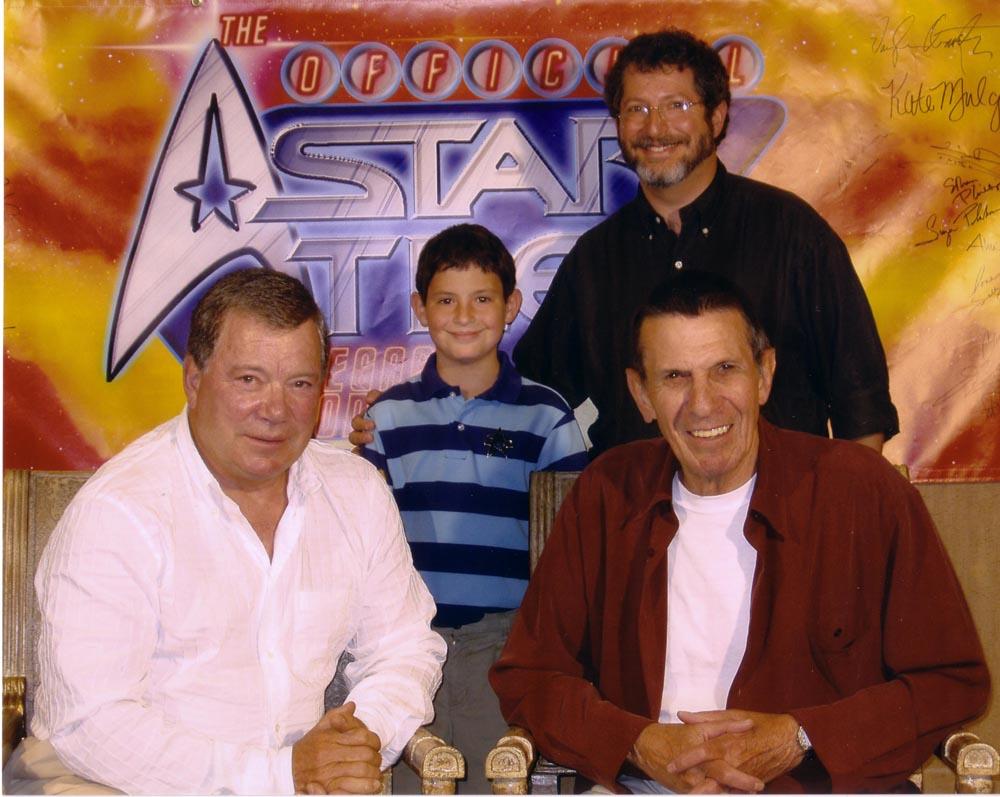
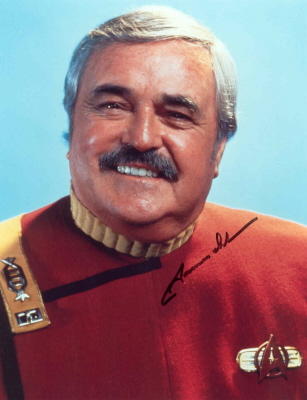
Today, we Star Trek fans say goodbye to James Doohan, who will be forever known as Scotty, the Chief Engineer of the Starship Enterprise. He died of complications from pneumonia and Alzheimer's disease at age 85. His ashes will be rocketed into orbit later this year. (That's not a joke, by the way; he will join Star Trek creator Gene Roddenberry, whose ashes were intered into space several years ago.) I guess we tend to forget that the characters of Star Trek are getting on up there in years. DeForest Kelly, who played Dr. McCoy, died in 1999 at age 79. Even Kirk (William Shatner) and Spock (Leonard Nimoy) are in their early seventies now. I had the chance to spend 10 seconds in their presence last summer at the Star Trek convention (yes, I admit I went), while posing with my son for this photo. I call it three old Jewish guys and a kid.

Many say Jimmy Doohan was the most beloved of all the Star Trek actors. I think we can rest assured that he was beamed up and not down to his Final Frontier.

One Brief and Shining Moment....


My apologies to the late Richard Harris....

I am really amazed at the traffic generated by the AuntMinnie.com article. Comments have been generally positive, usually something like, "I didn't know PACS could be funny!" I seem to have the attention of a significant number of those in the PACS community, and I would like to put that to good use while it lasts.

It seems clear that there is a disconnect between the designers and (Radiologist) users of PACS interfaces. I'm not sure why this is the case, as it seems logical to consult your end users before creating a huge software product. I don't want to indict any one particular company, but some do a better job than others of giving us the clear interface and powerful tools we need to slog through the day's work.

For the moment, lots of users, and not a few vendors are dropping by to see what foolish thing I have posted this time. Now I'm sure you all realize that is is possible for you to post comments here, and I really, really, REALLY encourage you to do so. It's simple; just click the word "COMMENTS" at the end of each posting. Perhaps this blog might be considered a "safer" place to post complaints or suggestions for the vendors, and for them to post answers. This happens on the AuntMinnie.com boards to some extent, but I think some are hesitant to post there. So, come here and let it all hang out. Don't hold back, say what you really think. I certainly haven't even begun to describe everything that would go into a perfect system, but if I can get input from as many of you as possible, maybe we can get closer to that ideal product.

Now, if you will excuse me, the boys want me to get back to the Roundtable, I mean my PACS station, and generate some revenue.

Monday, July 18, 2005

Northwest, One Last Time

Ms. Michelle Mohr
Northwest Airlines Complaint Department
Dear Ms. Mohr:

Unfortunately, Northwest was unable to live up to the earlier performance on our trip home. In brief, we were delayed leaving Minneapolis/St. Paul on our flight yesterday due to "weather over Detroit", and we idled on the tarmac for almost an hour before taking off, burning a significant amount of expensive jet fuel. After a very late arrival at DTW, we did manage to make our connecting flight home, but all five of our bags did not. We had to sprint to the departing gate, B19, from A70, the longest possible distance at DTW, but made it with a few moments to spare. The fate agents were courteous, and even apologetic but told us we could not take even a minute to walk across the hall and buy a snack, since the gate was about to close. They asked US if WE knew of anyone else trying to make the flight. As it turns out, there were indeed two stragglers who boarded about 10 minutes after we did, and I would be surprised if your computer did not report that these people had arrived at DTW and were en route to the flight. (One of them had a leg injury and was walking with the aid of crutches.) It was very clear that having the aircraft push back from the gate on time was much more important than letting my family grab a quick snack to take onboard (we had not eaten for 8 hours, anticipating an adequate amount of time to do so at DTW, and this flight didn't even have your now-famous $1.00 trail mix available.) This was the last flight of the day to our destination, and the aircraft had nowhere else to go that evening. Your schedule was likely already in shreds due to the "weather problem"; one more minor delay would not have mattered. As it was, the flight arrived home 10 minutes ahead of schedule. To complete the series of unfortunate events, all five of our checked bags did not make the transfer, forcing us to go through the claims process. The only person available at 12:30 AM was George S., one of the baggage handlers, who clearly was trying very hard to do a good job, but just as obviously had never been trained to use the computer system to file a missing baggage claim. Another baggage-handler finally was able to come to his aid, as did Venus R., whom I believe was a Continental agent. Hopefully, our luggage will be delivered sometime today.

Ms. Mohr, I am sad to report this experience, as I had much greater expectations after my last flight with Northwest. It seems that your people can shine if everything in the system is functioning perfectly, but a glitch, such as bad weather or mechanical failure sends everything into a tail-spin. Staffing has obviously been cut to the bone, and the goal of the airline seems to be to meet the on-time deadline of door-closure and pull-back at the expense of the comfort of the passengers. This will be my last flight on Northwest for the foreseeable future.

Thanks for your time. I know there are many good people working for Northwest; it is unfortunate that they are not allowed to perform to their potential.


Addendum: I do have to add praise where praise is due. Rick, the baggage manager for Northwest in my hometown, personally delivered our 5 bags when the local service couldn't get around to it. I wish Northwest would allow the rest of their employees to go the extra mile as Rick did for us.

Wednesday, July 13, 2005

PACS preferences: How to push a radiologist's buttons

I've finally made the big-time! This was published on AuntMinnie.com today! For radiology, PACS has been nothing short of a complete and total revolution; PACS now quite literally defines how I perform my job. As a nuclear radiologist, I spend at least 85% to 90% of my day with the microphone in my left hand and the mouse in my right hand. If I'm not talking into the former whilst manipulating the latter, I'm not generating revenue for my group.

My goal in life is to do my work and go home; my PACS system should facilitate this and not get in my way. So what are the elements of a usable, unobtrusive PACS according to this humble rad?

Let's start with some general observations on PACS GUIs and their functions. First and foremost, every part of the darn thing has to work every single time, and that includes all those little buttons that you might use once a year.

The vendors will quote you "uptime" rates of 99.999%, but for some distributed systems, if just one workstation is up, well, that counts as uptime. Given that great uptime, please spare me hourly (or more) lockups and reboots. Been there, done that: we used an early form of a small PACS network that would fail literally on every other study. One of my partners (who still likes the product) determined that pressing thus-and-so button, and right-clicking just there, while holding your left hand in the air and howling at the moon would keep the program from crashing. That may be, but most of us just don't have time for a crash-o-matic solution. The system needs to be bulletproof, and the least-technical member of your group should not be able to bring it down, even if he presses all the keys at the same time (I've seen it happen).

The interface must be clear, without distractions. The whole point of the process is to see the images, right? So why do some programs devote tremendous amounts of screen real estate to everything but the image? If I want the old report, or the demographic page, or the Nasdaq stock ticker, let me bring it up somewhere else, not where it invades the current image.
Some PACS systems out there seem to imitate the bridge of the Starship Enterprise up to and including the "gleeps" and "whirrs" from the controls. As a closet Trekker (we prefer that term to Trekkie, by the way), I love that idea, but not while I'm trying to work, please! Cute, but not what I really need.
Graphics on the various buttons can be a little underdone, too; that same crash-o-matic system I mentioned uses some very primitive low-resolution unintuitive icons on its various buttons, and at least one of those symbols seems to have been lifted from another famous non-PACS, but still copyrighted, source.

Make the interface clear and readable, with obvious designations. The same goes for menus. Some of the most sophisticated programs out there suffer from "right-click-orrhea" in which a right-click brings up a huge list of stuff. Now I don't mind if the right-clicker results in a well-organized and helpful submenu, but there are those who pile everything including the kitchen sink into this otherwise hidden area. No thanks. Some systems make that right-click deluge (and about 1,000 additional settings) customizable, and all that for each modality, no less. Most of us would give up and use the default settings that came with the program. Keep it clean, clear, and simple. That's all I ask.

Oh, and by the way, how about having all the buttons work in a consistent manner? It is a real pain if, say, the magnifier works by left-click activation, then actual manipulation with the mouse wheel, while the window/level control is toggled on and off with a left-click and manipulated with moving the mouse immediately thereafter without clicking anything else, etc., etc. See what I mean?

These expensive toys come with a vast number of tools and gadgets, all intended to help us interpret our examinations. Do they really accomplish this goal? Well, let's see. In no particular order, here are some of my favorites (or not as the case may be):

RIS/PACS integration: The new Holy Grail. I don't think this is quite there yet. Yes, it's nice to get your reports brought up within the PACS window, and all systems do that with the appropriate connection. But does the PACS really need to feel the RIS and be the RIS, or could they just go out for dinner and a movie?
Worklist: The unsung hero of PACS. You need to see what you need to read, yes? Well, there's much more to it than that. Tell me what needs reading, what is STAT, what can be put off until after lunch, is someone else reading something so I don't have to, are there prior examinations, and maybe tell me something about the patient like age and what idiot (oops, I mean honored referring clinician) ordered this test.
Hanging protocols: I like to think I'm flexible, but in reality I am set in my ways. I like my studies to come up in the same manner every single time. Hanging protocols are supposed to accomplish this. Properly done, you should simply set up windows and other settings the way you want them for a particular type of exam, click the button, and presto, the next exam comes up in the same way. There are systems out there that require deep, dark, secret programming methods to set up, and somehow, no one ever quite knows how to do it. Hanging protocols can be totally confounded, however, if your techs are inconsistent in labeling the examinations. The PACS is stupid, after all, and can't just look at the image, decide whether it's the patient's head, tail, or something in between, and place it appropriately. Wine and dine your techs and make them swear to label the same image the same way every time. Tell them your happiness is their reward.
3D: Gotta have it for CT and some MRI exams. Period. Some companies have built-in multiplanar reconstruction (MPR), volume rendering, and such, and some let you connect to 3D software (or actual added-on computers). The absolute minimum acceptable to me would be MPR with the ability to do oblique reconstruction, and the ability to MIP (create maximum intensity projections) from there. Volume rendering is really nice to have. It is very helpful to be able to push those renderings back to your PACS, which is often not available without the add-on programs. And by the way, make the included stuff intuitive, if you please. If I point to a lesion on one plane, I want the other planes to show me the same lesion. It's called triangulation, and some of the vendors out there must have slept through that class in high school.
3D cursor: Most MRI studies are done in multiple planes, and the DICOM headers tell you lots of spatial information if you actually look there. A 3D cursor uses this information to triangulate (see above), snapping the images in all sequences to the spot you select. Believe me, this is incredibly helpful.
Spine labeling: Done the easy way using that 3D information there for the taking in multiplanar studies (CT, MRI), I can label the individual vertebral bodies and disk spaces in five seconds. Done the hard way (by another company), it would take me 10 minutes if I were willing to slog through things that way, which I'm not.
Magnification: You thought there wasn't anything new here, right? Surprise! Several companies have figured out that image magnification should not go from the center of the image matrix itself, but should be centered where you select. It doesn't sound like much of a philosophical difference, but it saves the panning step after you've magnified the abnormality off of your screen and have to drag it back.
Linking: If you read a CT or MR that by some miracle has a prior study available, you want to link them together slice by slice. Just about every system will do this based on table position, so if one CT was performed with thicker slices than the other, the images will match up better. A few companies still haven't grasped this simple concept, however. If your potential vendor can't do this, run, don't walk, to the next one. It can be done with one click, especially if you want to display multiple views of the same sequence with different window and level settings, for example. The more clicks, menus, and buttons it takes to make this (or anything else, for that matter) happen, the less likely you are to actually use it. Some systems get bogged down if you link too many windows. That's too bad, because I like to link multiple windows.
Measurement/markup: I have to keep reminding some of my partners not to write on the screens with the red crayons -- that's what the markup tools are for, guys. I like the latest versions that let you place the actual measurement somewhere other than over the thing you're measuring. And if I want to make a hundred measurements on a single slice, I'm going to do just that; one system will only allow two measurements to appear on the screen at once, and that will never do.
Web client: Being rather set in my ways, I really prefer having the same interface at home as I do at work. The Web-based systems allow this; the older model "big-iron" approach is to add on another whole system that taps into the main PACS database (and was usually acquired from some other company anyway).

In my own humble opinion, a PACS needs to let me do my work, and not get in my way. At the same time, it needs to give me a Swiss Army knife (dare I say McGyver-esque?) set of tools to get the job done. These are not mutually exclusive criteria; rather, a properly deployed interface will make my work of interpretation much easier, and make my day much more enjoyable. Well, except for the BEs....
Monday, July 11, 2005

Northwest Redux and Other Random Musings From The North Woods

(My Temporary Shingle)

I try to be flexible when possible, and this week I am playing Pediatrician at my son's camp in northern Wisconsin. The territory up here is nothing short of spectacular, lots of trees and lakes and clear blue skies. The camp itself is a rustic paradise, about as far from a Ritz Carlton as you can get, but still peaceful, placid, and comfortable. Maybe I'll stay up here for a while....

Northwest redeemed itself in getting me here. There were absolutely no glitches whatsoever. Flights were ontime and smooth, and personel were friendly. Special thanks to Sergio at our originating airport, who went out of his way to help us redistribute items in an overweight bag, thus avoiding a penalty. Sergio's behaviour compensated for that of the other Northwest employees to a very significant degree. He "got it" as they say. All I ask is that I be treated with kindness, understanding, and dignity; this is how Sergio treated me, and how I hope I treat my patients.

On the PACS front, the big news is the purchase of Stentor by Philips, for $280 Million. That's a lot of cash, folks. The big question I have is this: What happens to all of those Sectra installs? The Sectra folks seem to be assuming the worst:

Since 1997, Sectra has had a global cooperation with Philips Medical Systems, which has sold Sectra's software for processing digital X-ray images worldwide.

"We have several project agreements with Philips that extend up to ten years and our cooperation will successively be terminated," relates Sectra's President and CEO Jan-Olof Brüer. "We assess that the termination will impact on our sales and earnings in the current fiscal year. At this time, however, it is difficult to provide any reliable view of the financial effects, since this depends on how much time the termination will require."

The change provides Sectra the opportunity to review its sales channels. Sectra's sales of PACS are handled on a proprietary basis in Scandinavia and other selected markets as well as through partners, of which Philips was the largest. Sectra's largest sales together with Philips have been in the US.

"Part of the sales for which Philips is currently responsible will be taken over by other partners that today are active in the same markets as Philips," says Jan-Olof Brüer. "At the same time, we gain the opportunity to advance our positions and will increase our focus on own sales in important key markets, as we do today in Scandinavia, where we have captured more than half of the total PACS market."


Sounds to me like Philips is dropping Sectra (or maybe it will turn out to be the other way around) like a hot potatoe, and Sectra will find some "other way" to service its sites. Uh Oh. I've lived through that sort of thing with our Elscint CT scanners. Elscint sold its CT division to Picker (actually happened while I was visiting their main offices in Haifa, Israel), which then was gobbled up by none other than Philips. Service was pretty good, considering, but it just isn't an optimal situation. In this case, Sectra will have to bring in some other outfit to do its service. Perhaps they should contact Banctec, the outsourced Dell service provider, or maybe the Geek Squad from Best Buy.

I know of several sites that had purchased Philips/Sectra, or were close to doing so. Wouldn't go there at this point, at least until the market stabilizes. If they were buying because of the Philips name, they would of course still get that, but a completely different product. To buy Sectra means diving into a very murky future. I personally wouldn't go near either one for the time being, but that's just me. Your milage may vary.

I had the chance to play with the Philips/Sectra system, and it isn't bad. It was neither my most or least favorite. The team was (and I emphasize was) a formidible player in the PACS field. I've asked people why they liked the PS system so, and invariably I get one of the following answers:
  1. It's made or marketed by a company that makes scanners, so it must be good.
  2. It has an easy pull-down preliminary report menu.
  3. Their embedded 3D lets you select exact slice thickness on MPR.

My answers to the above are probably predictable. First, GE and Siemens make scanners too...I don't consider the PACS product from either company, um, great at the moment. Secondly, one should never, ever make a major purchase based upon one or two perks. Would you buy a Peugot over a Mercedes because it has, say, a prettier hood-ornament? You have to take all factors into account, not the least of which is the overall usability of the entire system. Having the hots for one specific component has the potential to send you down the completely wrong path. Pull-down preliminary report generators are dandy, and I have a rudimentary version on Agfa Impax 4.5. I rarely use it, because I can type my prelim much faster without any help. As far as MPR slice thickness, I don't know anyone who finds knowing the exact numerical value of the thickness that valuable in actual use. Frankly, I suspect a lot of potential PACS purchasers, especially those who are new to the game, are so overwhelmed by whizbang gadgets, they don't stop to think about how they might actually use said toys.

My advice remains this: use the product as much as you can before making a purchase. Web-based systems lend themselves very well to trial-runs in your own office or home setting. Vendors...can you accomidate this?

Anyway. For the moment, all is well in the North Woods. That is until Sick-Call, which is right after dinner.........

Wednesday, July 06, 2005

Pod Casting

I saw this in Walt Mossberg's column in the WSJ and I couldn't resist giving it a try. Just click the "Play" button....

Monday, July 04, 2005

Fuji Synapse Not HIPAA Compliant?

CI writes:

Our group of 7 FTE Radiologists is in an interesting predicament. We have been using Fuji Synapse for over 3 years for in-house PACS and we are filmless for all modalities. We do a total of 140K exams a year. For the last three years our group has been pushing the hospital to provide web access to the referring docs using Synapse and they refused claiming that Synapse, outside of the intranet, is not HIPA compliant. (Synapse uses Internet explorer which can leave copies of the downloaded images on the browsing computer). So, the hospital started looking at Stentor a year and half ago. Initially we were all excited but w found out that Stentor was not able to display the Fuji CR images properly on their system. Stentor was able to fix this for new images comparisons still look pretty bad. Most radiologists also do not like the scrolling in stentor (it is too fast when you hold the mouse down or too slow to scroll one image at a time). Our referring docs are finding it a pain to navigate stentor, and clearly it is not as intuitive as Synapse. The rads want to keep Synapse and the hospital is pushing for Stentor. The rest of the hospitals in our system have gone with Stentor. (interestingly none of them have used Synapse before). Any body out there with any experience with these systems or have any general advice please post.....


This is certainly a new one on me! I replied: Yours is the first complaint of that sort I have ever heard about Synapse. It seems an extreme measure to bring in another (expensive) system to do what Synapse will already accomplish for the cost of connection. Your hospital/IT people have taken a view that is more extreme than any other hospital in the country using any web client. They ALL cache stuff on the home computer in some form. It is possible to clear the cache on any IE set-up, and probably this could be automated with a very simple script, thus saving you literally thousands if not millions of dollars. I'll be glad to collect 10% for my trouble.

If your IT folks are correct, every last system using a web-client for call isn't HIPAA compliant, and millions of dollars are out the window. I really don't think so. Yet another example of IT not totally understanding how something in PACS functions, but shoving their view down our throats anyway. I don't know about the HIPAA regs that specifically mention cached images. In general, (and I am far from an expert on this), the regs are there to make sure that images only are available to the intended viewing party. Thus, there should be nothing limiting the access of your rads at all. The only question would come if they temporarily installed Synapse on, say, a friend's computer. In any case, I think your IT department is way, way off base here.

Addendum: I just did a Google search...I couldn't answer the question specifically, but I came across the instruction sheet to connect to a Synapse system over the web in the manner we are discussing for three separate radiology groups. I am familiar with two of these groups, and I seriously doubt that your IT people have found something these huge groups have neglected. Ask them why they think Stentor is any better in this regard. I am not a fan of the Synapse interface, as I have posted many times before, and in some ways I am a little surprised that you find iSite harder to use. Still, the key to all this may be in the last lines of your first post, "The rest of the hospitals in our system have gone with Stentor." I'm guessing your IT people would rather have just one platform, and are looking for a way to get the product they know into place. (I'm assuming the same IT people cover all your places...)

There's More than One Way to Scan a PET...

Actually, there are numerous options out there for those in the market to purchase a PET scanner. I've directed the purchase of three over the years. My first "PET" scanner was a coincidence device from ADAC, which was replaced with a Siemens ECAT Exact 47, and then with a Siemens Biograph 16 Hybrid PET/CT. As I mentioned in a prior post, GE lobbied me heavily to buy a Discovery ST instead, but I was convinced that the faster LSO crystals in the Biograph made it the best choice.
Fast-forward to the present. My group has today a rather unique situation: we read PET/CT studies from the Siemens I chose, and from a Discovery ST placed several months later at the oncology clinic we cover. So, we can do some near-direct comparisons. I say "near-direct" because we don't have the workstations for the competing systems side by side, and even when a patient has a prior exam, comparisons are done with a CD-ROM or on PACS, which is not the optimal way to do this. (I should, of course, add that about 99% of the time, the new scan is at the clinic and the old was from the hospital, which shouldn't surprise anyone.)

I'll give you the punchline first, and then we'll go into the boring discussion of what's behind it. My educated, although still subjective, opinion is that the Biograph produces better images. Sorry, GE, but Siemens gives us images with less noise which are overall more pleasing and easier to read, again, in my opinion. The faint of heart can leave now.

A word about the proprietary workstations attached to each camera is in order. GE provides the Advantage Workstaton 4.3, the AW, and Siemens uses the Leonardo with eSoft. To be fair, I find the Linux-based AW about the same in ease of use for this application, although it helps that the apps people set me up with my own hanging-protocol. The Windows-based Leo got a slightly different version of my custom display. I don't really like the AW for other purposes, but for PET/CT it works well enough. There are numerous differences in the overall approaches, and I tend to prefer the Leo for CT. Both lack mouse-wheel scrolling, which would be a welcome addition.

The two scanners themselves are quite different in their hearts, their detector crystals, and their approach to the actual acquision of the image.

For those unfamiliar with positron scanning, a very brief primer is in order. Positrons are positively-charged particles that are otherwise identical to negatively-charged electrons. The positron is technically antimatter, which does exist outside of the Star Trek universe. Isotopes that emit positrons when they decay are made by cyclotron, and the most common is 18F, or Flourine-18, which has a half-life of 110 minutes. (Half-life means that half of the stuff is gone or transformed, within that time.) For PET scanning, we label a glucose analogue with 18F to get 18-FDG, fluorodeoxyglucose. This can be used to map metabolism, taking advantage of the fact that most tumors and other bad things burn glucose faster than most normal tissues.

When the 18F decays, it shoots off its positron, which quickly comes in contact with one of the vastly more numerous electrons in the adjacent tissues (or air, or whatever). When a positron meets an electron, they annihilate each other, with a very tiny "bang," and in the process sends out two photons, each with the energy of 511 KeV (Kiloelectron Volts) which just happens to be the amount of energy contained in the mass of the electron or the positron. As it turns out, it is these photons, which are sent out at 180 degrees opposed to each other, which are detected, and not the positrons per se. Thus, we really should call this whole process "Annihilation Imaging" and not PET scanning, but I doubt that anyone would stick their head in an "Annihilation Scanner"!


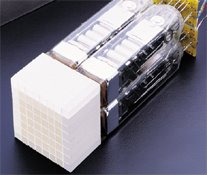
Siemens uses Lutetium Oxyorthosilicate, or LSO, crystals, pictured below, while GE uses Bismuth Germinate (which looks quite similar.)


OK, a crystal is a crystal, right? Well, not really. The purpose of the crystal is to turn those 511 KeV photons into light, which is then turned into an electrical signal, and then into the picture. To make a long story short, LSO does a better job of turning the radiation into light, and does it more quickly than BGO, so it can handle a higher amount of radiation. Now, GE insisted that BGO is just as good, and sent me a barrage of articles to prove this. However, GE is working on its own version of LSO, called LYSO, and rumor has it that Duke, the main showsite for GE PET, will not get another PET/CT scanner until GE can deliver the LYSO unit. (The GE people tell me that they are making LYSO to accomodate future PET pharmaceuticals, and BGO is really great for now.)

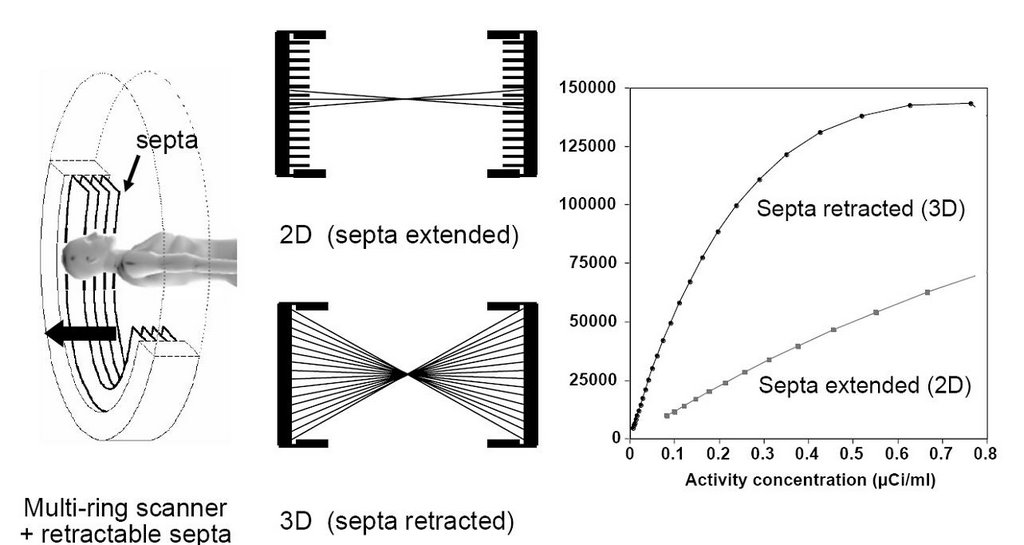
But there's even more to the story. The PET portion of a PET/CT gantry isn't just a big tube-shaped crystal, but rather a collection of smaller crystals arranged in rings. When a detector senses an annihilation photon, it tries to match it to another one that came in at the same time. The simultaneity allows the machine to figure out where the detonation occurred and then it can paint the picture of the distribution of the tracer. But sometimes the radiation gets scattered within the body, or two unconnected (random) photons happen to hit at the same time. To prevent this, thick lead septa are introduced as in the image below..this is the so-called 2-dimensional approach. With faster crystals, it is theoretically easier to discriminate on the time of arrival, and so one can open up the whole array of detectors to receive all possible photons, the so-called 3-dimensional approach. Siemens LSO PET/CT's use 3D exclusively, while GE's BGO machines can run in either 3D or 2D mode.


“From 3D PET to 3D PET/CT: what did we learn?” Peter Valk Lecture given by David W. Townsend, Ph.D.,
Department of Medicine and Radiology University of Tennessee, Knoxville


All well and good. Again, to make a long story very short, the 3D approach allows a lot more scatter radiation and random counts to be, well, counted. On the other hand, 3D picks up a whole lot more photons overall. Do these balance out? The answer depends on the article you read. Here is one from a recent article in the Journal of Nuclear Medicine by Lodge, et. al.:

Comparisons of 2D and 3D performance are very sensitive to the specific conditions under which the data were acquired. Counting rate, scatter, activity outside the field of view, reconstruction algorithm, and scanner characteristics all influence relative performance. In this study 2D and 3D data were compared under clinically realistic conditions and effects that may introduce bias were minimized. The mean ratio of 3D to 2D image values was 0.94 with 95% limits of agreement of 0.63–1.41. All noise comparisons were made under conditions of matched lesion target-to-background ratio as measured in patient images. A statistically significant reduction in image noise was found with 3D acquisition compared with 2D, suggesting reductions in scan duration of 33% or more are feasible.
Italics are mine, as usual. Now GE cited some other articles contradicting this one. One in particular by Laritizien, et. al., states:

In this study, we performed an AFROC analysis to evaluate the impact of the acquisition mode (2D vs. fully 3D) on human observer detection performances. Three acquisition protocols were selected to provide a fair comparison between the acquisition modes. Results showed that the fully 3D acquisition mode allowed better or equivalent detection performance than the 2D mode for a same injected dose typical of the clinical practice (about 440 MBq) in a standard patient. The 2D acquisition protocol combined with higher injected doses (about 740 MBq) resulted in higher detectability than those achieved with the fully 3D acquisition mode for approximately half the injected dose. Changing the patient size or the PET scanner model will potentially change the lesion detectability results of this study.

Now, wait just a second. This says you have to double the dose to get 2D to work better in the clinical setting than 3D! That's problematic enough, but, BGO has a slower response than LSO, and the "dead time", the time it takes the crystal to "recover" from the last event could get to be a problem if you really crank up the dose. I won't even go into the wisdom of doubling the radiation dose, although 18F is short-lived. Basically, we are not comparing apples and apples here.

One way to improve your pictures with either system is to scan longer. We had a 2D BGO system, as you may recall, the Siemens ECAT Exact 47, and we scanned at 7-minutes per bed position, i.e., how long each segment of the patient is within the ring of detectors. GE has advised its Discovery ST customers that 2-3 minutes is plenty adequate. Now, I'll grant you that some significant electronics improvements have occured between the introductions of the two devices, but have there been enough to drop scan time by more than half (not counting the time for the attenuation scan, either with the old germanium transmission or with the faster CT version)? I don't know. What I do know is that the images from the Biograph are better, at least to me, than those from the Discovery. That's my story, and I'm sticking to it.

GE made a last ditch effort to change our minds by reminding us that they won the Frost & Sullivan Market Leadership Award for the PET/CT in 2004. This is a monumental achievement, true, but take a look at the press release from Frost & Sullivan:
Frost & Sullivan’s recent analysis, U.S. PET and PET-CT Markets, selected GE Healthcare as the recipient of the 2004 Market Leadership Award. This Award acknowledges the company’s exceptional marketing strategies that helped it capture the largest percentage of the U.S. positron emission tomography-computed tomography (PET-CT) market in 2003 and maintain its robust lead since the market’s inception.
I have to agree 100%. GE certainly has exceptional marketing strategy. No question about that. But I don't think Frost & Sullivan is really qualified to evaluate the scanners themselves. That needs to be left to those of us who actually have to interpret the images. You might ask, "Will the Discovery fail to demonstrate something that the Biograph would show?" Now that's one question I can't honestly answer, and it's probably the most important of all. Time will tell on that one. But you can bet it will become obvious eventually.

Friday, July 01, 2005

1999 Happy Visitors; One Less So

Congratulations to visitor number 2000, from Mesa, Arizona. Maybe someone from AuntMinnie.com?

Sadly, not all of my readers seem to be enjoying my musings. "Anonymous" posted this comment on my entry about the KLAS survey just this afternoon:

Did you ever consider that Blogging in a medical environment would be so crude as to bash vendors. Besides, it is easy to jump on a bandwagon of the top 1, 2 or 3 with little market share and history, yet to bash others in a cowardly fashion is outright fake. What is your total combined compensation (including free meals) for promoting the top 3? Just need to know so I can budget for this when we crush them with slow steady forward progress and you turn your vote. This will remain anonymous so long as you continue to hide your identity behind an outrageous title that should belong to people to have acutally contributed something to the medical profession.
Cheers!

Gee, where do I start? I hate to dignify such a posting with a response, but what the heck. I have to note at the outset that Anonymous' IP localizes him to Milwaukie, WI, the home of GE Medical systems. Coincidence? Gotta wonder... As to the rather personal comments....I would just as soon keep my name off of the blog, but my full name is revealed in the AuntMinnie article, so I am not "hiding" behind anything, thank you. If Anonymous had bothered to read some of the other entries, he would have found that I do indeed deny being in any company's pocket. Adding up all dinners and so on received from PACS vendors (which include Agfa, Amicas, Fuji, and GE) over the past five years would yield the grand total of $500. If I can be bought, it would take a lot more than that! Finally, as to my contributions to medicine, I am responsible for the introduction of PET imaging to South Carolina. Tell me, Anonymous, what have you contributed?

Sigh. I guess you just can't please everyone. But I'll keep trying anyway.

I can't directly link Anonymous to GE, and I should mention that GE PACS headquarters is in Chicago. Perhaps Anonymous owns GE stock (I do too, by the way). He is obviously worried about my "bashing" of big-iron vendors, but in reality, the only vendors I "bash" regularly are GE, Fuji, and ScImage (sorry, guys). I don't push Stentor or DR. My only experience with Stentor was at a past RSNA, where I went through an excellent demo, but concluded that the pricing structure was not what was needed for the hospital that ultimately went with Amicas. We called upon DR Systems once to see if they would be interested in providing an "interim solution" for multislice CT reading. They responded that if they couldn't sell us a full system, we were not worth their time.

I "bash" whom I "bash" usually due to my dislike of their interfaces, which is the part of the PACS I actually use. It is clear in many cases that the products were designed and tested by engineering types (I can say that because I am one) and perhaps a few docs who didn't actually try to do their day-to day work with the system. This is why I am calling for an open exchange of ideas about PACS GUI's. Every PACS system has room for improvement, and the more we work together, the better things will be for the industry and end-users alike.

Cheers!

Thursday, June 30, 2005

Jog Wheelin', Trackballin', and Mousin' Around


Sherbondy, et. al., writing in the journal Radiology (2/2005) had a bunch of radiologists try to find a lesion on a 3D display using a mouse, a trackball, a tablet, and a jog-shuttle wheel. The jog-shuttle won, with the fastest detection time of the four input devices, and provided less stress on the hand and wrist than a trackball.

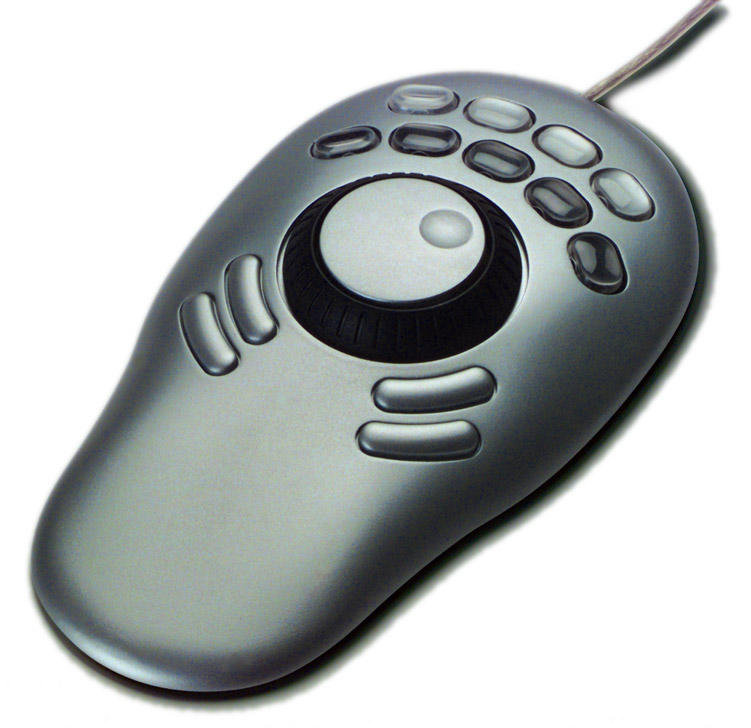
The jog-shuttle device chosen was the ShuttlePro2 from Contour Designs:

"Jog-shuttle wheel (mixed-control mode): The ShuttlePro jog-shuttle wheel is designed for video editing and allows one to view image sequences both in motion and frame-by-frame. The inner jog wheel rotates freely with detents every 36°, advancing the image one frame per detent in the corresponding direction (position map). The outer wheel can be rotated continuously 90° in either direction from a starting position. We mapped the displacement of the outer wheel (in terms of its rotation from 0°) to control the rate of continuous scrolling with seven linearly increasing increments from eight to 400 sections per second (velocity map). A spring provided a force feedback proportional to the displacement. Because the spring actively forces the wheel back to the zero position when no force is applied, it was not necessary to have a dead zone.....the ShuttlePro jog-shuttle wheel ranked highest in the subjective ratings and was among the set of fastest devices (the devices in that set were not significantly faster than one another). It is likely that the ease of accurate positioning with the inner wheel, which led to the lowest overshoot distances, was a key factor in the ease and satisfaction with this device. "

Well, after reading this, I just had to try it! The ShuttlePro2 retails for around $100, but I got mine for $60 from eBay, very gently used, but nearly in near-perfect condition anyway. Once out of the box, it rather resembles Darth Vader's cod-piece, but it turns out to be much more functional. (My friend Zach wants to know how I know this. His skepticism could be on target; there must be some reason Darth is always breathing so hard....) Anyway, you plug the ShuttlePro in to an unused USB port (becoming harder to find on my laptop these days), and load the software. If you happen to be using it for its intended purpose of video editing, there are a number of preloadedaded configurations for the inner and outer wheels and the fifteen other buttons.

I am in the beginning stages of setting it up to function with Amicas LightBeam. So far, it is working as advertised in the Radiology article. My only complaint/concern to this point is that I still have to move my hand back to the mouse (or trackpad on my laptop) for a lot of things. I have the buttons set up to change window and level settings, to change sequences, and to close the study. I have not yet tried the ShuttlePro with the embedded Voxar, but I suspect that is where it will shine.

I'll let you know how it goes.

Addendum: I haven't had as much luck with the 3D software, mainly because the embedded Voxar apparently lacks keyboard shortcuts to move from the coronal to the sagittal to the axial planes, and the ShuttlePro2 software depends on keyboard commands. I've got Amicas looking into this.

Wednesday, June 29, 2005

Overdose (of Imaging) in the ER

Dr. Joel Schwartz, writing in response to an article in Diagnostic Imaging about subspecialty ER radiology, touched upon a nerve. He writes, in part,


What Dr. Trefelner (in the original DI article) does not mention is the very low rate of positive studies for ER patients. (At our hospital, ER and private physicians order studies on patients in the emergency room.) A recent review of 1600 studies ordered from our emergency room between 5 p.m. and 8 a.m. over a 10-week period revealed pulmonary embolism in just 6.25% of pulmonary angiograms, acute findings in just 7.1% of cervical spine CTs, and acute findings in just 6.7% of pediatric emergency room head CTs. None of 27 patients who had combined chest, abdomen, and pelvis CT scans had acute surgical abnormalities. The conclusion is obvious: There is an extremely low percentage of acute findings on studies ordered from the ER. The problem is not on the interpretation side but on the ordering side....

It would be unacceptable for any radiologist in my group to recommend additional imaging that would be negative 90% of the time. Yet, after an initial ER evaluation, ER physicians are sending patients for radiological evaluation where 90% have no significant abnormality identified.

The reason for the high ordering of studies is most likely multifactorial. Dr. Trefelner talks about lack of subspecialization in radiology, when, in fact, a lack of expertise by ER physicians and nurse practitioners accounts for some of the overordering. The subject of liability always arises during discussions of utilization with our ER physicians. Staffing and limited time may also contribute to the ER's reliance on imaging. I do not think radiological interpretation plays a significant role.

Now, I have many friends among our ER staff, and I don't want to slam them in this manner. (They might well find ways to get revenge at 3 AM the next time I'm on call!) Still, I have run similar reviews on CTA's for pulmonary embolus and on head CT's at our main hospital, and lo and behold, we too have an approximately 5% rate of positives.

As Dr. Schwartz notes, there are numerous reasons for this overload of mostly negative studies, and he seems to place blame squarely at the feet of the ER docs. I think there is much more to it than that.

A bit of history is in order. In 1986, Congress enacted the Emergency Medical Treatment and Active Labor Act (EMTALA), which mandates hospitals (especially ER's) to treat anyone who needs care, whether or not the patient can pay. Depending on how you look at it, this could well be the most expensive unfunded mandate in United States history, essentially establishing a limited form of socialized medicine. Unlike Hilary's plan, or the Canadian or British systems, funding comes from the providers, the hospitals and the doctors, rather than the federal government. There are ways the hospitals are compensated by tax money, but the docs have to simply write off the care of those who cannot pay. The bottom line here is that anyone who walks, crawls, or otherwise arrives at the ER gets care. Period. Now, don't get me wrong, this is definately a good thing. In the bad old days, acutely-ill patients could be dumped to another (usually the county) hospital, and on occasion they didn't live long enough to get there. EMTALA was designed to eliminate this horrendous practice, and it has done so. In the process, however, we have created somewhat of a monster. My fellow blogger, Mad House Madman (an internist) puts it thus:

...unfortunately, many in our community have made the Emergency Department their primary care provider. They come to the emergency room to obtain care for non-emergent problems. This is unfortunate because the ER was not intended to provide this care and, often, they will simply stay out in the waiting room for hours on end to obtain a prescription, or seek medical advice about routine medical issues. More worrisome is the fact that many will end up receiving unnecessary tests to rule out emergent disease, as this is the primary goal of the emergency room physician. These tests carry risk, and increased cost. For example, last night a lady waited in the emergency room for treatment of acute diarrhea that she’s had from the morning. She was finally seen at ten at night. She was given Imodium, which stopped the diarrhea. However, someone noticed that her oxygen saturation was low, which led to a Doppler, and then a spiral CT scan. Nothing turned up. Forty hours and four hundred dollars later, she finally went home, free of her bowel difficulties.

There are two things working against common sense here. First, you have a patient who comes into the ER expecting to be fixed (as in made well, not the other definition). Second, you have the ER doc who wants to fix the patient. The patient comes in with certain expectations: "My (fill in the blank) hurts, the doctor needs to do something that looks at my (fill in the blank) so he can fix it. And by the way, since I've waited four hours to see the doctor, I would like this done NOW." One of my friends among the ER staff told me that he used to have patients with clearly non-acute abdominal pain return at 7AM for their obligatory gallbladder ultrasound. Many of the patients subsequently complained to the administration of the hospital that my friend "didn't feel their pain". He was forced to order emergent studies after that. I'll wager he never got a surgeon to remove those few hot gallbladders he might have found until well after 7AM the next day. Sadly, there are those patients who abuse the system, although they might not see it that way. Consider the patient whose X-ray jacket (or PACS study-list) contains 20 head CT's over the past 5 years, all of which are negative. He presents today with a "really, really bad headache, the worst I ever had, Doc!" I will guarantee that he will receive his 21st scan, and it will be negative. Again. (This is not an exaggeration, by the way.)

The ER docs feel they must "give" the patient something so they will leave happy; patients expect such treatment as a reward for their, uhhh, patience. Add that to the fear of litigation for missing something, and you have a recipe for the 95% negative scan rate.

How do we solve this? It is far from easy, but I think the first step is to recognize that the vast majority of these scans are negative. That is not to say that 95% of the scans were unnecessary, but obviously there must be a significant percentage of studies that simply didn't have to be done. Dr. Schwartz concluded in his letter:

I would like to see the ASER, ACER, or American College of Radiology develop imaging algorithms for emergency room patients. These could serve as acceptable guidelines and hence act as reasonable standard of care. These would protect the emergency physician from liability, protect patients from unnecessary imaging, and maximize resource utilization. I would also like to see guidelines for measuring the utilization of the more expensive and resource-hungry examinations. Guidelines that set targets for the number of studies with positive results could serve as goals for ER physicians.

Certainly a good place to start. Now, how do we keep the public from using the ER as their primary physicians, coming in with every little complaint? That is probably the harder question. Education will help, but in the end, Americans have come to believe that high-level health care for any and all problems at any time of the day or night is their God-given right. It's a nice idea, but sooner or later, we may run out of resources to make that happen. Then what?

Saturday, June 25, 2005

You Got KLAS, Kid!

When I buy a car, or a computer, or a digital camera, I want to tap into the experience of others who have purchased a particular model. Hence, I subscribe to Consumer Reports, and peruse Internet sites such as CNET.com. For PACS systems and other healthcare needs, the KLAS report from KLAS Enterprises at HealthComputing.com is perhaps the most publicized of the few available "consumer" reviews. KLAS surveys those who have purchased or are in the market for various medical systems, and compiles reports regularly. I have actually filled out a survey on some of the equipment I use, although physicians comprise only about 5% of their respondents. KLAS does make it very clear that:

'This report is a compilation of data gathered from interviews with healthcare provider executives and managers. Data gathered from these sources includes strong opinions reflecting the emotion of exceptional success and, at times, failure. The information is intended solely as a catalyst for a more meaningful and effective investigation on your organization's part and is not intended nor should it be used to replace your organization's due diligence."


Responding gives one access to their data, although

"...(t)his report, and its contents, are provided under copyright by KLAS Enterprises, LLC and are intended solely for your organization. Any other organization, consultant, investment company or vendor gaining unauthorized access to this report will be liable to compensate KLAS for the full retail price of this report...."

Therefore, I won't be cutting and pasting anything here from KLAS. In brief, KLAS asks several dozen questions, and compiles individual scores of "Primary" and "Detail" indicators, and also yearly Business indicator trends. These are then distilled into a final grade.

Vendors who have paid the full retail price of the report are allowed to publish snippets and they do so if it suits their needs. The latest Interim, Midyear, Early 21st Century results from the KLAS surveys are in, and Stentor iSite wins the coveted Number One spot. (This was e-mailed by Stentor to the zillions of folks on their lists. Amicas was number two, although they are touting more the areas in which they were number one rather than their overall standing.) For the past two or three years, Stentor, Amicas, and DR Systems have jockeyed for first, second, and third, leaving some of the "Big Iron" vendors far behind.

I looked at the data from the following vendors: Agfa, Amicas, DR Systems, Fuji, GE, ScImage, and Stentor. Finding a true trend is difficult, and discussing it here is certainly impaired by the fact that I'm too chicken to quote the actual numbers. Still, one thing seems clear: the web-based products are prevailing over everything else. The ease of deployment and cost-savings with this approach cannot be ignored. There is another interesting trend: those who have done well in the KLAS survey over the past few years (Amicas, DR, and Stentor) are showing a minor down-tick in their indicators beginning in mid-to-late 2004. Amicas and DR show reversal of this trend as of early 2005, but Stentor's Primary/Detail indicators continue to fall, with plateauing of their Business indicators. I'm going to hazard a guess that these three at the top of the list have had an explosion of business generated in part by the KLAS results themselves, and are having to scramble to support the new demand. AGFA and GE actually show up-ticks on average in the same time frame, perhaps due to having a well-established sales and service force. Fuji had a bump-up around late Summer 2004, but has been down ever since. ScImage didn't make the survey until Fall 2004, and has one up-tick in May; KLAS gives the caveat that ScI's numbers are statistically below their confidence level, and one or two responses could skew the curve.

The individual rating components give a little more insight into a PACS purchase, but really not so much as I would like. There are many questions about support and contract negotiations, and keeping of promises. As far a promise-keeping, the web-based products (including Fuji) seem to do far better job than "big iron". DR, ScImage and Stentor do the best with items such as complete and fair contracts. DR gets the best rating in on-time implementation. And so on and so on....

To me as the end-user, the most important question is only partially covered by the question of "product quality". Every product on my short list is average or above, with Stentor winning by a very, very small margin. This still doesn't address how the bloody things actually work in practice. There are a few comments here and there, generally on the order of "our docs love it", but no real review of the details themselves. Maybe that is for the best. Selection of a PACS, for me the GUI, is a personal thing. I would rather test out the program under working conditions than rely on someone else's opinion anyway. To that end, would the vendors consider easier availability of on-line demos? But you all have to promise not to peek at each other's wares....

Thursday, June 23, 2005

Chiropractic Anatomy

A billboard near my home touts the benefits of chiropractic therapy, with this very picture. I am not terribly impressed. The x-ray that was artfully superimposed upon the model's photograph is an IVP, a kidney study. Notice the bright areas to either side of midline: these represent dye within the renal collecting systems. Apparently, chiropracters think that kidneys are located somewhere near the armpits, well above the heart. Could that be why they stand at arm's length when they squeeze your upper back?

Wednesday, June 22, 2005

Dalai's PACS Blog's 1000th Visitor!

Congratulations to the 1000th visitor to this blog, who comes to us from HBOC/CareBridge. If I knew who you were, I would send you a prize...like an autographed photo of me! OK, ok, maybe something really valuable, like a free BE....

Many thanks as well to the folks from ScImage who are visiting up to twice a day and more. Hope I'm keeping you guys amused....

Sunday, June 19, 2005

Night Call

PACS: n. (acronym)
Picture Archiving and Communications System. A device or group of devices and associated network components designed to store and retrieve medical images.


This four-letter acronym has totally changed how we radiologists practice our trade. Gone are the days of huge sheets of film, developing trays and machines, and even file rooms. We are freed to work with the actual information of the radiograph or scan; no longer is this data irreversibly coupled to a sheet of plastic. I can view the image from my office 50 feet away from the scanner, from my home 5 miles away, or from literally anywhere in the world where internet access is available. Simply put, I can sit here and read from there, wherever here and there might be.

There are more consequences to this portability than the inventors of PACS might have envisioned. Early on, we heard a lot about "Swoop and Snatch" operations, wherein big, national operations might convince a hospital to turn over all imaging to their central office, shunning the local rads. We hear about this periodically today, but unlike the banking industry, Radiology has not yet consolidated into a few big national operations ala Wachovia and BankAmerica. There is at least one curious attempt at a franchise in PACS, Professional Radiology Solutions, having the underlying implication that the state-by-state owners are to scour their region for business. They require in their contract that a radiologist devote 10 hours per week in marketing, on top of a pretty hefty initial fee (hundreds of thousands of dollars). So far, we have received "courtesy" calls from the local state franchise rep informing us that they have contacted sites we cover, but of course they wouldn't think of trying to grab our business, they just want to provide PACS services. Uh huh.

PACS also changes the face of night work, more for better than for worse. Night call has become somewhat of a nightmare for most of us. A "good" night involves taking only 4 or 5 studies after midnight, but on an average night, we get at least 10-15 exams. One solution for this PM overload is to hire an in-house nighthawk; great if you can get one. Here in our "average city in the South" with nothing much interesting to do, we aren't going to find someone willing to do nothing but night-work. Just won't happen. Most groups now use some form of teleradiology, now incorporated into PACS, to allow the rad on call to read from home, certainly better than being stuck in the hospital, right?

If you can send the images to the guy (or gal) on call at home, you can send them anywhere the rad might happen to be, and of course, you can send to anyone else who has the proper equipment and authorization to receive them. So, it made sense to form companies that do nothing but take night call, affectionately called "nighthawks", a generic term which includes the largest such operation, Nighthawk Radiology Services. You pay them per night or per study, and they give preliminary reports (unless you make arrangements for them to do final interpretations.) These services usually place their rads on the West Coast, or in Hawaii, or in Australia, or in Europe or Israel; when it's night here, it's daytime there, and wouldn't you rather have your head CT read by someone who is fully awake at the time? I would. As an aside, some groups are establishing outposts in other time zones and hiring someone there or sending someone weekly to staff them. My group toyed with this idea but ultimately figured that by the third or fourth required rotation, most of my partners would balk at making the trip. Nothing like a 9-hour flight to dampen your enthusiasm about a trip to Hawaii.

Hiring a nighthawk service cannot be taken lightly. Their rads will be the face your group presents to your referrers at night. To me, it is very much like hiring a partner. You have to get someone with the right abilities and such; you don't just hire the first one that applies. There is a lot being said online about foreign nighthawk companies using untrained physicians (or nonphysicians, for that matter..cough cough Wipro cough cough) reading under sweatshop conditions. Obviously, your night-readers should have the same qualifications as your day-readers, i.e., US training, and certification, and medical licensure in your state. One could argue that some of these 'hawks become better at the usual ER studies, e.g., trauma radiology, having tremendous experience over time.

The decision to use or not to use a call-service becomes purely political, once you ensure the quality of the readers. We are about to take on a new site that has a nighthawk service in place. (The new place is an academic/county hospital, by the way.) Our plan is to phase out the call-service, and eventually have a rad in-house all night long, reading from the new place as well as all other sites in our own little "war-room". Why revert back to in-house call? It is a problem of perception. Some of my partners perceive that the surgeons and other "real doctors" will see us as "weenies" or "lazy" if we stick with the call-service. There has been some negative talk about the service, though it seems mainly to involve comments about radiologists who would "shirk their responsibilities" rather than the quality of the nighthawk service's reads. But I have a question: Why would it be OK to hire someone to do nothing but night call, but we are "weenies" if we hire a service, staffed by equally (or more) competant radiologists to do the same thing?

So far, we have had luck recruiting new members, but some recent threads on AuntMinnie.com lead me to think that the new crop of radiologists coming out of residency won't even look at a job that doesn't use nighthawks. I guess we'll find out....

Sunday, June 12, 2005

NorthWorst Airlines

I spent the entire day trying to get my daughter to Minnesota for her job as a camp counsellor. It should have been easy, but the disgruntled employees of Northwest Airlines made it a rather trying time.

The string of problems started with equipment malfunction. My kid was actually on the plane at 8AM, ready to go, when they announced a "mechanical failure" involvolving the navigation system, and cancelled the flight. (I have to wonder why they didn't discover this when the aircraft came in last night...really gives me great confidence in their maintenance people and procedures.) Like a house of cards, their entire flight schedule came tumbling down. Among several "solutions" the Continental Airlines staff cross-covering Northwest found was a transfer to Delta, routing my daughter to Minnesota via Orlando. It would have worked, except Delta couldn't find the transferred ticket. There was considerable finger-pointing on that one, and as yet I'm not sure if Delta wouldn't or couldn't find the data in the computer. I tend to think the latter. After a few more false starts, and notice from the camp that they couldn't pick her up at the late arrival time, I ended up driving the kid to another city to attempt to catch a flight that might have worked. I averaged about 85 MPH in this attempt, and actually made it to the other airport 20 minutes before flight time. I shoved the kid out the door with her rolling duffles, and parked the car with the valet service (a real life-saver). By the time I got to the ticketing desk, the kid was in tears. The agent, whose English was somewhat lacking, had assumed that my daughter had insulted her: the kid had asked to speak with someone who "might be more capable" to get her on the flight after saying, "PLEASE help me!" The woman, Elizabeth L., was not going to help her at all until I got there, and my daughter grovelled with apology for her "rude" behaviour. She finally made it to Minnesota about 9 PM, and has a 3 hour shuttle ride to camp sometime tomorrow. Friends of a cousin are sheltering her tonight.

I may be old fashioned, but I expect service from the service industry. Anybody hear of Nordstrom's? The customer is always right? We are the customers of the airlines. Sadly, the attitude has become, "it is a pleasure for you to be served by us". My daughter did NOT sass the agent; Ms. Elizabeth L.'s poor command of the language added weight to the chip on her shoulder, and she was quite ready to withold service to a 4'10" 17 year old who just wanted to get to her job as a junior-counsellor at a girls' camp.

I am currently holding 3 more tickets on NorthWorst. I will move Heaven and Earth to change airlines for these trips. Northwest's employees are not acting like they want my money, and I'm not giving them any more. I would strongly urge all of you to avoid this poor excuse for an airline as well, and tell your friends to do the same.

And now, back to PACs....

Dalai's Sprint PPC 6600

I recently replaced my old Treo 600 with an Audiovox PPC-6600. Love the sliding keyboard. Windows Mobile 2003 has a great deal more power than PalmOS, although the phone can be a little fickle at times. Still, I am pleased with it overall after a month of "testing".

Saturday, June 11, 2005

Thanks to HIStalk!

The author of HIStalk, a blog about hospital IT services, thought my blog worthy of mention, and I see many of you have come here to have a look. Welcome! I hope you find my babbling interesting, or at least amusing.

Greetings also to visitors from Amicas, GE, HBOC, Mitra, ScImage, Siemens, and various PACS and IT professionals from around the world! (And apologies to those surfing blogs with the "next blog" button that land here by accident!)

Thursday, June 09, 2005

No, I am NOT paid by Amicas....

Our Amicas install has become a favored destination for site visits. We had a group come through the other day, and I was more than happy to wax poetic in favor of Amicas and to, um, dissuade them from purchasing Evolved (see below..) In the middle of my anti-Evolved spiel, one of the top Amicas guys gently suggested that I get back on the Amicas track, lest the visitors think that I am paid by Amicas to say bad things about their competitors. Let me assure everyone that I am NOT paid to say (or not to say) anything. I do own stock in one company that makes a PACS system: GE! That doen't keep me quiet about them, now does it? I do have my price, but none of the PACS vendors can afford it...well, maybe GE can, but they haven't made any offers as yet.

In the spirit of fair and balanced reporting, here are some minor changes I would like to see Amicas make in the LightBeam product. Yes, some of this is borrowed from other systems I have seen, and some I made up all by myself. Likely many are already in the pipeline...

  1. Unify the function of the measurement tool so it works the same as its counterpart within the Voxar tools...both need to be click and then drag or drag and then click. My two neurons get confused very easily, you know. There should be a way to drag the label out from over something interesting, too.
  2. Add the ruler function to the right-click options.
  3. Lock the display window to maximum size within designated monitor(s). Right now, the viewer is within a regular Windows window, and can be (too) easily resized. Might as well use all that monitor real-estate we purchased.
  4. Add some additional markup tools.
  5. Use the mouse-over state to decide which window is active.
  6. Bring the comment window to the front, or create a button for one-click access instead of two-click access (radiologists are lazy if you didn't already know that!)
  7. Make a second great big "X" on the left side of the screen as well as the right so I don't have to move the cursor all the way to the other side (see comment on #6.)
  8. DO NOT CHANGE ANYTHING ELSE!!!!!!!

See, I don't think Amicas is perfect, just darn close.