Friday, December 26, 2008


Thursday, December 25, 2008
Trouble In Paradise

Emageon has had some financial woes of late, and ultimately, its shareholders voted to sell to Health Systems of Tampa. From the Tampa Bay Business Journal:
Health Systems was all set to buy Emageon for $62 Million, or $2.85 per share. This is a pretty good deal, especially in light of the fact that Emageon itself bought a cardiology imaging company called Camtronics from Analogic Corporation in 2005 for $40 Million. Those were the days.Health Systems Solutions was founded in Tampa in 2002 as a software company serving home health care agencies. Under new management, the company has transitioned to providing custom IT solutions and services. It also has relocated its corporate headquarters to New York, while Tampa remains headquarters for the home health care operations. . .
The acquisition of Emageon will provide Health Systems Solutions with a strong platform to enter the medical imaging market, company executives said during a Dec. 3 investor presentation at the Piper Jaffray Health Care Conference.
There appears to be some trouble in Paradise. Emageon stockholders voted on December 18 to proceed with the merger/purchase. But on the 22nd, CEO Chuck Jett announced:
I suppose its better to get the fighting done before the wedding, but a naive reader such as myself would be very wary after this statement. I am a firm believer in due diligence , and it sounds like Mr. Jett is saying that "Health Systems don't need no stinkin' due diligence" because Emageon is a good company (which it is, of course) and they didn't ask for it in the prenup."We believe we have an obligation to consummate our merger in an expeditious manner in accordance with the requirements of both parties under the merger agreement," said Chuck Jett, Chief Executive Officer of Emageon. "We also believe our stockholders, who have resoundingly supported this transaction, desire us to move forward without delay. Health Systems has not agreed to set a closing date, instead making additional due diligence requests. This news was especially surprising given Health Systems' recent public and private support of the transaction."
Mr. Jett continued, "There is no due diligence condition in the merger agreement and the time for due diligence ended when the parties signed the merger agreement. Health Systems has also asserted purported breaches of our representations, warranties and covenants under the merger agreement, which we categorically deny and reject as immaterial. Health Systems is clearly stalling for reasons that are not apparent to us and unrelated to any purported breaches of the merger agreement. We believe we have satisfied our conditions to closing and that it is time for Health Systems to comply with its obligations and close the merger. In the event the closing does not occur by Tuesday, December 23, 2008, we intend to pursue our rights and remedies under the merger agreement."
So, what was the problem? It seems to lie with the purchase price itself. Some (lawyers) seem to think it was too low and implied that there was a little hanky-panky involved:
Emageon Inc. (“Emageon” or the “Company”) (NasdaqGM: EMAG) announced that it agreed to be acquired by Health Systems Solutions Inc. Under the terms of the agreement, Emageon shareholders would receive $2.85 in cash for every Emageon share they own, for a total sale price of approximately $62 million. The price is unfair given that Emageon stock traded at $2.90 per share as recently as June 23, 2008 and at least one analyst has a $4 per share price target for Emageon stock. Furthermore, the sales process the Company conducted was flawed, given that in contravention of their fiduciary duties to maximize shareholder value, the Company’s Board agreed to a “no-solicitation” provision and a $3 million termination fee which will ensure no superior offer will ever be forthcoming.And then again, maybe the price was too high, since the stock price was putting along at $2.50 until some more recent unpleasantness (see below) drove it down to $1.50 per share.

The spat was apparently put to bed, and the deal was to proceed (From the Birmingham Business Journal):
Health Systems Solutions Inc. has closed on its $62 million purchase of Birmingham’s Emageon Inc.
So far, so good, right? Wrong... An Emageon press release from December 24 (yesterday) states:A day after Emageon Inc. demanded in a federal filing Health Systems close the deal by Tuesday, the Tampa firm told its bank to transfer $62 million to the medical technology firm to close the previously announced merger deal.
Health Systems said it instructed Stanford International Bank Limited to provide the funding to consummate the transaction on Tuesday. Emageon has not yet received notice of SIBL's response to this request, according to a news release.
Emageon officials claimed in a Monday news release that Health Systems had not agreed to a closing date and had made additional due diligence requests. Health Systems agreed to buy Emageon in October. Emageon produces technology that helps doctors analyze images to diagnose and treat patients.
Emageon’s shareholders voted to approve the sale on Dec. 17. Health Systems has said it will keep Emageon’s base in Birmingham.
Emageon stock fell to $1.30 Monday morning after closing at $2.22 on Friday. It was trading near $1.65 in late Tuesday morning trading.
Uh oh. Now, whatever could Mr. Jett intend to do with this? Will he force Health Systems to find other financing? Is there some big penalty they will have to pay? Will they kiss and make up (and consummate), or will they break up and seek other partners?Emageon Inc. (Nasdaq: EMAG) today announced that it has received a letter from Health Systems Solutions, Inc. (OTC Bulletin Board: HSSO) indicating that Stanford International Bank Limited (SIBL) will not provide the funding to consummate the transaction at this time. The letter further provided that Health Systems is continuing to seek to cause SIBL to fund the transaction and that Health Systems is undertaking further efforts to consummate the transaction.
Commenting on the situation, Emageon Chief Executive Officer Chuck Jett stated, "We continue to seek to engage Health Systems and SIBL in a constructive dialogue towards the goal of closing as soon as possible. We are also hopeful that Health Systems will begin to take all such actions as required under the merger agreement to remedy the failure to finance the transaction and close promptly. Failure to remedy the financing promptly will require us to seek all remedies to enforce our rights for the benefit of our stockholders."
Stay tuned for the next episode of "As the PACS Companies Turn."
ADDENDUM
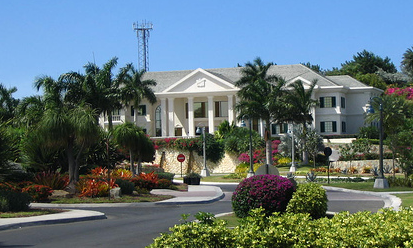
From HISTalk.com:The Emageon saga continues, dragging the company’s name further in the mud. Would-be acquirer Health Systems Solutions, Inc. says its major shareholder, Antigua-based Stanford International Bank Ltd., won’t provide the funds for the acquisition to go through. Emageon CEO Charles Jett seems to be the outraged spokesperson, but he’s not a major player given that he was ousted from the board last summer after an ugly proxy fight with Oliver Press Partners. Now it could be that Stanford is just playing with the stock behind the scenes, safely tucked away in Antigua outside US jurisdiction, but it makes more sense that they’ve found something they don’t like about Emageon and their carefully created legal structure gives them an out that they’ve chosen to exercise. Or, that billionaire owner Allen Stanford and Oliver Press don’t get along, like Gordon Gekko and Sir Larry Wildman in Wall Street (Stanford really is a Sir, the first person knighted by Antigua, where he holds dual citizenship along with the USA).Here's a picture of Sir Allen's little bungalow in Antigua:
Tuesday, December 23, 2008
Farewell, Majel

I had the chance to meet Ms. Barrett in 2004 at the Star Trek convention, and while she was a little harried after a long day, she was very gracious to me and my son. She will be missed.
Sunday, December 21, 2008
Witness For Hire . . .A Jewish Perspective

I subscribe to a Jewish web-site called Aish.com, which this week featured an article on this topic in response to this question:These questionable suits would not progress beyond the lawyer's office if it were not for members of our own profession who choose to serve as "expert witnesses." In most cases, their testimony is purchased for fees of $200 to $400 per hour for case review, and $5,000 to $10,000 per day of testimony. There is no recourse should they perjure themselves on the stand, because they are "just giving opinions."
In my humble opinion, this is where the system has gone haywire, and the aspect that we as physicians actually could impact. My personal solution has been to refuse payment for testimony. Period. It could be considered one's civic duty to tell the truth, and I refuse to extort an outrageous fee to do so. If my testimony is required, I insist upon a subpoena, and I make it clear that I am present because I am required to be there, not that I am being paid to be there. Simply put, if testimony can be purchased, then it can be bought.
Q. I'm a property assessor. Being an expert witness is a good source of income, but if I give fair evaluations no one will hire me. Can I tend to low-ball or high-ball estimates in my testimony?Rabbi Dr. Asher Meir, of the Business Ethics Center of Jerusalem, answers with examples from Jewish literature concerning the ancient practice of animal sacrifice. An offering had to be perfect, and one needed an expert to tell you if this was the case.
We all know the tort sytem is broken, and this is due in no small part to the fact that testimony can be purchased, and the "truth" goes to the highest bidder. That is no way to find justice. Somehow, the payment has to be decoupled from the testimony. Frankly, I think my solution is as good as Rabbi Meir's from the Mishna (yes, pretty arrogant of me, I know.) No payment is in the end as good as neutral payment. But without some move in this direction, we will never achieve true tort-reform. Again, as long as testimony can be purchased, it can be bought, and that is a price we can no longer pay in this country.The mishna in tractate Bechorot discusses a person who is an expert in determining when a first-born animal, which is usually dedicated for a sacrifice, becomes unfit for an offering and thus permissible for ordinary use. The mishna states:
One who takes payment for seeing a first-born, it is forbidden to slaughter based on his assessment unless he is a [great] expert like Illa in [the town of] Yavneh, whom the sages permitted to take four isar for each small animal and six for each large one, whether it turned out to be fit or blemished. (1)
The mishna mentions two safeguards. The first is that in normal circumstances we don't permit taking payment for giving a judgment. We are afraid that a person will be tempted to disqualify even fit animals (thus permitting them for consumption) in order to get more business. So an ordinary expert is forbidden to get paid for his evaluation.
But note that there is a second safeguard as well: even in the case of a unique expert, who is allowed to get paid, he must get the same price whether he permits or forbids the animal. The absolute minimum standard is that there shouldn't be any incentive to distort judgment on this particular animal. That still doesn't completely solve the problem because a person who tends to lenient rulings is more likely to get future business, as you have discovered.
Even so, if there is a person of unique expertise and acknowledged judgment, he may be appointed as a designated paid witness. When there is only one great expert, there is no problem of shopping around for one of slanted judgment.
This mishna can help us address the systemic question. First is the question of compensation. At the very least, someone hiring an expert witness should never be allowed to condition any kind of payment on the content of the testimony. Otherwise, we would be sanctioning payment for perjury.
Second is the question of competition. Note that the problem begins with the practice of shopping around for a witness. This practice, while legitimate in itself, leads to perverse incentives for the potential witnesses. If we have a designated witness, appointed by the court itself, this would solve the problem. Such a witness no longer has any incentive to tend to either side in his statements before the court.
I have written before that I believe this idea should be adopted in our legal system. Instead of having each side bring their own witness, there should be some incentive for the sides to agree on one witness, which would strongly favor a professional known for impartiality. Another possibility is for the court to appoint its own expert, which is the closest parallel to Illa of Yavneh.
Wednesday, December 17, 2008
Yes, SR Sucks
There is a paucity of information out there on the topic, with most of the reports on AuntMinnie.com and elsewhere being anecdotal, or written by those with an agenda on one side or the other.
From Ann Arbor, Michigan comes an article in the JACR that appears to be both objective and rather derogatory toward SR, and maybe a little bit toward docs as well. Leslie E. Quint, M.D., Douglas J. Quint, M.D., and James D. Myles, Ph.D wanted to
. . .determine the frequency and spectrum of significant dictation errors in finalized radiology reports generated with speech recognition technology.To this end, they reviewed 265 reports, and found that 206 (78%) were accurate, containing no "significant" errors, but that means that 59 (22%) DID have "significant" errors. Those errors were:
Some might not be impressed, but this really represents an unacceptable number of problem reports. Interestingly enough, the radiology faculty grossly underestimated the report error rate:Type of Error
Wrong word(s)-------------31
Nonsense phrase-----------19
Missing word(s)------------16
Wrong image number------9
Wrong date-------------------7
Wrong measurement-------4
Right/left substitution-----4
Missing or added ‘no’-------3
Nonsense date---------------2
Template----------------------1
Mm/cm substitution-------0Total--------------------------96

It is apparently a given that SR systems will bollux up a report, and that those poor docs forced to use SR should expect such. So:
The errors reflect a breakdown in the proofreading process, and there are multiple possible causes for this breakdown. Carelessness by the report signer is one possibility.Personally, I chafe a little at this statement, but in the end, it is the radiologist's responsibility to send out an accurate report. Whining about the SR system (or the transcriptionist, for that matter) doesn't play well in a court of law. But still, if SR is doubling, tripling, quadrupling the number of errors in your reports, it becomes harder and harder to catch them all.
Quint, et. al. conclude:
Carelessness on the part of the editing physician or ill-conceived radiologist incentives (eg, rewarding speed over accuracy) may be partly to blame. Generally, the radiologists surveyed believed that the departmental error rate was much lower than it actually was, and most of the radiologists believed that they personally had lower than average error rates. This lack of awareness of the problem probably contributes to the high error rate. By delineating the frequency and spectrum of errors, we hope to raise awareness of this issue, thus facilitating methods for improvement.So their point was to make everyone aware of the fact that SR creates lots of errors, and that those who use it need to be doubly vigilant.
I've got a better solution: Yes, I'll proofread carefully, but I'm keeping my human transcriptionists. Which is what I was going to do anyway.
Saturday, December 13, 2008
Canadian Man Builds Robot Girlfriend

Fox News, of all places, tells us about Le Trung,
a 33-year-old software engineer who lives with his parents in Brampton, Ontario, a suburb of Toronto, says he's spent about $20,000 so far on Aiko, a 5-foot-tall female android with clear skin, a slim if shapely figure and a wonderful disposition.
Here's a video of Aiko in action. There are some disturbing moments later in the clip, but Aiko takes care of business nicely:
I'm not sure I wanted to know that, personally. Oh, Brave New World..."Aiko is what happens when science meets beauty," Le Trung tells the Sun of London. "Aiko doesn't need holidays, food or rest, and will work almost 24 hours a day. She is the perfect woman."
She still can't walk, however. That will take a lot more work and, Le Trung tells the Globe and Mail, a new round of funding. He hopes to create and sell more pretty female robots in the future.
But, ahem, is there more than just companionship involved?
"Aiko is still a virgin, AND NO I do not sleep with her," he writes on the Project Aiko Web site, though he admits that she "has sensors in her body including her private parts, and yes even down there."
Wednesday, December 10, 2008
Oy Vey! Israel Goes Carestream!

My friend Mike Cannavo, The One and Only PACSMan, usually manages to find me something esoteric for Christmas/Hanukkah. This year, his gift included this set of stocking-hooks for the mantle, tailored for the Jewish taste. (I think this was actually supposed to be the more traditional JOY, and Mike kept the "J" for himself.)
"Oy" technically means "woe" in Yiddish, often used in the statement "oy vey iz mir" – "Oh, woe is me" (Yiddish: אױ װײ'ז מיר). This is a phrase heard at least a hundred times a day within the facilities of Clalit Health Services, the second largest HMO in the world, covering 3.9 million folks in Israel, 54% of its population.
Clalit's facilities and services include 1,400 community clinics, 14 hospitals, 400 pharmacies, dozens of laboratories, research institutes and subsidiaries that provide diagnostic imaging, dentistry, complementary medicine, aesthetic medicine and medical equipment maintenance services. As the largest civil employer in Israel, Clalit has approximately 33,000 employees including physicians, nurses, pharmacists, paramedics, laboratory/imaging technicians and administrative staff.As an aside, the Clalit web site shows this photo of a nice Jewish doctor, who for some reason is much better looking than me, another nice Jewish doctor:

When you have 5 million exams per year, you really need a PACS, and Clalit just signed on with Carestream to provide RIS, PACS, and central archival. Now, to be accurate, the deal was made with Algotec. In case you didn't know, Algotec is an Israeli company that was bought out by Kodak around 2003 to provide the fifth iteration of Kodak PACS. (Don't even ask about the other four...may they rest in peace.) When Onex Corporation purchased the floundering Eastman Kodak company's Health Group, Algotec came with as fully-owned subsidiary. The new company was called Carestream (a title I have always thought would work better for an entity that serves urologists), and the rest is history.
I suppose it should come as no surprise that the largest Israeli health entity would chose the PACS that is made in Israel. To be honest, I haven't played with an Algotec product since it was, well, an Algotec product, but I was impressed with what I saw at the time. I'm sure Clalit made a good choice. I can hear it now: "PACS, SHMACS. You want a good PACS? We got a deal for you!" Mazel Tov to Carestream!
Dalai Gets Published...In PRINT!

Diagnostic Imaging is well-known to all of us in the field. Better than a "throw-away" and more topical than the hefty scholarly periodicals, it is the one monthly journal I usually read cover-to-cover.
My favorite part of DI is the Backscatter column (which is for some reason on the back page of the magazine), written by Brad Tipler, M.D., a private-practice rad from Virginia. His tongue-in-cheek commentary is usually right on target, but with a proper dose of sarcasm and cynicism. Over a year ago, Dr. Tipler wrote about "TIBS", Tipler's Irritable Body Syndrome (see the article here), and for some reason, it reminded my of my old "X-Ray Man" song from 2006 (original post here). On a whim, I sent the song to Dr. Tipler, who forwarded it to his editors. They too liked it, and promised to publish it in the RSNA edition of DI....in 2007. Well, things happen, and editors change. A new editor found the note in the email droppings of someone departed, and the ball finally rolled into my court with publication in the December 2008 issue.
I'm not really sure where the "came in a flash" title originated, but it's fairly accurate. I was indeed on call at our busiest site (although the time was closer to 11 PM than 2 AM, and the words did indeed flow pretty quickly. Please rest assured that there was no demented patient in earshot at the time this was written, although based on the PACS traffic, there were quite a few folks in the mood for a malady.
Today DI, tomorrow, the Yellow Journal! Wait...you actually have to do research and write a real paper for that one. Never mind....
Sunday, December 07, 2008
Friday, December 05, 2008
Doctor ...a short story

DOCTOR
Doctor was the last. His implants had nearly lost their cohesion to his nervous system, the end point to his existence. But the occasional impulse did cross from the organic to the non, and Doctor made do with that.
The child in the tattered unisuit tugged at his wrist. "Doctor? Doctor?" she whimpered. He yanked his arm away, servos screaming.
"What do you want, urchin?"
"Please, Doctor! I need you....I need you..." She looked up, pleading, seeing her reflection in his face.
"Leave me, urchin. I can't help you. I can't help anyone. I never could." He started off again down the deserted street, trying not to see....anything.
"But, Doctor, Doctor, Please..."
From an long-unused lattice within his crystalline backup memory, an image insinuated into his visual. The time-stamp read "1 March, 2063," years before he had been augmented. He saw a child, holding his hand, that of flesh, smiling up at him. He shook his head out of instinct, trying to banish the pic back to silicon, but it had already imprinted upon his consciousness. His breath would have caught, if he still had it. The child. His patient. Lost. Mere protein constructs and humours could not see what was needed. Simple tissue had not the speed or the precision to save her. So he evolved.
What God saw as perfection, he improved. Polymer lenses superseded gelatin. Sensors tuned to spectral extremes replaced the function of the spider web of rods and cones. Tendonous and osseous yielded to steel. Actin and myosin and adenosine triphosphate to servo and actuator and fusion-cell. Cortex interfaced with doped metals. He was more. Oh, yes, so much more. He was the first, the best. He was ... Doctor.
Others changed, too. But they didn't. So much of them was replaced, they became what they already were. There were not like him. They were less. They were not Doctor. Their software reverted to self-serving infinite loops. The program was abandonded. And so was Doctor. He was the last.
"Doctor? Can you come with me?" The old image faded, replaced by the earnest features at his side.
"All right, urchin, all right." He modulated the impatience and intransigence out of his audio transducers, and hoped she wouldn't notice. "I'll help you."
She took his actuator in her hand, and led him off into the ruins of the city.
Sunday, November 30, 2008
Amicas PACS

My friend Mike Cannavo, the One and Only PACSMan, called me from the RSNA exhibit floor this afternoon, both to chide and congratulate me for avoiding the show this year. Apparently attendance is OK so far, but there seems to be a lot of hesitation over spending any money, given the state of the economy, as well as the uncertainties of medicine's future.
By staying home from Chicago, I unfortunately will miss the world premier of the latest version of Amicas PACS. The program's original code-name was"Phoenix" or more properly, Version 6, or V6 for short. A number of us users were asked about fancier titles, maybe something like Visionary PACS, X-Ray Vision PACS, I-Can-See-You-Without-Clothes PACS, or maybe NOT-Centricity PACS. But by the time the Amicas brass contacted me, they had pretty much decided on the simple, straight-forward title of "Amicas PACS", and I had to agree it was the best choice. That's what we call it around here anyway. (They did bow to some X-Box 360 fan and titled the viewer component "Halo Viewer," but I'll forgive them for that.
I played a minor role in the development of this product, and I have been running it from a test-server connected to our system. Thus, I can reveal to the rest of the radiology world, those folks that didn't go to RSNA this year anyway, just what V6 is all about.
Amicas has come up with some new approaches to PACS, while keeping much of what has made this my favorite system. I won't go through excruciating detail about every aspect of the system, but these screen-shots will give you an idea of how Amicas PACS functions.
Amicas' Real-Time Worklist (RTWL) is similar to it's predecessors, although it has been updated a bit. It still offers at-a-glance assessment of your worklist status, something the competition hasn't quite mastered. The new display has a twist, in that it shares space with a display of the current exam and its series as well as those of relevant priors, and it's a nice addition:

Once the study is selected, the primary study and relevant priors are displayed based on your hanging protocols, as well as anatomic relational rules.


The older Amicas programs used a limited port of Voxar 3D for advanced visualization, one of the first PACS to have such functionality directly embedded. Amicas PACS (V6) goes way beyond this, adding some very powerful 3D and MPR displays that are reminiscent of Siemens InSpace:


Our old friend, spine-labelling, is here with little change, but fortunately none was needed for this module that set the standard for this sort of thing. Here is Amicas programming at its best: the module is very simple to use, and IT WORKS! I can label a spine in all views within 5 seconds.

There's a lot of power here in V6, I mean Amicas PACS, folks. The functionality should go a long way toward smoothing out my worklist, and thus my work day. Obviously, some of the simplicity of the old program had to be sacrificed to gain that strength. Still, there is very little fluff here, nothing that doesn't belong, and as near as I can tell, there isn't much that was thrown in because one (and only one) site demanded it. I have long complained about GUI's that have too many buttons and too many functions, and it was my goal as part of the advisory team to keep that from happening to the new Amicas PACS. I think you'll find a very nice balance of usability and power when you try out Amicas PACS. It's definitely worth your while, and it is certainly a better investment of your shrinking health-care dollar than my stock portfolio. . .
Saturday, November 29, 2008
RSNA RFIDdles with RFID's Again
One major change I've seen at RSNA is literally around my neck; the badges now have RFID tags, which lets the powers that be do some sort of monitoring of the attendees. No doubt this information will be used for proper ends, such as making sure that we actually do attend the educational stuff for which we are requesting credit. Personally, I'm worried that (a larGE company) is using the tags to locate me when their snipers are in position. Nah, that would be too easy.David Clunie noticed my post and persued the situation, eventually posting on AuntMinnie:
As I wandered about RSNA I recall seeing signs that mentioned that RFID badge tracking was in use, but I assumed that this would only be for RSNA's own purposes to count attendance in various areas and educational sessions; I do not recall exactly what the signs said. Even so, I felt slightly uncomfortable that I had not been asked when I registered whether or not I agreed to this or not (at least not that I recall). I was truly stunned to discover on further investigation that RSNA was allowing vendors in the technical exhibit area to track attendees, and indeed encouraging this (see "http://rsna2007.rsna.org/V2007/documents/servicekit/index.htm" and click on "attendee tracking/exhibit analysis"). It is not clear from the information there whether or not RSNA is actually "selling" this information to the exhibitors themselves or merely allowing the providers of the tracking to sell the service without taking a cut. I am not sure how I feel about this, and whether or not I should take further action - I guess it depends a lot on whether the exhibitors were being provided with only aggregate information, or whether they were provided with my individual identity and contact details. If the latter were to be the case then I would be really pissed.David has a new blog post that tells us RSNA is at it again.
I'm glad I'm not the only one who had a problem with this (ab)use of technology. If anyone wishes to track me, I'll be down here in the not-so-sunny South this week.Now, whilst I am happy for RSNA to know that I attended, and happy to know which scientific sessions I participated in to help their planning, I am not at all happy about providing that information to the vendors. So, whilst I do not yet know what their "opt out" mechanism is, I suspect it is to record your details to be excluded from the reports sent to the vendors (they did that on request last year in my case).
So this year I am going to be proactive and remove or destroy the RFID tag that is in my badge. This is actually easier side than done, because it turns out they are tough little f..rs. The sticky label on the back of the badge will not peel off cleanly. Attacking the chip or antenna with a scalpel reveals that they are very hard, and without any way of confirming that the device is actually no longer working, doing a really good job (e.g., on the chip with a hammer) is going to make a mess of the badge. A Google search on the Internet (see for example, "How to kill your RFID chip") reveals that a short time in a microwave oven does the job, though at the risk of starting a fire, which doesn't sound cool. Also, most attendees won't have a microwave in their hotel room. I tried it on my wife's badge first (!), and when that didn't catch fire, did my own, and whacked the chip with a hammer, nailed it with a punch a couple of times, and cut the antenna. That said, I would still rather peel the whole thing off if it didn't look like the whole badge would tear apart.
Anyway, if you respect your privacy, as I do, then I suggest you find a way to deactivate the device before you go wandering around, and if you forget, make sure to go an opt out to prevent the information being disseminated.
Dalai Becomes Happy Fuji Customer
Now, Fuji has done the logical thing in this business and purchased Empiric. From their press-release:
I'm a little concerned about the "IN COMMAND" verbage, somewhat reminsecent of Alexander Haig at the White House. Still, I have it on good authority that Fuji will let Empiric continue to function as usual, producing a web-based product (something Fuji also understands) which is usable (something Fuji doesn't understand as well) with excellent service (from the reviews, something Fuji doesn't understand at all).November 29, 2008 - Stamford, CT -
FUJIFILM ACQUIRES INFORMATION SYSTEMS VENDOR EMPIRIC
Gains further ground in health IT segment and expands breadth of Synapse® portfolio
Stamford, CT, November 29, 2008 – FUJIFILM Medical Systems USA is pleased to announce the acquisition of Empiric Systems, LLC, Morrisville, NC. Fujifilm has acquired 100 percent of the Empiric stock, making the vendor a wholly owned Fujifilm subsidiary. The acquisition is another significant step in Fujifilm’s growth strategy, and a demonstration of the company’s continued commitment to the fields of medical imaging and health information technology.
“Fujifilm is now in command of a fully integrated, Web-based solution for the entire radiology department,” said Bob Cooke, Fujifilm’s Vice President, Network Systems Management. “To meet the diagnostic workflow, efficiency and compliance challenges of today’s radiology environment, healthcare facilities need a fully integrated solution. Fujifilm has already made substantial progress in integrating the Synapse and Empiric applications, and with the acquisition we are now in a position to deliver an even deeper integration that will yield the complete imaging informatics solution that healthcare facilities are seeking.”
So, as of now, I am a happy Fujifilm customer. Let's keep it that way, guys.
Monday, November 24, 2008
iMoan, uMoan, we all Moan for iPhone

I have written about the MIMVista iPhone app, which is really the reason (should I say excuse?) for my purchase. I do have the app on my phone, with demo data as pictured below:


This part of the app shows a fused PET/CT examination, and all one has to do is drag a finger over the display to blend from the PET image to CT and back again. The app has to communicate back to the mothership program on one's workstation to access data, but it does process the images on the iPhone itself. I have the software installed, and it is quite powerful, as I mentioned in the last post. Sadly, our hospital network has not been easy to crack for outside access as required by the MIM app, so I have yet to access "real" data. Still, the proof-of-concept provided by the demo data is spectacular in its own right. Let's hear it for Johnny Appleseed!
There are some other radiology apps appearing. The most powerful will probably prove to be the iPhone version of Osirix:

Here's a video preview of the operation of the Osirix iPhone app:
Osirix is the free, open-source viewer from Switzerland, which is totally Mac-based (much to the chagrin of those of us stuck in the Win-tel world). The app is a companion to the desktop version (here we go again) which allows downloading and manipulation series of images directly onthe iPhone. It can display images from most modalities in native DICOM. It uses the iPhone gesture controls for image functions, such as zooming and panning and rotation with two-finger drag and pinch, and so on. Their iPhone app is $20, and since I don't have a Mac anyway, I haven't downloaded it as yet.
Merge has a similar app that does work with a Windows-based server (and the app at least is free):
Merge Mobile incorporates advanced remote rendering techniques, including multi-planar reconstruction (MPR), which eliminate downloading of large data quantities to the mobile device and enable near-immediate access to images. Features include remote stack viewing using the iPhone multi-touch interface, scroll, contrast adjustment, zoom and pan. A secure communication protocol addresses privacy.For actual use, one would need a Merge installation, but they have kindly made a test server available. Here are some screen-shots of the demo-data:


AMICAS Reach is a radiology EMR and portal designed specifically for referring physicians. This new solution uses common e-mail and secure messaging to deliver images, reports, and information to any e-mail-enabled device via a secure Web-based portal. This is a "zero install" application, which means the elimination of IT headaches traditionally associated with downloading and installing software for viewing images and results.

. . .a zero-footprint physician portal that delivers diagnostic images, reports, waveforms and documents to web browsers. PicomWeb can be implemented as part of PicomEnterprise, as a unifying layer for multiple disparate systems, or as an embedded link in an EMR system using the ScImage Universal Interface Toolkit. The result is a single point of entry for all of your physicians’ to access image and reporting information."
The version accessible through Internet Explorer uses an Adobe Flash display, but the more limited iPhone browser appears to show a JPEG image:


Saturday, November 22, 2008
You Are Safe From Attack In Stuart, Florida
 It seems that a kid in Stuart, Florida was a really, really bad boy:
A 12-year-old Florida student was arrested earlier this month after he "deliberately passed gas to disrupt the class," according to police. The child, who was also accused of shutting off the computers of classmates at Stuart's Spectrum Jr./Sr. High School, was busted November 4 for disruption of a school function.Feel free to read the police report above. The boy's name has been blanked out to protect the innocent (or guilty). Thank Heavens the Stuart Police Department was up to this greuling task.
Toshiba Buys AVIS (but won't be renting cars)

The acquisition, to be handled via Toshiba's newly formed wholly owned subsidiary Toshiba Medical Visualization Systems (TMVS) Europe, allows for internal development of 3D volume rendering and advanced visualization capabilities for all Toshiba modalities, according to the Tokyo-based vendor. TMVS will be based in Edinburgh, Scotland. Terms of the deal were not disclosed.Phew. I thought my friends at Voxar were going to have to move to Tokyo and learn to say "haggis" in Japanese. Toshiba promises "to honor all contractual obligations" and provide necessary support for current customers. But...
Nothing like owning one company and fronting for another. We have to wonder which product Toshiba will push harder, the Voxar that they own or the Vital that they distribute. I get the feeling that Voxar won't be sold as an add on (in the manner we use it with Agfa Impax) in the future, unless you buy a Toshiba scanner."The company also will evaluate all aspects of the AVIS business over the next 12 months," the spokesperson said.
TMVS also expects longtime advanced visualization collaborator Vital Images to remain a key partner, according to the spokesperson. "Toshiba will continue development with Vital Images on clinical applications and, in fact, just signed a five-year distribution agreement with the company," she said.
Toshiaki Nakazato, chief specialist at Toshiba Medical's Research and Development Center, has been named president of TMVS, while former AVIS marketing director Calum Cunningham has been tapped as senior vice president and general manager.
Thursday, November 20, 2008
Product Safety Notification

I posted about the FDA's letter of warning about Centricity on August 20, 2008. Three months later, on November 14, 2008, GE sent a letter to our site notifying us of the problems and promising repairs.
It seems that Centricity RA1000 workstation software versions 2.1.x and 3.0.x have a few problems.
Issue 1: Patient Jacket
There is a patient safety issue involving patient jacket content intermittently becoming unintentionally out of synchronization with the image(s) being displayed. This results in a mis-match between the information listed in the patient jacket and the image(s) being displayed. The Centricity PACS RA1000 provides the user with a message in the patient jacket header indicating that the patient jacket does not match the current displayed image(s).
This issue has been reported as occurring in the following workflow: While viewing images on a Centricity PACS RA1000 workstaton, the user immediately clicks on the "Show Patient Jacket Palette" button on the image titlebar or the "Show Palette" button on the taskbar. Intermittently, the patient information that gets loaded in the patient jacket, does not match the patient whose images are currently displayed. Instead, the patient jacket loads patient information for a patient whose images were previously displayed. In this condition, the user can continue to view the mismatched images in that patient jacket.
The expected operation is that when the "Show Patient Jacket Palette" button or "Show Palettes" button is clicked, the patient jacket should load the patient whose image(s) are currently displayed.
NOTE: It is still possible for the user to intentionally select an exam in the worklist that is different from currently displayed images. In such a case, the patient jacket will sync with the exam information selected in the worklist, and the PACS system will provide the user with a message in the patient jacket header that the patient jacket does not match the current exam. This specific workflow is normal behavior and is not identified as a potential patient safety concern.
SAFETY INSTRUCTIONS: The patient name/ID of the Patient Jacket content should be carefully checked, after immediately displaying an exam, to ensure it is consistent with the information for the displayed image(s).
If the patient jacket goes out of synchronization with the displayed image(s), it should be re-synchronized by re-opening the patient jacket palette (by selecting the "Show Patient Jacket" button on the image title bar). If that action does not result in appropriate re-synchronization, then the workstation application should be restarted.
Issue 2: Default Display Protocol
There is a patient safety issue involving Default Display Protocols (DDPs). DDP's are hanging protocols used to lay out images when displaying a study.
If the user/site DDP was configured to place the current and historical studies in different regions than the system default DDP, the user may believe that the old study is the new one and vice versa. If the user does not check the Study Date and Time of the exam on the image title bar, then they may interpret the current exam as a historical and vice versa.
SAFETY INSTRUCTION: When displaying images, the user should check the following to determine if there are historical comparison exams, and in which image regions they are loaded:
1. The study date/time as displayed in the image title bars of every image region.
2. The italicized folt of the label in the image title bar. The current study will be displayed in an italicized font, whereas historical studies will display in a non-italicized font.
3. The Patient Jacket and the Comparisons Hotzone on every image title bar, which will show whether there are historical comparison exams and, if so, how many.
The user could also check the name of the applied DDP, as it appears on the Display Functions combo button, to see if the applied DDP is a user/site DDP or a system default DDP. This is helpful if a known convention is followed when naming user/site DDPs for easy recognition.
The gist of all of this engineer-speak is simply that you should confirm what you are looking at is what you think you are looking at. Probably good advice in all settings, not just those prompted by FDA warnings.
For what it's worth, this is not the first such notification for Centricity RA2000. This link takes us to a letter that went out just under a year ago, covering a glitch in the exam notes window which likes to ignore special characters such as "greater than" or "less than" (which I think Blogger.com will confuse as well.) Makes it hard to post lab values and such. And here's another one:
A potential patient safety issue involving incorrect study date and time information being displayed in the report screen and title has been identified. Incorrect study date and time displays may lead to a potential patient misdiagnosis. These date and time display inaccuracies may vary from minutes to years depending on certain circumstances and workflows.
I guess it's really hard to test out every permutation of problems that might arise with such a complex piece of software. Personally, I can't wait for the Dynamic Imaging revisions....
eRAD Snags "Pryor" Agfa President
I first met Bob Pryor at RSNA 2003, and I remember his mea culpa for Agfa's performance quite well. "We dropped the ball," he stated, "but we're going to pick it up and run with it." And so they did. As you well know, the Impax 6 purchase that was prompted by this admission has been anything but trouble-free, but Agfa has been very willing to work with us, and certainly hasn't thrown a certain blogger to the wolves over negative posts.
Mr. Pryor retired from Agfa recently, and now, he has a new spot:
Image Medical Corporation, parent of eRAD Inc., an industry leader in workflow solutions through its native Web-based RIS/PACS and Diagnostic Imaging Information Management Systems, announced today that Robert S. Pryor has been appointed to Image Medical’s Board of Directors. Pryor had recently served as President of Agfa Healthcare, Americas with responsibility for Agfa’s Imaging and Informatics business throughout the Americas. He had previously held executive positions at Sterling Diagnostic Imaging and in E.I. Dupont’s medical businesses. Roy W. Miller, Image Medical Board member and CEO of eRAD Inc. stated: “Bob Pryor is an outstanding individual with a tremendous business acumen and an extensive knowledge of the diagnostic imaging industry. We are delighted to have him join us in a position of such strategic importance.”
I would imagine that a smaller company like eRAD presents some different challenges and rewards than a big conglomerate like Agfa. I'm sure this new relationship will be beneficial to all involved.