AGFA

Amicas


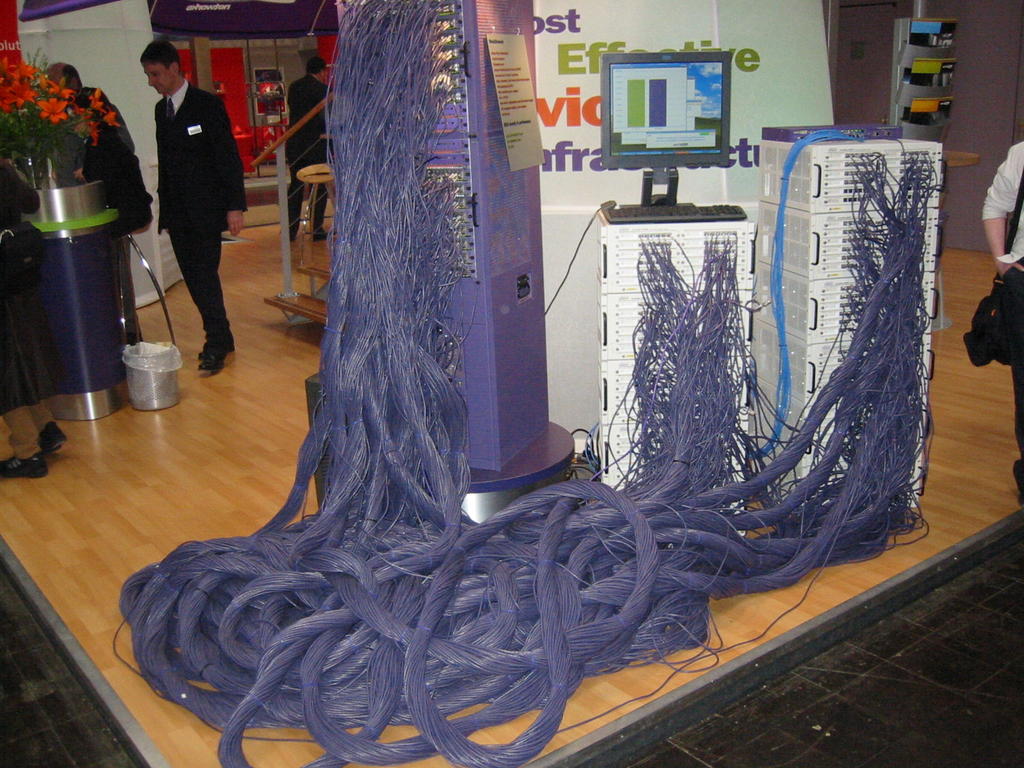
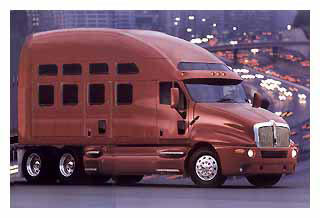
DR Dominator (both vehicles are called "Dominator")

Fuji






General Electric

McKesson


Philips


.jpg)
Sectra


Stentor

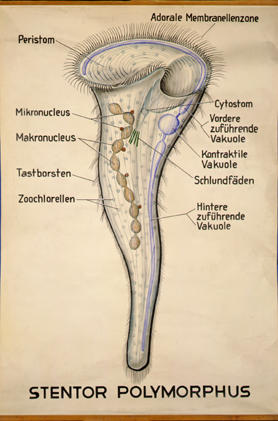
Addendum...Marc from Mitra, I mean Agfa, says he's seen one of these driving about:

Anonymous sent this one:


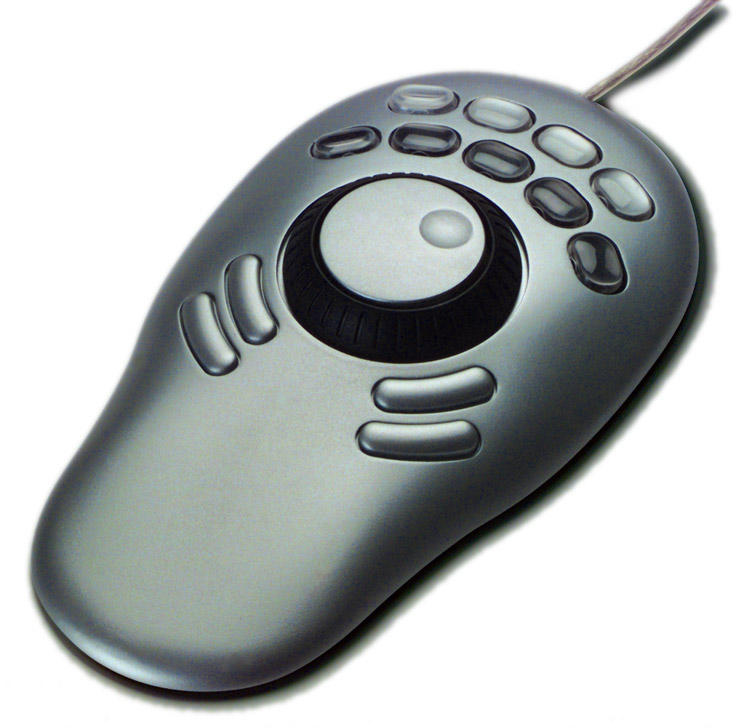
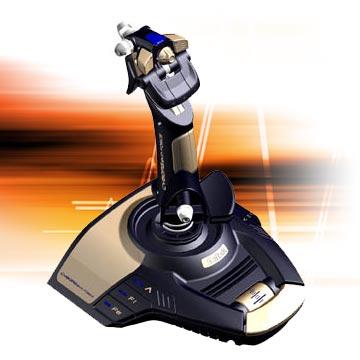

 With apologies to Home Improvement...
Hands-down, my favorite incarnation of this tool comes from Amicas. This is the way it should be, simple, intuitive, quick, and effective. You click the button on the menu bar, and then point at the middle of S1 and click. Then you point to the middle of L5 and click...and so on until the spine is labeled. The magic of this is that 3D information within the DICOM header is utilized to deploy labels in the axial plane:
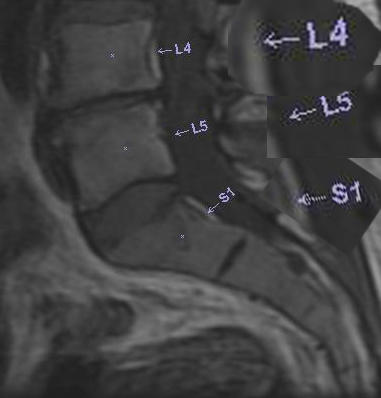

This whole process literally takes 5 seconds.
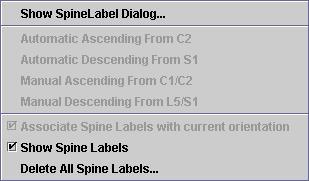
A drop-down menu gives several options with further control available from the labeling dialogue:

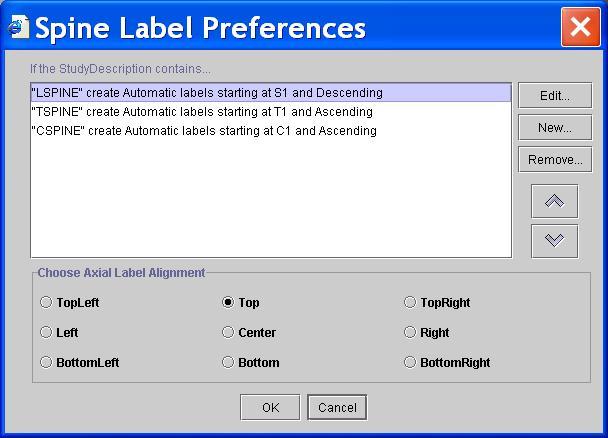
Now this is really neat: "Preferences" lets you set up a degree of automation. If the spine study is properly named(cervical, thoracic or lumbar), the labeling tool automatically starts at the level you choose. (This is actually an unusually deep level of adjustment access for Amicas tools, by the way, and the initial set-up will probably be adequate for the vast majority of users.)
The other systems we use either don't have this tool at all, or have a such a poorly-designed version that using it would take 10 minutes; therefore, we don't.
I don't have any significant improvements to suggest for this tool; Amicas did it right. I would perhaps like to have the ability to change the font, or at least the size, of the labels. It would also be nice if they would propagate to the coronal projections as well if these are available. Finally, it would be really nice (but really difficult to accomplish) to have the labels appear within the embedded Voxar 3D window. I can dream, can't I?
Tune in next time, when Heidi and Al get caught up in the magnification tool!
Sorry to get on a tirade but I just got handed a bill from the Geek Squad serviceman for a service call on my Gateway that I have had for 2 years now. I just had a service call last week where a piece was replaced that was worn out and my contract states that I get 1 service a year for free. Well the hard drive failed as they sometimes do, and I needed it repaired.Here comes the fun part, for a 50 gig hard drive I was charged $667.18. Yes that is correct over 600.00 for a hard drive I could get for less than 100.00. I was charged at a rate of $240.00 per hour to install it which took 3 hours and $325.00 for them to drive to my office which is less than 25 miles from there office here. I was told that all of these are the standard rates.
Well I asked the rep if I charged him 667.18 for a contrast injection would he be upset, he said of course he would, but he has no control over the pricing. As far as I'm concerned this is all horse shit, I'm sick of being charged $95.00/ hour for IT support while they sit at one of my computers and wait 30 minutes for a download to finish or for a program to scan my hard drive. Plus they charge me 1/2 the hourly rate for travel to my office.We (physicians) have been taking in the shorts for way too long and I for one am pissed off ( sorry about the language). I want to organize just like every other business in the free world. I would like to see them put all of us in jail for collusion. I have said it before but it is time to strike!!!!!!!!!!!!!Close the doors for 2-3 days don't answer the phone, all of us go see our families take them fishing or go play golf, round on your hospital patients if you have them, but otherwise stop, Only by a massive shut down will anyone, inscos and gummit, see that we aren't going to take this crap any longer.My prices just went up 50% and no more free work of any kind unless it is something I want to do, not what some patient or inscos think I have or should do!!!!!!!!!Sorry but I'm pissed!
Shoulda got a Dell with a 4 year service policy. Or learn to open the can of your computer and swap the drive yourself. 5 minute hardware procedure, 1 hour or so to reload the drive.
On the more serious medical front, I think in the end docs are their own worst enemies. How 'bout them expert witnesses? Without them, the lawyers are SOL. But Google the term "medical expert witness" (I've made it easy by linking it for you), and you get 40,000+ sites that will connect you with a doc that will say the sun didn't come up this morning if you pay him/her enough. My personal solution is to make it ILLEGAL to pay for such expert testimony beyond travel expenses and such. Some of these plaintiff whores make $5,000-$20,000 per case that goes to trial, so they have every motivation to drag your sorry backside into court, even if there is no case. This must stop. The tort-reform bills going through various state legislatures, and even Congress, are not dealing with this issue as strongly as they should.
For us imagers, the clinicians with their own scanners are presenting an interesting problem. They are generating more imaging business, and the more upstanding of them contract real rads to read their stuff, but their out-of-control self-referral is bringing down the house on ALL of us. This baby doesn't want to go out with the bathwater. Then you have the ERs that order everything but a corpora-cavernosagram in the middle of the night (at least I haven't had to do one yet), and want the answer yesterday, overtaxing the system at that end.
$700 for an hour of work to replace a hard-drive? Maybe I'll join the Geek Squad....

Philips iSite® PACS is the leading enterprise-wide medical image and information management system on the market today. iSite® PACS is an innovative image and information management system that delivers on-demand diagnostic-quality images over existing hospital networks, advanced radiology reading stations for radiologists, and "always online" long-term storage.
FHSPACSADMIN said...
We enjoyed your rants about ScImage! Our favorite was "Dear ScImage." Don't know how many times i have had to walk our radiologists over the phone at night how to re-inistall picom client. One them asked in a huff one night...."now why do i have to keep doing this?!?" I do not know sir.We enjoy your site and will most certainly be keeping up with it!Take Care!
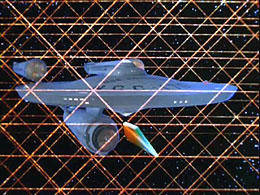 Inside joke for Star Trek fans....
Once you are in the application (after it is launched), the web is really out of the equation. You are running an application that is installed on your local machine. Most (all I would hope) applications have some capability to auto download new clients as they are available. So, to make a long story short, web or not, if an application can be downloaded and installed/configured from a web browser and if that same application will communicate on standard web ports, then to me everything else is the same."
Peter then comments:
Uhhhh...can a client be small and fat? Sorry, don't set me up with a straight line! I think we all may be talking about the same thing, but with different buzz words. Let's take a look at the way a generic "web-based" system functions, and see where we might have some common ground on this part of the wider issue....I would much rather see a well designed, small fat client install which uses the internet to communicate to a backend database than...a “thin” web app.....An easily available web site with a small, intuitive install would be so much more preferable to a web app. Limiting the customizations possible by the end-user saves a lot of support time in the long run."
I think we will find that essentially all systems use mainly thick clients for viewing. You are not just tunneling into the server and watching the images being manipulated there, but rather you are pulling the images to your client, and playing with them on your very own computer. I can think of two instances in which I have used a thin client, based on the above definition: First, when I was in junior high sometime in the last century, we had the great priviledge of using a mainframe via acoustic-coupled modem over POTS (Plain Old Telephone Service) with a teletype at 110 baud. Much more recently, I have tried out a TeraRecon Aquarius via internet. I loaded a thin client on my laptop, and all the image manipulation was done on the Aquarius, wherever it was. The images were, of course, spectacular, but the process was completely bogged down by bandwidth. Therein lies the problem with thin-clients...while it might be feasible to do all the crunching on a central computer, you still have to get the results out to the viewers in the boonies. Not a big problem in-house, especially with gigabit ethernet, but even DSL or cable speeds may not be up to the task. I'm going to go out on a limb on this one, and come down hard in favor of the thick(er) clients. I just bought a number of Dell Precision 670 computers from the Dell Outlet Site for my group. For $4000 each, we get dual Xeon 3.6 GHz processors with 1 MB cache, 4 GB of RAM, 200 or so GB hard drives, and a 256 MB dual-DVI nVidia graphics card. That's more computer power than all of NASA had at the time of the moon shots (and probably more than the Shuttles themselves have today). These machines can do a great job with 3D processing and cine-style viewing of 8 or 16 windows simultaneously. In the end, they represent a cheaper approach. Bandwidth to accomplish all this would be prohibitive, at least to deliver it outside the main hospital, anyway. So, to me, the thick client approach wins. A thick-client viewer is not bound to a web-browser, but the two can play nicely. Think of Adobe Reader, a client used to read .pdf files. It is downloaded (though the user has to initiate this) from the web, and its various incarnations can work as a plug-in within the browser, or as an independent app. Most importantly (and depending on its timing, sometimes annoyingly), Adobe will give you the opportunity to upgrade to the latest and greatest when such is available. Likewise with PACS viewers: usually they are downloaded with the initial connection, and the opportunity to upgrade is usually given upon subsequent sign-ons.
‘Thin Client’
A simple program or hardware device that relies on having most or all of its functionality supplied by a network server. It is similar to a dumb terminal in that it gets all of its information from the network. For example, a simple HTML form filled out in a web browser is considered to be processed by a ‘thin client’ since much of the form's functionality is supplied by the server.
‘Thick Client’ (or ‘Fat Client’)
A program that is stored locally on the user's computer rather than the server. For example, word processing software used to write letters and other documents generally resides on the user's computer rather than the server. Even when the software resides on the server it is actually on space allocated to the user and is, in reality, just an extension of the user's computer. The term can also be hardware related, referring to fast stand alone PC's that have large amounts of memory and high volume hard drives that run programs locally rather than off the server.
"I still do not understand how all of the advantages that Brad describes are gained via a Web based PACS. Whether the PACS is web or not, a system can still be brokerless, flexible, inexpensive, easy to deploy, easy to upgrade, etc. A web based PACS still requires somewhat complex servers and configurations, etc. The advantage for me, and the only one, of a web based system is the ability to 'launch' the application from the web. This opens up opportunities that are endless. Now granted, that is a huge advantage, but I just dont think that people are conveying the advantages of web based PACS very well, and espescially not in this tidbit by Brad. I would love to see data on whether web based PACS perform better, are more reliable, are more secure, etc. And for those requests, I would love to see real examples, and not any high level, marketing focused, buzz word based responses."
First a bit of a disclaimer -- As my screen name explicitly describes, I'm Brad Levin and I'm the Director of Strategic Marketing for AMICAS. Prior to AMICAS, I was a PACS Subject Matter Expert for both Cap Gemini Ernst & Young and prior to that, Xtria Healthcare. I've experienced PACS for 10 years+, as the industry has made generational changes from the earliest military days of MDIS which was highly proprietary PACS (resulting in the Unix guts of most of today's traditional PACS), to the first DIN-PACS which spurred industry to go the route of rudimentary integrated RIS/PACS and heavily brokered systems, and most recently to Web-based PACS.
I'll try to provide you a snapshot of this market segment as it exists today -- it's a long response, but I hope this provides some clarity for you:
What is Web-based PACS? While there is no Webster's definition, Web-based PACS is PACS with the guts of a Web server under the hood. In other words, Web-based PACS delivers images and reports via a URL-based mechanism (e.g., what you typed in your browser to get to AuntMinnie.com). Some Web-based PACS vendors have URLs literally in their graphical user interface (GUI), while others use this mechanism, but choose not to have the URL accessible explicitly in the GUI.
Why Web-based PACS? Traditional approaches to PACS are tried and true - there's no argument there, as every vendor can ultimately move around images and reports. But to continue the automobile metaphor, these methods require significant "elbow grease" to be successful. This level of effort has both frustrated PACS customers and vendors alike. Why? Because these approaches lead to PACS with brokers, multiple databases, multiple operating systems, restrictive Radiology-centric workflow, expensive workstations/clinical viewers, multiple levels of archive, proprietary hardware (purchased through PACS vendors), a separate/non-scaleable Web-server and multiple user interfaces for different PACS viewing applications: telerad, distribution, clinical viewing and diagnostic workstations. The paradigm shift of PACS is challenging enough on its own (e.g., change management, training, system rollout) let alone to be hampered by the technical complexity of these disparate systems that must be implemented, maintained, and synchronized. It's complex because it's inherent in the model.What has been the result of these valiant efforts for PACS? Vendors have had no choice but to pass through (with profits) the complex development, support and integration costs onto the PACS consumer marketplace. By virtue of real-world experience alone, the majority of industry consultants are most familiar with this complex model of PACS and it is continually demonstrated in their RFPs. RFPs have marginally changed from the early days of PACS despite the significant differences in approaches to PACS. So, rather than make generational changes in architecture, many traditional vendors have continued to deliver "complex" PACS via this model, charging several million dollars per PACS, plus several hundred thousands dollars per year for support. That is why so many traditional PACS buyers have a hard time cost justifying PACS, because ROI (using "hard" numbers) is difficult to achieve in a model that does not have the tools to eliminate the production of film. And if you can't eliminate the film, you'll chase, but never get to ROI. That doesn't mean that PACS can't be justified with this model, because consultants and PACS customers have learned how to be creative using this approach with so called "soft and hard" savings. Just go to any conference or read the mags and you'll learn how. Early adopters have worked the system in this fashion simply because the technology and inherent high costs have led them in this not so pleasant direction.
So why Web-based PACS now? Simply speaking, the market dynamics changed and PACS customers are more demanding - on their terms. While literally one or two vendors have been in Web-based PACS for years, the PACS marketplace has clearly taken a decisive turn in the past 3 years. Today, there are probably a half dozen or more vendors offering Web-based PACS, and a similar handful of RIS vendors offer Web-based solutions as well.
As I said earlier, PACS early adopters (e.g., academics > 400 beds) are in upgrade mode now, but have had great difficulty accepting the costly terms of upgrading their traditional PACS. They are questioning "why spend millions on a model that was created in the early/mid 90s"?. I don't think anyone would purchase a 286/386 PC today. The same rationale exists for PACS, except when you purchase/upgrade your system, you are tied to your purchase for at least 5 years+. Combined with this is the reality that the broader marketplace (e.g., <400>
So, the only way for traditional PACS vendors to address this market opportunity is to come up with a model that meets the "demand" with a "solution" that can be delivered with scale (to provide wide image/report access and thus, allow film printing to nearly cease); reduce architectural complexity to "simplistic" models that can be deployed fast, supported over the Web with minimal resources, upgraded over the Web, etc.; provide integration platforms to electronic medical record (EMR) systems through Web server calls; leverage PACS for the enterprise and not just for Radiology; integrate through brokerless interface engines; and perhaps most important of all, to be able to be sold for less to meet the market demand head on.And what is the outcome of the above? PACS powered by the Web allows adopters to move to PACS faster, with far greater simplicity, and thus, far more affordably than has historically been the case for PACS. It's a confusing time in the marketplace for sure -- but make no mistake -- the rules for PACS have been and are continuing to be rewritten, allowing ROI to be a reality, not the fallacy from the past. There are many flavors to Web-based PACS out there. Some use proprietary means, others focus on standards. Some offer more restrictive solutions than others for enterprise workflow, integration, off the shelf hardware, etc.
In closing, the main message of my response is that for those who have been in the industry a long time the momentum is fairly obvious -- the Web is clearly the direction of the emerging PACS vendors and most of the traditional vendors are either on board with the Web, have released partial Web-based products, or you can almost certainly be sure the Web will play a part in their future releases. If they don't move, they and their customers will be left behind. And as in the past, one day the market dynamics will have its way with the Web --- it is almost inevitable. But when that day will come is anyone's guess. The wave of the Web is in it's infancy and will likely ride for many years to come. Just remember that the PACS penetration rate outside of the academics is in single digits today, and this is the target market for all of the traditional vendors. Some can play in this space today, others can't.
The real final message is that astute and novice PACS buyers have no choice but to filter out PACS for their own best fit model. The change from the past is that the business of Radiology for the <300~400>
Thanks for listening and I hope this was helpful.
blevin@amicas.com
You must be a huge Michael Moore fan. You seem to employ a similar style.
Jim @ ScImage


Sectra has been in the US for nearly ten years, and we have a superb service and support team. In addition to Philips Medical Systems, we provide Level II support for our other partners, selected dealers and comprehensive support for our direct sales.
Our PACS products for the Orthopedics and Mammography markets are extremely well received by the US market. While Philips' acquisition of Stentor will undeniably impact our revenue in the short term, we intend to aggressively bid for service on our products and continue to protect the investment of customers who have purchased Sectra PACS... whether under the Philips label or directly from us.
Sectra will continue to innovate and bring industry leading products to market in the US. If you have questions about support for your system, extensions to your Sectra PACS or have a new opportunity, we'd be happy to talk with you.
John Goble, Ph.D., President, Sectra North America, Inc. Call us at 800.307.4425.
 Today, we Star Trek fans say goodbye to James Doohan, who will be forever known as Scotty, the Chief Engineer of the Starship Enterprise. He died of complications from pneumonia and Alzheimer's disease at age 85. His ashes will be rocketed into orbit later this year. (That's not a joke, by the way; he will join Star Trek creator Gene Roddenberry, whose ashes were intered into space several years ago.) I guess we tend to forget that the characters of Star Trek are getting on up there in years. DeForest Kelly, who played Dr. McCoy, died in 1999 at age 79.
  Even Kirk (William Shatner) and Spock (Leonard Nimoy) are in their early seventies now. I had the chance to spend 10 seconds in their presence last summer at the Star Trek convention (yes, I admit I went), while posing with my son for this photo. I call it three old Jewish guys and a kid.
My apologies to the late Richard Harris....
I am really amazed at the traffic generated by the AuntMinnie.com article. Comments have been generally positive, usually something like, "I didn't know PACS could be funny!" I seem to have the attention of a significant number of those in the PACS community, and I would like to put that to good use while it lasts.
It seems clear that there is a disconnect between the designers and (Radiologist) users of PACS interfaces. I'm not sure why this is the case, as it seems logical to consult your end users before creating a huge software product. I don't want to indict any one particular company, but some do a better job than others of giving us the clear interface and powerful tools we need to slog through the day's work.
For the moment, lots of users, and not a few vendors are dropping by to see what foolish thing I have posted this time. Now I'm sure you all realize that is is possible for you to post comments here, and I really, really, REALLY encourage you to do so. It's simple; just click the word "COMMENTS" at the end of each posting. Perhaps this blog might be considered a "safer" place to post complaints or suggestions for the vendors, and for them to post answers. This happens on the AuntMinnie.com boards to some extent, but I think some are hesitant to post there. So, come here and let it all hang out. Don't hold back, say what you really think. I certainly haven't even begun to describe everything that would go into a perfect system, but if I can get input from as many of you as possible, maybe we can get closer to that ideal product.
Now, if you will excuse me, the boys want me to get back to the Roundtable, I mean my PACS station, and generate some revenue.
 For radiology, PACS has been nothing short of a complete and total revolution; PACS now quite literally defines how I perform my job. As a nuclear radiologist, I spend at least 85% to 90% of my day with the microphone in my left hand and the mouse in my right hand. If I'm not talking into the former whilst manipulating the latter, I'm not generating revenue for my group.
 (My Temporary Shingle)
Since 1997, Sectra has had a global cooperation with Philips Medical Systems, which has sold Sectra's software for processing digital X-ray images worldwide.
"We have several project agreements with Philips that extend up to ten years and our cooperation will successively be terminated," relates Sectra's President and CEO Jan-Olof Brüer. "We assess that the termination will impact on our sales and earnings in the current fiscal year. At this time, however, it is difficult to provide any reliable view of the financial effects, since this depends on how much time the termination will require."
The change provides Sectra the opportunity to review its sales channels. Sectra's sales of PACS are handled on a proprietary basis in Scandinavia and other selected markets as well as through partners, of which Philips was the largest. Sectra's largest sales together with Philips have been in the US.
"Part of the sales for which Philips is currently responsible will be taken over by other partners that today are active in the same markets as Philips," says Jan-Olof Brüer. "At the same time, we gain the opportunity to advance our positions and will increase our focus on own sales in important key markets, as we do today in Scandinavia, where we have captured more than half of the total PACS market."
My answers to the above are probably predictable. First, GE and Siemens make scanners too...I don't consider the PACS product from either company, um, great at the moment. Secondly, one should never, ever make a major purchase based upon one or two perks. Would you buy a Peugot over a Mercedes because it has, say, a prettier hood-ornament? You have to take all factors into account, not the least of which is the overall usability of the entire system. Having the hots for one specific component has the potential to send you down the completely wrong path. Pull-down preliminary report generators are dandy, and I have a rudimentary version on Agfa Impax 4.5. I rarely use it, because I can type my prelim much faster without any help. As far as MPR slice thickness, I don't know anyone who finds knowing the exact numerical value of the thickness that valuable in actual use. Frankly, I suspect a lot of potential PACS purchasers, especially those who are new to the game, are so overwhelmed by whizbang gadgets, they don't stop to think about how they might actually use said toys.
My advice remains this: use the product as much as you can before making a purchase. Web-based systems lend themselves very well to trial-runs in your own office or home setting. Vendors...can you accomidate this?
Anyway. For the moment, all is well in the North Woods. That is until Sick-Call, which is right after dinner.........
Our group of 7 FTE Radiologists is in an interesting predicament. We have been using Fuji Synapse for over 3 years for in-house PACS and we are filmless for all modalities. We do a total of 140K exams a year. For the last three years our group has been pushing the hospital to provide web access to the referring docs using Synapse and they refused claiming that Synapse, outside of the intranet, is not HIPA compliant. (Synapse uses Internet explorer which can leave copies of the downloaded images on the browsing computer). So, the hospital started looking at Stentor a year and half ago. Initially we were all excited but w found out that Stentor was not able to display the Fuji CR images properly on their system. Stentor was able to fix this for new images comparisons still look pretty bad. Most radiologists also do not like the scrolling in stentor (it is too fast when you hold the mouse down or too slow to scroll one image at a time). Our referring docs are finding it a pain to navigate stentor, and clearly it is not as intuitive as Synapse. The rads want to keep Synapse and the hospital is pushing for Stentor. The rest of the hospitals in our system have gone with Stentor. (interestingly none of them have used Synapse before). Any body out there with any experience with these systems or have any general advice please post.....
 Coincidence scan of a canine, courtesy of: http://ecpi.crump.ucla.edu/vol2/issue4/matwichuk/matwichuk_case-ex.html
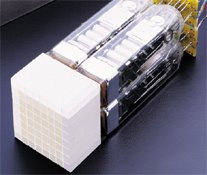
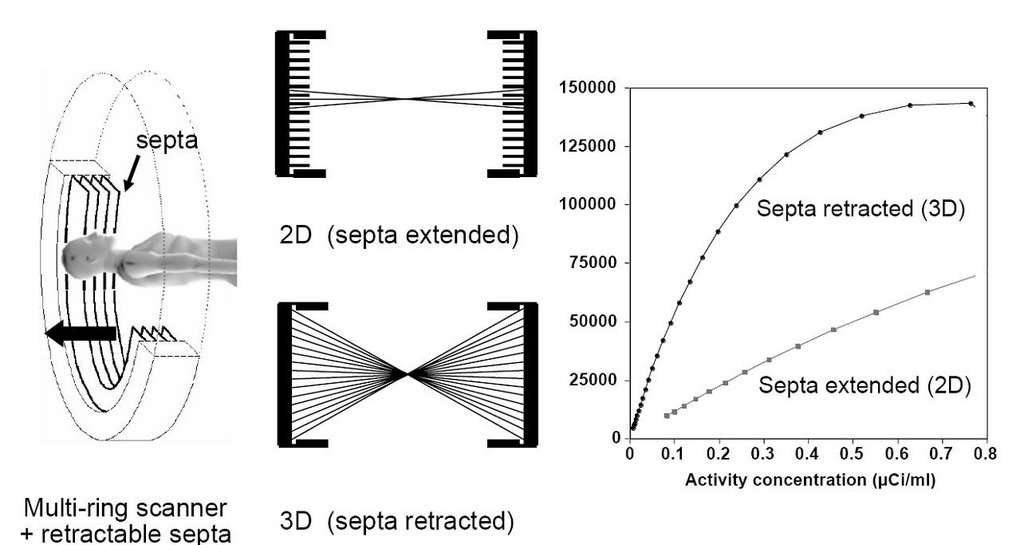
Italics are mine, as usual. Now GE cited some other articles contradicting this one. One in particular by Laritizien, et. al., states:
Comparisons of 2D and 3D performance are very sensitive to the specific conditions under which the data were acquired. Counting rate, scatter, activity outside the field of view, reconstruction algorithm, and scanner characteristics all influence relative performance. In this study 2D and 3D data were compared under clinically realistic conditions and effects that may introduce bias were minimized. The mean ratio of 3D to 2D image values was 0.94 with 95% limits of agreement of 0.63–1.41. All noise comparisons were made under conditions of matched lesion target-to-background ratio as measured in patient images. A statistically significant reduction in image noise was found with 3D acquisition compared with 2D, suggesting reductions in scan duration of 33% or more are feasible.
In this study, we performed an AFROC analysis to evaluate the impact of the acquisition mode (2D vs. fully 3D) on human observer detection performances. Three acquisition protocols were selected to provide a fair comparison between the acquisition modes. Results showed that the fully 3D acquisition mode allowed better or equivalent detection performance than the 2D mode for a same injected dose typical of the clinical practice (about 440 MBq) in a standard patient. The 2D acquisition protocol combined with higher injected doses (about 740 MBq) resulted in higher detectability than those achieved with the fully 3D acquisition mode for approximately half the injected dose. Changing the patient size or the PET scanner model will potentially change the lesion detectability results of this study.
Frost & Sullivan’s recent analysis, U.S. PET and PET-CT Markets, selected GE Healthcare as the recipient of the 2004 Market Leadership Award. This Award acknowledges the company’s exceptional marketing strategies that helped it capture the largest percentage of the U.S. positron emission tomography-computed tomography (PET-CT) market in 2003 and maintain its robust lead since the market’s inception.I have to agree 100%. GE certainly has exceptional marketing strategy. No question about that. But I don't think Frost & Sullivan is really qualified to evaluate the scanners themselves. That needs to be left to those of us who actually have to interpret the images. You might ask, "Will the Discovery fail to demonstrate something that the Biograph would show?" Now that's one question I can't honestly answer, and it's probably the most important of all. Time will tell on that one. But you can bet it will become obvious eventually.
Gee, where do I start? I hate to dignify such a posting with a response, but what the heck. I have to note at the outset that Anonymous' IP localizes him to Milwaukie, WI, the home of GE Medical systems. Coincidence? Gotta wonder... As to the rather personal comments....I would just as soon keep my name off of the blog, but my full name is revealed in the AuntMinnie article, so I am not "hiding" behind anything, thank you. If Anonymous had bothered to read some of the other entries, he would have found that I do indeed deny being in any company's pocket. Adding up all dinners and so on received from PACS vendors (which include Agfa, Amicas, Fuji, and GE) over the past five years would yield the grand total of $500. If I can be bought, it would take a lot more than that! Finally, as to my contributions to medicine, I am responsible for the introduction of PET imaging to South Carolina. Tell me, Anonymous, what have you contributed?Did you ever consider that Blogging in a medical environment would be so crude as to bash vendors. Besides, it is easy to jump on a bandwagon of the top 1, 2 or 3 with little market share and history, yet to bash others in a cowardly fashion is outright fake. What is your total combined compensation (including free meals) for promoting the top 3? Just need to know so I can budget for this when we crush them with slow steady forward progress and you turn your vote. This will remain anonymous so long as you continue to hide your identity behind an outrageous title that should belong to people to have acutally contributed something to the medical profession.
Cheers!